
ENV-KUWAIT-SUSTAINABLITYKuwait strengthens environmental sustainability through strategic initiativesBy Zahra Al-Kadhmi

HLT-KUWAIT-SURGERYKuwait advances health sector with robotic, remote surgeryBy Mohammad Al-Moseb

Saudi Arabia’s Voluntary Carbon Market Fuels the Shift to a Low-Carbon

Under UAE President’s directives, UAE launches urgent relief response for Ghana flood victims

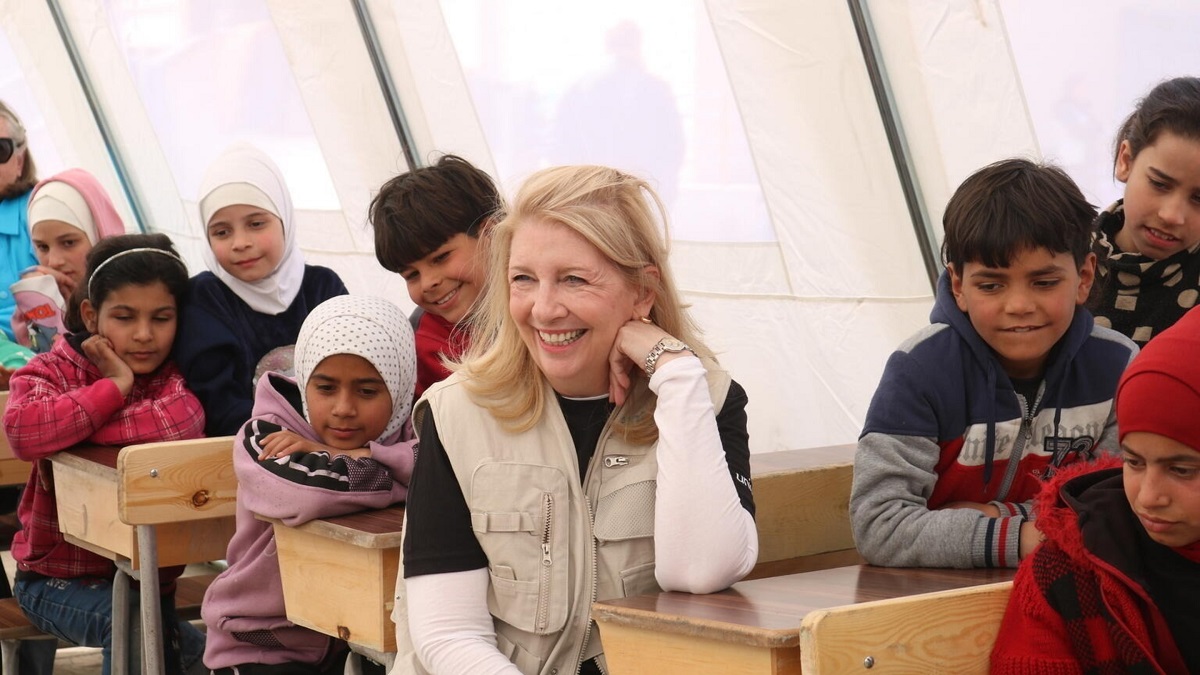
Amman, Sept. 29 (Petra) — UNICEF Executive Director Catherine
Russell said Jordan has made substantial progress in advancing
children’s rights by expanding access to education, strengthening the
legal framework for children’s rights and supporting vulnerable
families.
In an interview with the Jordan News Agency (Petra), Russell said her
visit to Jordan was an opportunity to recognize the Kingdom’s
achievements for children and reaffirm UNICEF’s support for the
country’s priorities.
She said her central message is that these commitments require
sustained investment, with progress measured by whether children are
learning, feeling safe and receiving the support they need.
Russell commended Jordan’s continued generosity towards refugees,
stressing that the international community must continue to share
responsibility for supporting refugees. She reaffirmed that UNICEF
will remain alongside Jordan as a partner to help ensure every child
has access to essential services.
She said Jordan has demonstrated extraordinary solidarity with
children and families displaced by the Syria crisis, despite the
pressures facing public services, water resources and the economy,
noting that this commitment deserves recognition and international
support.
Russell stressed that support for refugee children and investment in
host communities must go hand in hand. UNICEF’s work reflects this
approach, she said, noting that Makani centres provide refugee and
host-community children with safe spaces to learn and grow, while
UNICEF’s support to national institutions helps strengthen services
for children across the country.
Asked about her assessment of the situation facing Jordanian children
today and their prospects for the future, Russell said there is
strong reason for optimism, noting that with more than 97 percent of
children enrolled in primary school, Jordan has built a solid
foundation.
The priority now, she said, is to turn access to education into
quality learning and future-ready skills by strengthening
foundational literacy and numeracy, supporting teachers, modernizing
curricula and promoting inclusive classrooms.
She stressed that children with disabilities and those facing
economic or other barriers must be able to participate and succeed,
adding that UNICEF is working with the Ministry of Education to
support the reform agenda through technical expertise and evidence.
Russell said UNICEF’s partnership with Jordan is longstanding and
grounded in national development priorities. Over more than seven
decades, the partnership has developed into close collaboration with
national institutions on policies, services and investments that
shape children’s lives.
She said UNICEF will continue working with the government to improve
learning, support vulnerable families, prevent and respond to
violence, and strengthen the skills of young people and adolescents
as they transition to adulthood.
Russell noted that Jordan’s 2022 Child Rights Law represents an
important foundation, stressing that the priority now is to translate
the law, along with other national commitments, into consistent
services accessible to every child. She said the overall goal is to
strengthen institutions and coordination so that support reaches all
children in need.
Regarding the role of UNICEF’s Jordan office in the region’s
humanitarian response, including support for children in Gaza,
Russell said children in Gaza urgently need protection and the basic
necessities for survival, including safe water, nutritious food,
healthcare and shelter. They also need support to recover and return
to learning.
She said UNICEF is focusing on life-saving assistance, essential
services and protecting children from further harm, noting that this
requires safe, sustained and unimpeded access, protection for aid
workers and respect for international humanitarian law.
Russell said Jordan is a critical humanitarian gateway through the
Jordan Corridor. She noted that UNICEF has helped move more than
1,600 trucks and five airlifts carrying health, nutrition and winter
supplies worth more than US$54 million into Gaza.
On UNICEF’s cooperation with Jordan in developing the new National
Youth Strategy and efforts to bridge the gap between young people’s
skills and labor market needs, Russell said young people and
adolescents need skills, confidence, resilience and a voice in
decisions that affect their lives.
She said Jordan’s National Youth Strategy provides an opportunity to
bring these elements together within a coherent, long-term approach.
UNICEF is supporting the strategy and working with the Ministry of
Youth on life skills programs that help young people navigate the
transition into adulthood.
Through the Generation Ready program, in cooperation with the
Ministry of Labor and the Vocational Training Corporation, UNICEF is
helping modernize vocational training so that it better matches labor
market needs, she said, stressing the urgency of such efforts in
addressing unemployment.
Regarding the importance of strengthening national systems, Russell
said Jordan has established national institutions and developed clear
strategies aimed at improving children’s lives.
Investing in these systems, she explained, can help services reach
more families more consistently and extend their impact beyond
individual funding cycles.
She said UNICEF’s support for the National Social Protection Strategy
and the National Aid Fund’s new Cash Plus unit is helping strengthen
links between different services.
Russell added that the national action plan addressing child
protection and violence against children and families can improve
coordination between prevention and response services.
The next step, she said, is to ensure that the plan is backed by
adequate budgets, trained professionals, clear referral pathways and
effective case management.
As she concluded her visit, Russell said her message to the Jordanian
people is one of appreciation and continued commitment, stressing
that Jordan’s investment in children and its generosity toward people
seeking safety have made a lasting difference.
She said Jordan has clear ambitions in education, social protection,
child safety and opportunities for young people, reaffirming that
UNICEF will continue working with institutions and communities to
turn these ambitions into positive change for children and families.
After more than seven decades of partnership, Russell said UNICEF
will continue working to help every child in Jordan learn, grow up in
a safe and healthy environment, and face the future with hope.
//Petra//WH