Jordan’s Q2 2026 GDP Expands 3.0%, Outperforming Regional Headwinds, International Forecasts
ENV-KUWAIT-SUSTAINABLITYKuwait strengthens environmental sustainability through strategic initiativesBy Zahra Al-Kadhmi

HLT-KUWAIT-SURGERYKuwait advances health sector with robotic, remote surgeryBy Mohammad Al-Moseb

Saudi Arabia’s Voluntary Carbon Market Fuels the Shift to a Low-Carbon

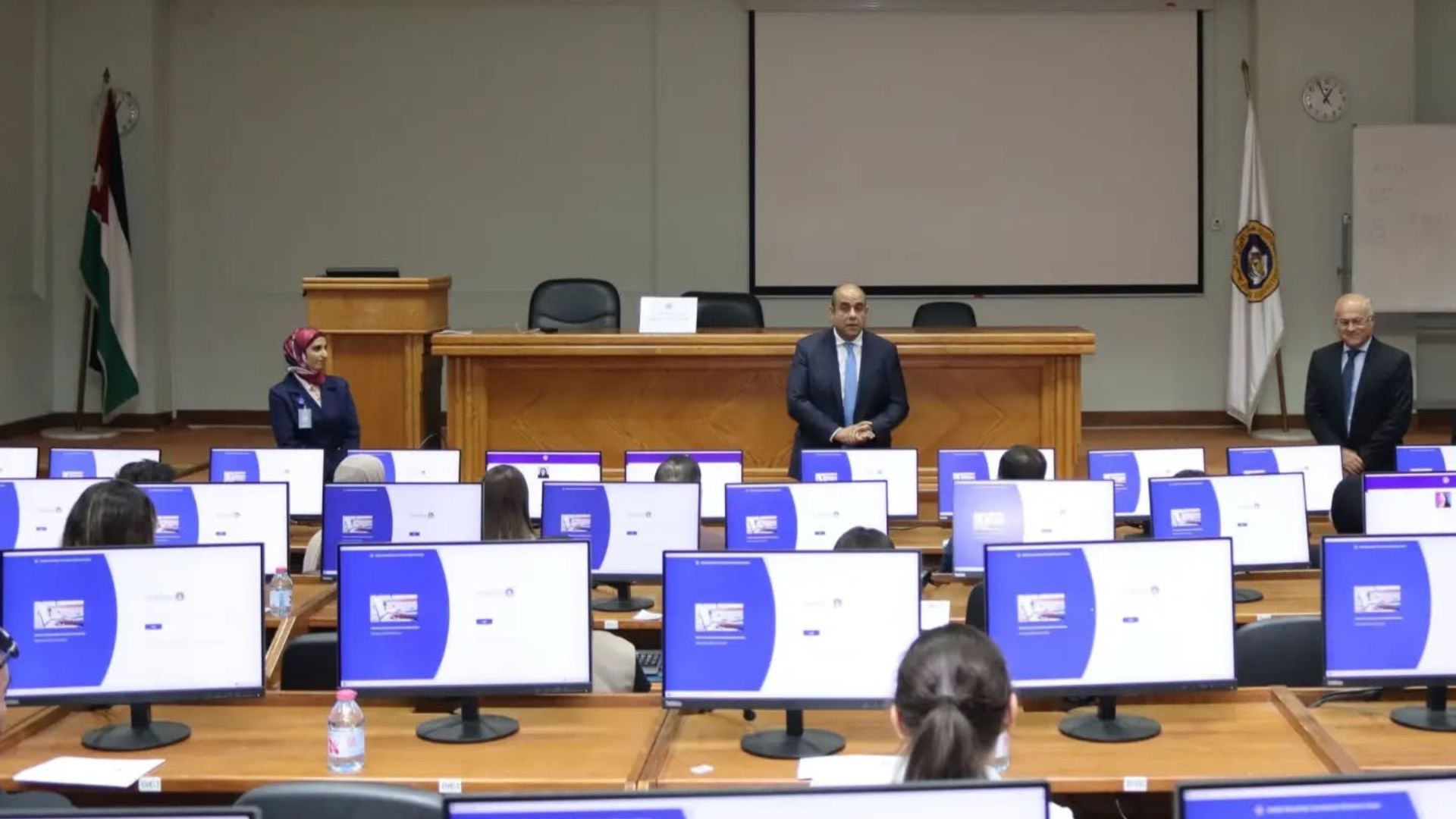
Amman, Sept. 30 (Petra) — Chairman of the Jordan Securities
Commission (JSC) Imad Abu Haltam opened a new session of the
financial legislation exam Wednesday at the commission’s
headquarters, with the participation of 39 candidates from among
employees and those wishing to practice financial services activities
in the local market and foreign exchanges.
Abu Haltam said the review of the financial legislation exam’s
governance is being conducted continuously to ensure a comprehensive
development of the exam system. This has included reorganizing the
mechanism for preparing questions, developing their methodology, and
reviewing and approving them according to standards characterized by
accuracy and objectivity, along with developing procedures for
applying for the exam and the mechanisms for holding, organizing, and
evaluating its results, enhancing integrity and transparency and
raising the level of efficiency and organization.
He stressed the importance of the financial legislation exam in
measuring candidates’ familiarity with legislation, regulations, and
instructions related to the capital market and verifying the
availability of the professional knowledge necessary to practice
financial services activities in accordance with approved legal and
regulatory frameworks.
He noted that the commission continues to develop the examinations
and professional certification system and implement specialized
programs, contributing to raising the level of legislative and
regulatory knowledge, enhancing a culture of compliance and
governance, and supporting the development of the Jordanian capital
market.
He explained that these updates represent a qualitative shift in the
commission’s professional examination system and aim to build a more
organized and effective framework that keeps pace with capital market
developments and best practices and ensures measuring candidates’
knowledge and professional competence more accurately and fairly.
Abu Haltam noted that the financial legislation exam complements a
set of exams offered by the Chartered Institute for Securities &
Investment (CISI), covering different levels, including an
introduction to securities and investment, risk in financial
services, and the cash fundamentals of financial management, among
others.
He explained that those who pass the legislation exam and CISI exams
can apply to obtain certification to practice as a compliance
officer, investment manager, issuance manager, custodian, financial
adviser, or investment trustee through licensed financial services
companies, with a pass rate of 59%, according to approved results.
//Petra// AF