Jordan’s Q2 2026 GDP Expands 3.0%, Outperforming Regional Headwinds, International Forecasts
ENV-KUWAIT-SUSTAINABLITYKuwait strengthens environmental sustainability through strategic initiativesBy Zahra Al-Kadhmi

HLT-KUWAIT-SURGERYKuwait advances health sector with robotic, remote surgeryBy Mohammad Al-Moseb

Saudi Arabia’s Voluntary Carbon Market Fuels the Shift to a Low-Carbon

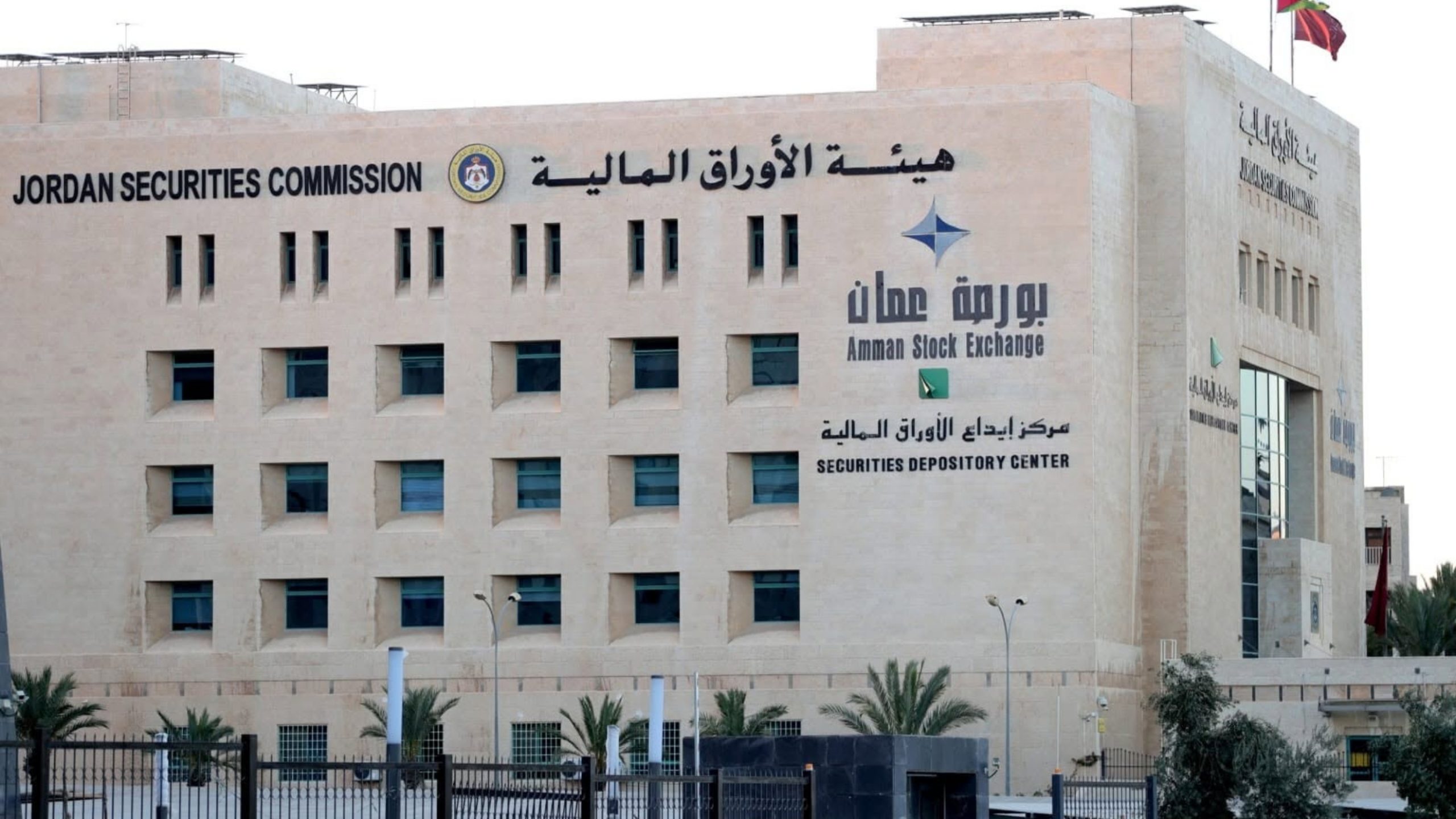
Amman, Oct. 1 (Petra) — The Amman Stock Exchange (ASE) recorded
exceptional performance in 2025, with its general index rising 45.1
percent to 3,611.6 points at year-end from 2,488.8 points at the end
of 2024, its highest level since 2007.
The strong performance was accompanied by a 50.1 percent increase in
market capitalization to about JD26.5 billion, an 80.6 percent rise
in trading value, and a doubling in average daily trading from JD4.4
million to JD8.8 million. The total return index also rose 58.52
percent.
The performance earned the ASE the Arab Federation of Capital
Markets’ 2025 award for the best-performing Arab exchange, after
Bloomberg ranked it first among Arab exchanges and 13th globally in
terms of performance during the year.
ASE Executive Director Mazen Wathaifi received the award during the
federation’s 2026 annual meeting and conference, held in Abu Dhabi on
Sept. 29-30 in cooperation with the Abu Dhabi Securities Exchange.
Financial expert Wajdi Makhamreh told Jordan News Agency (Petra) that
the market’s performance came amid a package of government measures
to stimulate the financial market, alongside stronger earnings among
listed companies, increased liquidity and investor confidence, and
positive expectations for the national economy.
He stressed that the market’s rise represented a significant shift in
the ASE’s performance, but said the increase should be assessed by
distinguishing between higher share prices and actual improvements in
corporate and economic performance.
He attributed the rise to several interconnected factors, including
government measures supporting the financial market, higher earnings
of listed companies, increased trading and liquidity, stronger
investor confidence in the market and national economy, and the
repricing of several stocks that had been trading at low levels
compared with their fundamentals.
Positive expectations for the national economy, which recorded
higher-than-expected growth, continued monetary and financial
stability, improved foreign reserves, and stronger performance by
productive and service sectors and exports also helped boost investor
interest, Makhamreh noted.
He described the rise as more than a temporary market wave, saying it
was supported by improvements in economic fundamentals. However, the
45.1 percent increase in the index, which significantly exceeded
earnings growth, indicates that future expectations and the repricing
of stocks also played a major role.
Makhamreh stressed that the market cannot be assessed uniformly, as
some stocks may remain attractive based on their earnings, dividends,
and book value, while the prices of others may already reflect a
substantial portion of positive expectations.
He said the next phase should rely more heavily on fundamental
analysis, including earnings growth, debt, cash flows, dividends, and
price-to-earnings and price-to-book ratios, rather than movements in
the index alone.
The key challenge, he added, is to translate the rise in share prices
into a deeper, more liquid and sustainable market by increasing
trading activity, expanding the institutional investor base,
attracting long-term foreign investment and increasing listings in
sectors such as technology, renewable energy, mining, logistics,
tourism and export-oriented industries.
Makhamreh also called for developing new financial instruments,
strengthening disclosure and corporate governance, protecting
investor rights, and encouraging large private and family-owned
companies to convert into public shareholding companies and list on
the exchange.
He identified five key factors that will influence the market’s
future direction: corporate earnings growth, interest rates and
monetary policy, domestic economic developments, regional
developments and tensions, and foreign investor flows and domestic
liquidity.
Financial expert Omar Gharaibeh said the ASE’s rise in 2025 was not
an automatic reflection of earnings growth, but rather a broad market
repricing driven by improved corporate performance, higher liquidity
and changes in investor appetite.
He noted that the rise in the index coincided with an 80.6 percent
increase in trading value to about JD2.2 billion, while share prices
rose for 106 companies, including 90 that recorded gains of more than
10 percent. Notable gains were recorded in electrical industries,
mining and extraction, and banking.
However, Gharaibeh pointed to the gap between market and earnings
growth, noting that listed companies’ after-tax profits increased by
only 12.9 percent, compared with the 45.1 percent rise in the index.
He said the gap does not necessarily indicate excessive valuations,
but shows that investors have priced in future expectations alongside
current results. The key test will be whether earnings, cash flows
and dividends can catch up with share prices, as continued growth in
companies’ economic value would strengthen the market’s ability to
sustain its higher levels.
Gharaibeh also highlighted the market’s concentration. In September
2025, Phosphate Mines accounted for about 28.4 percent of market
capitalization, Arab Bank 16 percent and Arab Potash 11 percent,
making the index sensitive to movements in a limited number of
companies despite the broader gains across listed firms.
Regionally, the ASE’s price-to-earnings ratio stood at about 11.5
times in January 2025, compared with 18.3 times in Saudi Arabia, 19
times in the United Arab Emirates and 8.5 times in Egypt. Gharaibeh
said the figures place the Jordanian market in a middle range while
also reflecting its lower liquidity and narrower base of listed
companies compared with deeper regional markets.
Looking ahead, Gharaibeh stressed the need to expand the base of
listed companies, particularly in technology, fintech, energy,
logistics, health and tourism, increase free-float shares and deepen
the institutional investor base. He also called for transforming new
projects into companies capable of listing and raising financing
through the capital market.
//Petra// AJ