Jordan’s Q2 2026 GDP Expands 3.0%, Outperforming Regional Headwinds, International Forecasts
ENV-KUWAIT-SUSTAINABLITYKuwait strengthens environmental sustainability through strategic initiativesBy Zahra Al-Kadhmi

HLT-KUWAIT-SURGERYKuwait advances health sector with robotic, remote surgeryBy Mohammad Al-Moseb

Saudi Arabia’s Voluntary Carbon Market Fuels the Shift to a Low-Carbon

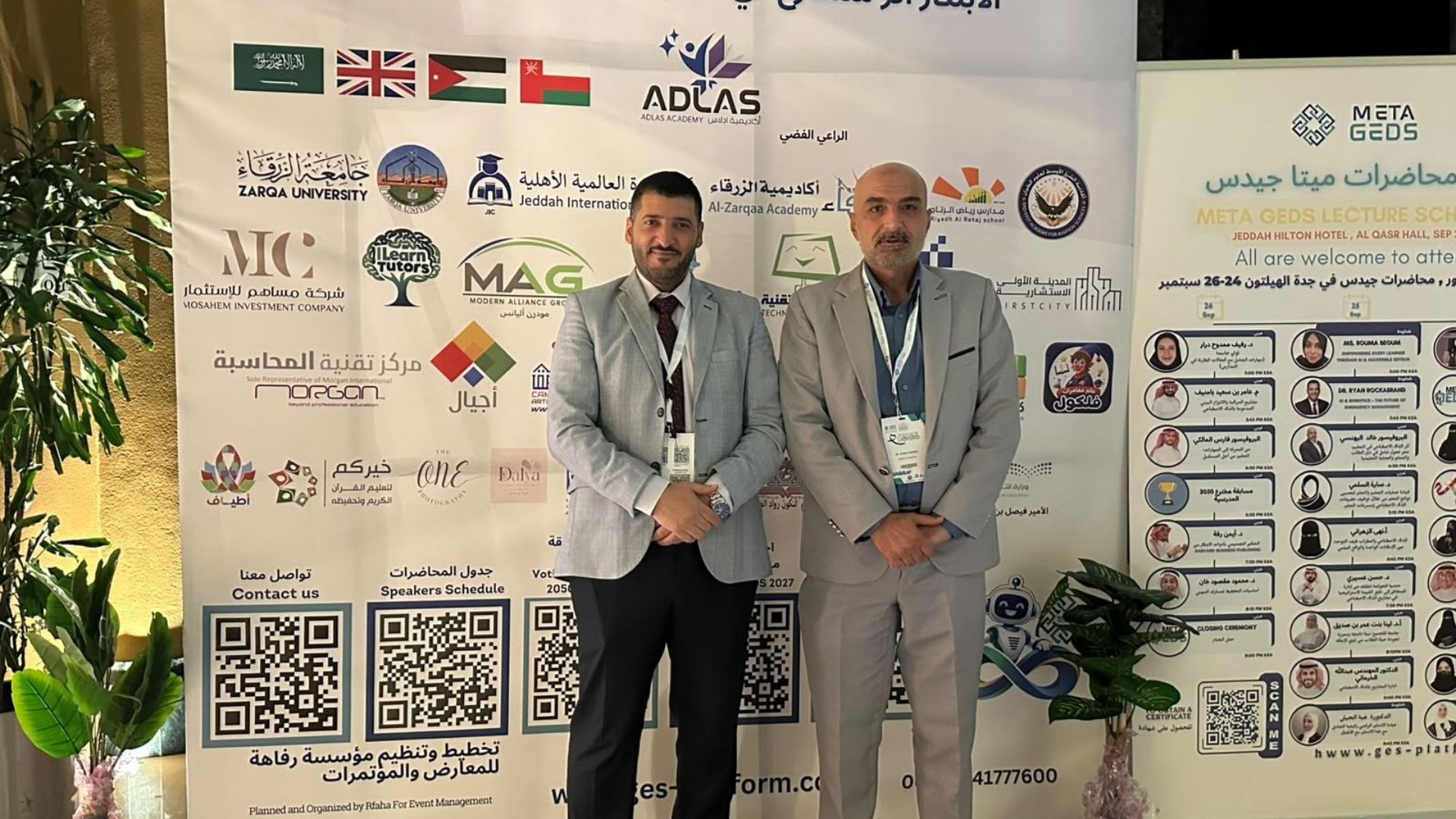
Zarqa, Oct. 3 (Petra) — Zarqa University, represented by its Faculty
of Information Technology, participated in the “Meta-Geds” exhibition
recently held in the Saudi city of Jeddah, aiming to introduce its
academic programs and explore cooperation opportunities in training
and technical development.
Hamza Al-Jawawdeh and Anwar Al-Qatrawi represented the university at
the exhibition, where they gave an introductory presentation on the
university and its academic programs at the bachelor’s and master’s
levels and a presentation on the Faculty of Information Technology’s
programs and specializations and the most prominent technical tracks
the university keeps pace with in modern technology fields.
During meetings with representatives of participating universities,
companies, and training institutes, the university’s representatives
discussed opportunities for academic and training cooperation and the
possibility of providing free training courses for the university’s
students in programming, artificial intelligence, and cybersecurity,
along with discussing the launch of joint training programs and
certificates.
According to a university statement Saturday, Dean of the Faculty of
Information Technology Hayel Khafajeh said the university’s
participation in the exhibition reflects its keenness to expand its
presence in regional educational and technical events and build
effective partnerships with universities, institutions, and
specialized companies, enhancing students’ skills and linking
educational outcomes with labor market requirements.
He added that the meetings held on the sidelines of the exhibition
allowed for exploring cooperation opportunities in training and
technical development, stressing the importance of providing applied
programs that enable students to acquire practical skills that keep
pace with accelerating transformations in the information technology
sector.
Khafajeh noted that the Faculty of Information Technology continues
to develop its academic and training programs and enhance its
cooperation with specialized institutions and entities, providing an
educational environment that responds to technical developments and
supports students’ academic and professional paths.
//Petra// AF