Jordan’s Q2 2026 GDP Expands 3.0%, Outperforming Regional Headwinds, International Forecasts
ENV-KUWAIT-SUSTAINABLITYKuwait strengthens environmental sustainability through strategic initiativesBy Zahra Al-Kadhmi

HLT-KUWAIT-SURGERYKuwait advances health sector with robotic, remote surgeryBy Mohammad Al-Moseb

Saudi Arabia’s Voluntary Carbon Market Fuels the Shift to a Low-Carbon

Forum Reviews Commercial
Opportunities at Muscat, Salalah and Sohar Airports
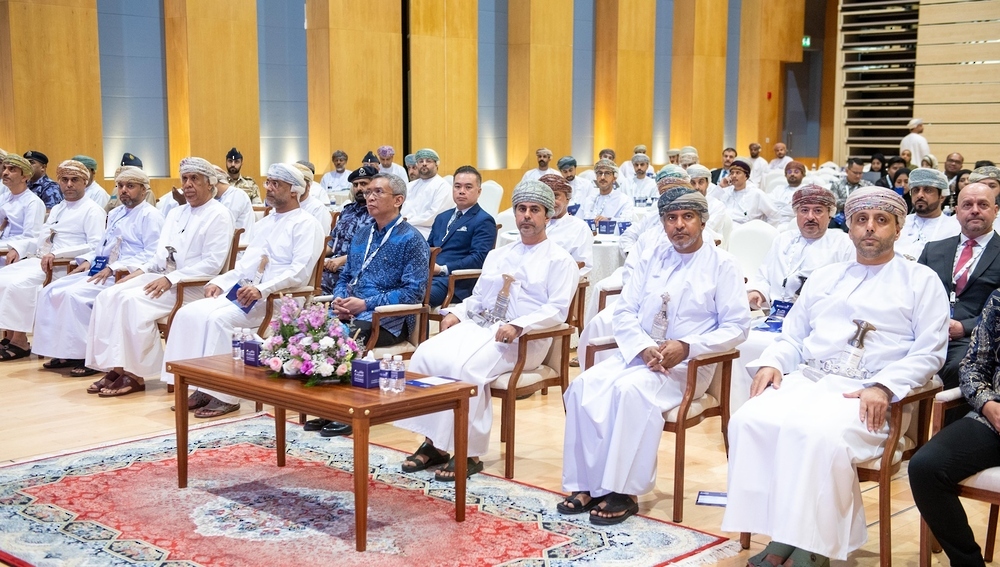
Muscat, 5 Oct 2026 (ONA) — The Civil Aviation Investment Forum reviewed
investment opportunities in the sector, the enhancement of partnership between
the public and private sectors, and investment opportunities related to land
development and the commercial and logistical activities surrounding Muscat,
Salalah and Sohar airports, as well as enhancing their role as integrated
economic hubs. It also addressed opportunities related to free zones and
airport-related logistics services, in support of the objectives of the
National Aviation Strategy 2040 linked to Oman Vision 2040.
The forum was organized today by the Civil Aviation Authority at its
headquarters in Muscat, with the participation of a number of government
entities, operators, investors and small and medium enterprises. It comes
within the launch and readiness assurance phase related to the implementation
stages of the National Aviation Strategy 2040. It highlights the most prominent
investment opportunities and the sector’s development pathways, including
airport cities, free zones, logistics, foreign investment, emerging
technologies, advanced air mobility, as well as training, qualification and the
building of national cadres.
The forum aims to attract new investments, raise awareness of investment
opportunities, improve the investor experience, enhance integration among
relevant entities, and highlight investment in emerging technologies and human
resource development, thereby strengthening the aviation sector’s contribution
to economic diversification and supporting the objectives of the National
Aviation Strategy 2040.
A number of agreements and
memoranda of understanding were inked during the event. The Civil Aviation
Authority signed a concession agreement with Oman Airports for the operation,
management and development of Muscat International Airport, Salalah Airport and
Sohar Airport for a period of (35) years.
The agreement was signed on behalf of the Authority by Eng. Naif Ali Al Abri,
Chairman of the Civil Aviation Authority, and on behalf of the Company by
Haitham Nasser Al Taie, Acting Chief Executive Officer of Oman Airports.
The agreement aims to manage the
civil airports of the Sultanate of Oman in accordance with the best global
practices in the management of air facilities and ground services, to ensure
the highest levels of safety and security, and to transform the airports into
integrated logistical and commercial hubs that support economic diversification
and are consistent with Oman Vision 2040. It also aims to develop the traveler
experience by raising capacity and improving the quality of services provided
to passengers and airlines through modern solutions and technologies, and to
empower and qualify national cadres and increase the Omanisation rate across
various technical and administrative sectors at the airports.
It further aims to establish a contractual framework for regulating the
management, operation and development of the airports, enhance their
operational and investment efficiency, and elevate the quality of services
provided in accordance with best practices and international standards.
The Civil Aviation Authority also signed a concession agreement with the
Indonesian company GMF AeroAsia for the operation and management of aircraft
maintenance facilities at Muscat International Airport for a period of 20
years. The agreement was signed on behalf of the Authority by Eng. Naif Ali Al
Abri, Chairman of the Civil Aviation Authority, and on behalf of the Company by
Andy Fahrrozi, Chief Executive Officer of GMF AeroAsia.
The agreement aims to provide heavy maintenance services and periodic
inspection of aircraft fleets for national, regional and international
airlines, and to transform Muscat International Airport into an integrated
regional center for aviation services and maintenance, by leveraging the
strategic location of the Sultanate of Oman, as well as transferring knowledge
and advanced technologies in the field of airframe, engine and electronic
systems maintenance, and creating specialized job opportunities for national
cadres.
A cooperation agreement in the field of student training was also signed
between Oman Aviation Academy and the Arab Academy for Aviation, for
cooperation in training students of Oman Aviation Academy. In addition, a
memorandum of understanding was signed between GMF AeroAsia and Mac Aerospace
International to develop business in the fields of aircraft, wheel and brake
maintenance and training, thereby enhancing strategic cooperation between the
two sides and supporting the development of these fields.
The forum includes a review of operation and foreign investment opportunities
in the Omani airports system and investment models in emerging technologies and
advanced air mobility (AAM), as well as efforts to redesign and improve the
investor experience in the aviation sector, simplify procedures and enhance
integration among relevant entities.
The forum also focuses on investment in human resources by reviewing models in
training, qualification and national capacity building, in line with the
sector’s future needs and in support of the readiness of national competencies.
The forum featured a panel discussion entitled “Investment in the Civil
Aviation Sector: Opportunities and Enablers,” which addressed the
investor’s journey from discovering the opportunity to establishing and
operating the project, and the role of capital, partnerships and national
competencies in enabling investments in the sector.
The session addressed a number of themes, including: from opportunity to
operation – the investor’s journey; capital and partnership – who invests and
how; and national competencies as an enabler of investment, along with a quick
overview entitled “One Step 2030,” which reviews the practical steps
that can contribute to enhancing investment in the aviation sector.
— Ends/AH