Jordan’s Q2 2026 GDP Expands 3.0%, Outperforming Regional Headwinds, International Forecasts

ENV-KUWAIT-SUSTAINABLITYKuwait strengthens environmental sustainability through strategic initiativesBy Zahra Al-Kadhmi

HLT-KUWAIT-SURGERYKuwait advances health sector with robotic, remote surgeryBy Mohammad Al-Moseb

Saudi Arabia’s Voluntary Carbon Market Fuels the Shift to a Low-Carbon

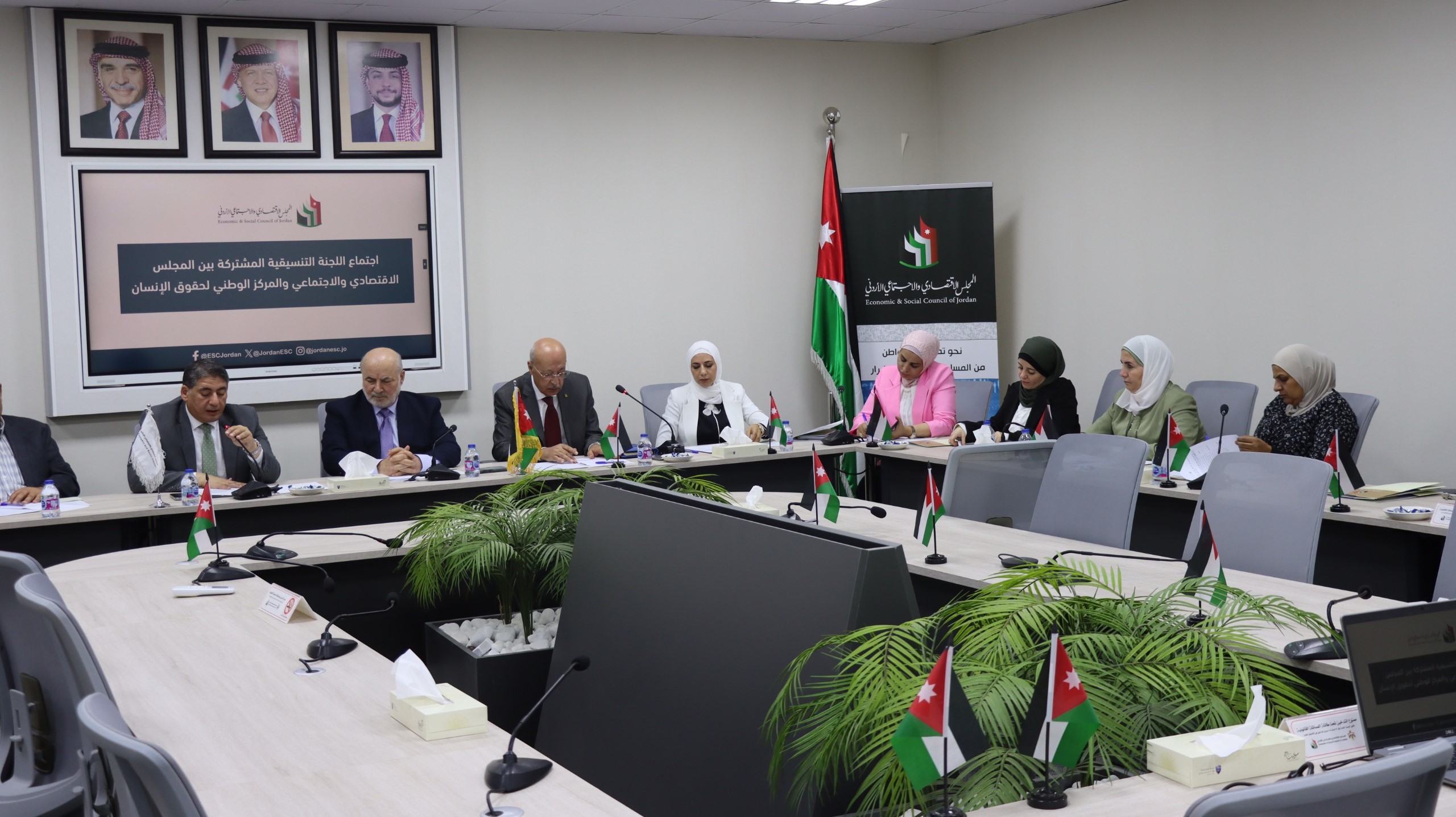
Amman, Oct. 12 (Petra) — The Economic and Social Council (ESC) and
the National Center for Human Rights (NCHR) met on Monday to
establish joint implementation mechanisms for recommendations
outlined in the NCHR’s annual report, aiming to translate them into
policy papers, specialized studies, and national dialogues focused on
economic and social rights.
The meeting addressed integrating priority recommendations across the
ESC’s six standing committees, establishing frameworks to monitor
execution, and developing quantitative and qualitative indicators to
measure impact regarding socio-economic challenges, including
unemployment and labor legislation.
ESC President Musa Shteiwi stated that although the council lacks
executive authority, it plays a key advisory role in shaping public
policy and legislation. He noted that economic issues such as
unemployment are intrinsically linked to human rights, requiring
targeted legislative and service-level interventions. Shteiwi added
that the ESC will address these priorities through its committees and
secretariat, with special attention to labor laws and women’s
economic participation.
NCHR Chief Commissioner Jamal Al-Shamayleh highlighted Jordan’s
institutional stability and economic achievements, emphasizing the
need for a balanced approach that builds on national progress while
addressing legislative and developmental gaps. He noted that the ESC
provides significant value to national efforts by aligning
investment, economic, and political priorities with human rights
principles.
ESC Secretary-General Nazeer Al-Awamleh affirmed that the meeting
follows up on the NCHR annual report, which is submitted to King
Abdullah II, constitutional authorities, and state institutions.
Al-Awamleh explained that the ESC’s study and policy teams have
mapped the report’s recommendations to the relevant committees to
produce actionable policy papers aligned with Jordan’s Economic
Modernization Vision and public sector reform programs.
The two sides agreed to maintain joint coordination to refine policy
priorities, enhance partnerships with national institutions, and
address pressingly needed protections for vulnerable groups,
including women, children, persons with disabilities, and
agricultural workers.
//Petra// AF