Jordan’s Q2 2026 GDP Expands 3.0%, Outperforming Regional Headwinds, International Forecasts
ENV-KUWAIT-SUSTAINABLITYKuwait strengthens environmental sustainability through strategic initiativesBy Zahra Al-Kadhmi

HLT-KUWAIT-SURGERYKuwait advances health sector with robotic, remote surgeryBy Mohammad Al-Moseb

Saudi Arabia’s Voluntary Carbon Market Fuels the Shift to a Low-Carbon

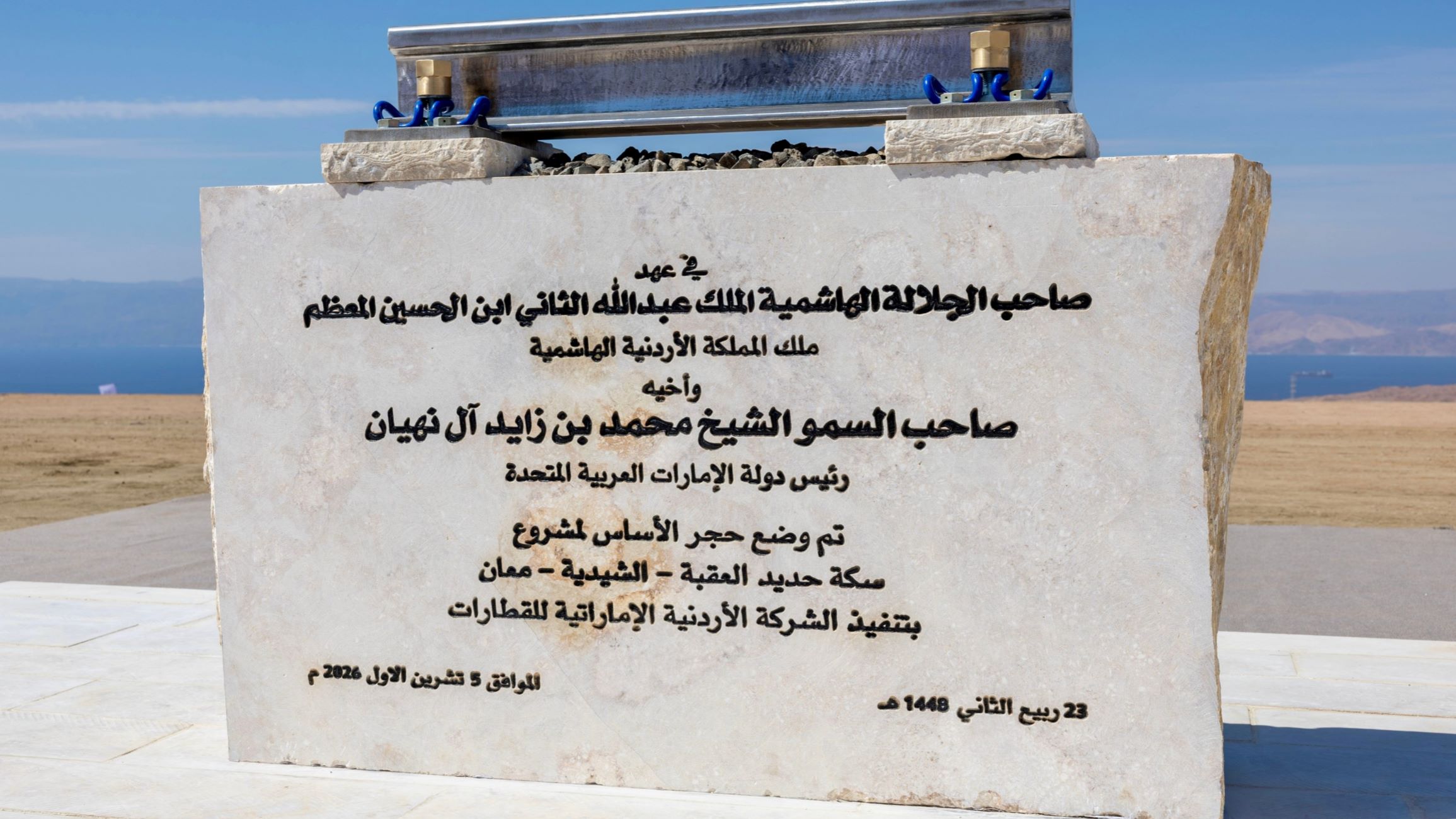
Aqaba, Oct. 19 (Petra) — A $2.5 billion railway project linking
Aqaba, Shidiya and Ma’an is expected to transport up to 16 million
tons of phosphate and potash annually and create approximately 5,000
jobs, according to Jordan-UAE Railway Company Chair Mohammad
Thneibat.
The project, being developed under a Jordanian-Emirati partnership,
aims to improve the efficiency of mineral transport, connect
production sites with Aqaba’s ports and attract local and foreign
investment. It is also expected to support Jordanian exports and
strengthen Aqaba’s position as a maritime and logistics gateway for
the national economy. The project is being developed alongside plans
to upgrade Aqaba’s ports and establish the Aqaba-Ma’an dry port.
During a visit to Aqaba on Monday, Prime Minister Jafar Hassan
stressed the importance of continuing to develop port infrastructure
and logistics services alongside the railway project to improve
freight handling, storage and transit trade, and strengthen Aqaba’s
position as a regional transport and logistics hub.
Thneibat told the Jordan News Agency (Petra) that the railway
represents a strategic investment that will enhance the
competitiveness of Jordan’s economy and support the transport, mining
and logistics sectors. He said the project will extend 403
kilometers, including 360 kilometers dedicated to phosphate and
potash transport routes and a 43-kilometer connection between Shidiya
and Ma’an. The railway is designed to transport 13 million tons of
phosphate and approximately 3 million tons of potash annually,
connecting key locations in Aqaba, Shidiya, Ghor Safi and Ma’an.
Thneibat said the project is expected to create approximately 5,000
jobs in southern Jordan, helping reduce unemployment and support
local economic development. He added that the railway will be
integrated with the Ma’an dry port project, strengthening connections
between production facilities, logistics centers and maritime
transport.
Regarding implementation, Thneibat said work had already begun with
the award of an initial contract worth approximately $10 million to
construct access roads to railway sites, tunnels and bridges in
preparation for the main construction phase. Major construction work
is expected to begin in early 2027 and take approximately five years
to complete.
Thneibat said the project’s economic benefits would extend to Aqaba,
Ma’an, Shidiya and eastern Amman, with potential future expansion
toward Iraq, Syria, Turkey and Gulf countries to establish an
integrated regional transport network. He noted that Aqaba would be
among the main beneficiaries, serving as the railway’s maritime
outlet and supporting port activity, logistics investment and wider
economic growth.
On ownership and operational sustainability, Thneibat explained that
the terms of the Jordanian-Emirati railway partnership are publicly
available and provide for ownership to transfer to the Jordanian
government after the agreement’s 30-year term, subject to possible
extension. He said the project would be handed over to the government
in good operational condition, allowing services to continue.
For his part, Aqaba Special Economic Zone Authority (ASEZA) Chair
Shadi Majali said the railway would strengthen integration between
Aqaba Port and production and mining areas while supporting the
development of a multimodal freight transport system.
Majali told Petra that the project’s significance extends beyond
transporting phosphate and potash to establishing an integrated
logistics network linking ports with industrial zones, storage
facilities and distribution centers. He said the network would create
opportunities to expand economic activities associated with trade and
transport.
Developing railway connections alongside logistics facilities and
infrastructure projects would also help Aqaba attract investment in
transportation, warehousing, cargo handling and supporting services,
while opening new opportunities for private sector participation, he
added.
Majali said the ASEZA is coordinating with relevant authorities to
develop the Aqaba-Ma’an dry port project, which would complement the
railway and extend its economic benefits to Ma’an and other southern
governorates.
He noted that shifting freight transport to rail could improve
efficiency, reduce certain logistics costs and make shipments more
reliable. Rail transport could also ease pressure on roads caused by
heavy trucks, improving road safety and helping preserve road
infrastructure.
Majali added that stronger connections between production areas and
Aqaba’s port would enhance the competitiveness of Jordanian exports
by improving supply chain reliability and providing more efficient
transport options. This would help companies manage their commercial
and export operations more effectively, he said.
He stressed that the ASEZA’s role includes creating a favorable
investment environment, coordinating with relevant stakeholders and
linking infrastructure development with economic opportunities to
diversify investment, increase value added to the national economy
and generate employment.
//Petra// AJ