
Jordan’s Q2 2026 GDP Expands 3.0%, Outperforming Regional Headwinds, International Forecasts
ENV-KUWAIT-SUSTAINABLITYKuwait strengthens environmental sustainability through strategic initiativesBy Zahra Al-Kadhmi

HLT-KUWAIT-SURGERYKuwait advances health sector with robotic, remote surgeryBy Mohammad Al-Moseb

Saudi Arabia’s Voluntary Carbon Market Fuels the Shift to a Low-Carbon

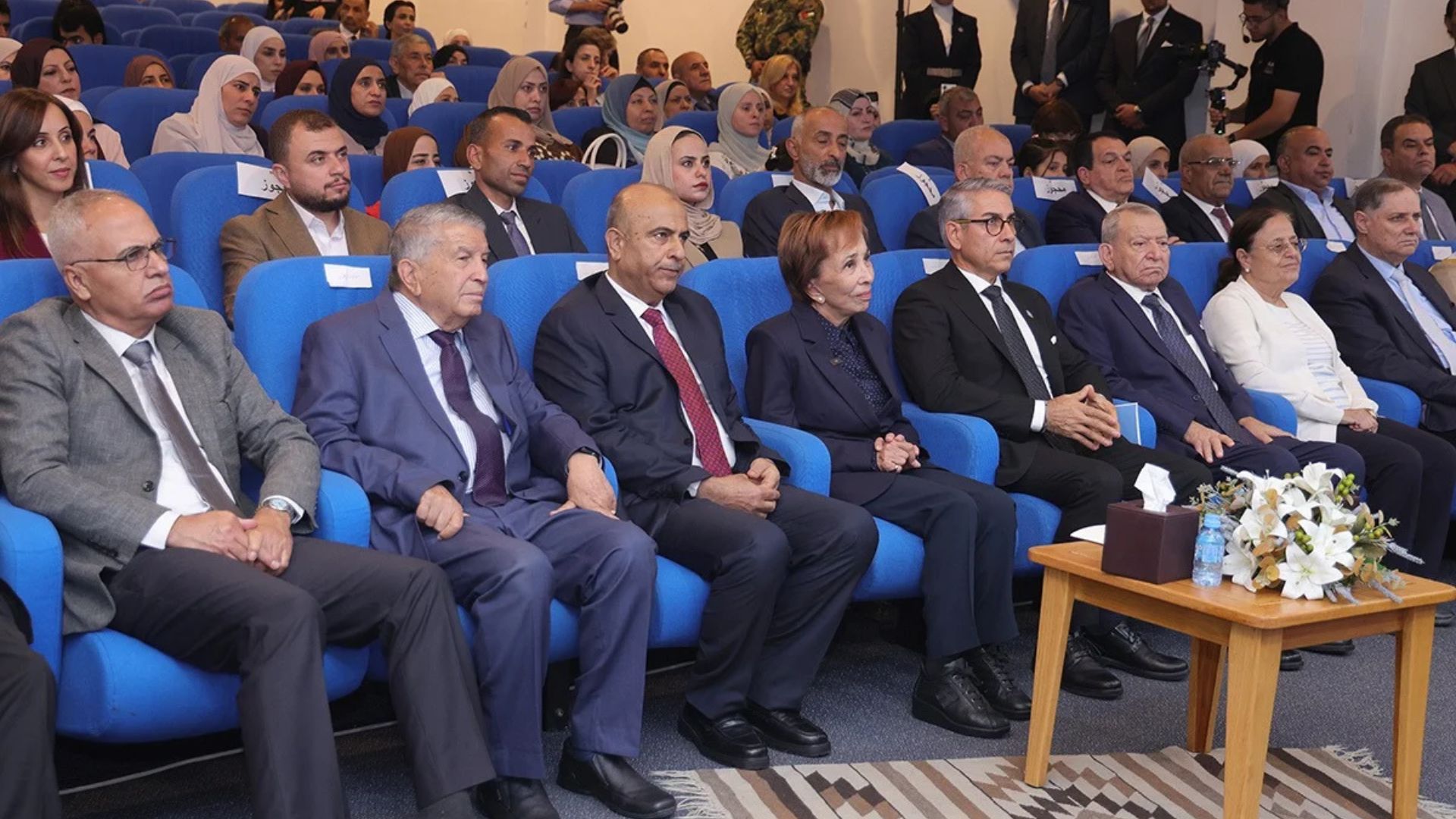
Amman, Oct. 25 (Petra) — Her Royal Highness Princess Basma bint
Talal, President of the National Alliance Against Hunger and
Malnutrition (NAJMAH), said on Sunday that World Food Day offers
great hope but also carries a responsibility to rethink how food is
produced, transported, and shared.
Speaking at a World Food Day 2026 event held under her patronage and
organized by the Food and Agriculture Organization of the United
Nations (FAO) under the theme “Innovate Today, Nourish Tomorrow,” the
Princess noted that innovation must drive improvements in people’s
lives, from access to opportunities and healthier diets to more
stable livelihoods. She stressed the importance of investing in
people as much as in technology and protecting the natural resources
on which food systems depend.
Princess Basma said millions worldwide suffer from hunger despite
sufficient food being produced to feed everyone, underscoring the
need to ensure it reaches those most in need. Hunger is not
inevitable, she said, but is shaped by the choices people make and
how they safeguard the resources entrusted to them.
Princess Basma noted that innovation extends beyond laboratories and
technology to combine science, new ideas, and the knowledge and
experience passed down through generations in rural communities.
Drought-resistant seeds, she said, will make no difference unless
women farmers can access and afford them.
She also mentioned the growing pressure on global and regional food
supplies from wars, conflicts and climate change, which directly
affect families and communities already struggling to meet their
basic needs.
Speaking on behalf of Agriculture Minister Saeb Khreisat, Ministry
Secretary-General Mohammad Hayari voiced Jordan’s commitment to
accelerating efforts to modernize its agricultural sector and
building more resilient agricultural and food systems through
innovation, technology, and strategic partnerships.
He outlined continuous national efforts to boost food security,
improve resource efficiency, and help farmers adapt to climate
challenges and market fluctuations.
Hayari said Jordan had taken several institutional steps to advance
food security, including establishing the Higher Council for Food
Security, chaired by the prime minister, adopting a national action
plan for 2025–2027, updating the national strategy in line with the
Economic Modernization Vision (EMV), launching a national food
security information management system covering 22 indicators, and
conducting a national survey to identify gaps and the groups most in
need.
He added that the 2026 Global Hunger Index ranked Jordan 48th out of
122 countries, up from 54th in 2025. The World Food Day theme is
particularly relevant to Jordan, he said, noting that innovation
encompasses scientific research, agricultural extension services,
value chain development and farmer empowerment.
Hayari also pointed to the sector’s economic performance, saying
agriculture recorded the highest growth rate among economic
activities in the first and second quarters of 2026, with growth
reaching 7.8 percent in the second quarter.
Agricultural exports rose 14 percent in the first half of the year,
while self-sufficiency exceeded 61 percent, with production surpluses
in 28 agricultural commodities.
He said the ministry launched Jordan’s first national food waste
index in December 2025, establishing a baseline of approximately 81
kilograms of food wasted per person to promote more responsible
consumption.
He also commended FAO, the World Food Program, farmers and workers
throughout the food supply chain for their contributions.
FAO Representative in Jordan Thair Yassin said approximately 645
million people worldwide, or 7.8 percent of the global population,
faced overlapping food-related challenges in 2025.
Meanwhile, 2.7 billion people could not afford a healthy diet, and
2.1 billion experienced food insecurity.
Despite its limited water resources, Jordan offers an example of
resilience, Yassin said, noting that the prevalence of
undernourishment fell from 17.9 percent in 2023 to 12.2 percent in
2025. Adult obesity rates also declined from 38.5 percent to 35.4
percent.
He said FAO’s programs in Jordan align with the EMV, noting the
Kingdom’s participation as a leading country among 191 nations in the
World Food Day celebrations in Rome on Oct. 16.
Jordan also presented agricultural investment opportunities at the
Hand-in-Hand Investment Forum, held from Oct. 13 to 16, and
participated in the From Seeds to Foods exhibition in Rome from Oct.
8 to 12.
With more than 733 million people worldwide continuing to suffer from
hunger, Yassin said, innovation is “no longer optional but
essential.” It extends beyond technology to include new partnerships,
traditional knowledge, community-based solutions, and smarter ways to
produce, process and consume food.
Investing in innovation today can help build more efficient,
inclusive, resilient and sustainable agricultural and food systems,
he said, supporting better production, nutrition, environmental
protection and quality of life while ensuring “no one is left
behind.”
The event featured a World Food Day Innovation Exhibition showcasing
solutions from across Jordan aimed at making agricultural and food
systems more sustainable and resilient.
Researchers, farmers, cooperatives, youth initiatives, women’s
associations and private-sector innovators presented practical
examples of how creativity and technology can address major
challenges facing agriculture and food systems.
The program also included a World Food Day drawing competition
organized in cooperation with the Ministry of Education and Human
Resources Development.
The competition invited school students from across the Kingdom to
express their views on food security, sustainable agriculture and
healthy eating through art.
Six winners were announced and honored for their creativity and
contributions to raising awareness of a more sustainable food future.
The event was organized in partnership with the Ministry of
Agriculture and national partners to highlight innovation’s role in
building sustainable agricultural and food systems. It was attended
by government representatives, development partners, academic
institutions, innovators, farmers, entrepreneurs, young people,
women’s associations and the private sector.
//Petra// HA