
Jordan’s Q2 2026 GDP Expands 3.0%, Outperforming Regional Headwinds, International Forecasts
ENV-KUWAIT-SUSTAINABLITYKuwait strengthens environmental sustainability through strategic initiativesBy Zahra Al-Kadhmi

HLT-KUWAIT-SURGERYKuwait advances health sector with robotic, remote surgeryBy Mohammad Al-Moseb

Saudi Arabia’s Voluntary Carbon Market Fuels the Shift to a Low-Carbon

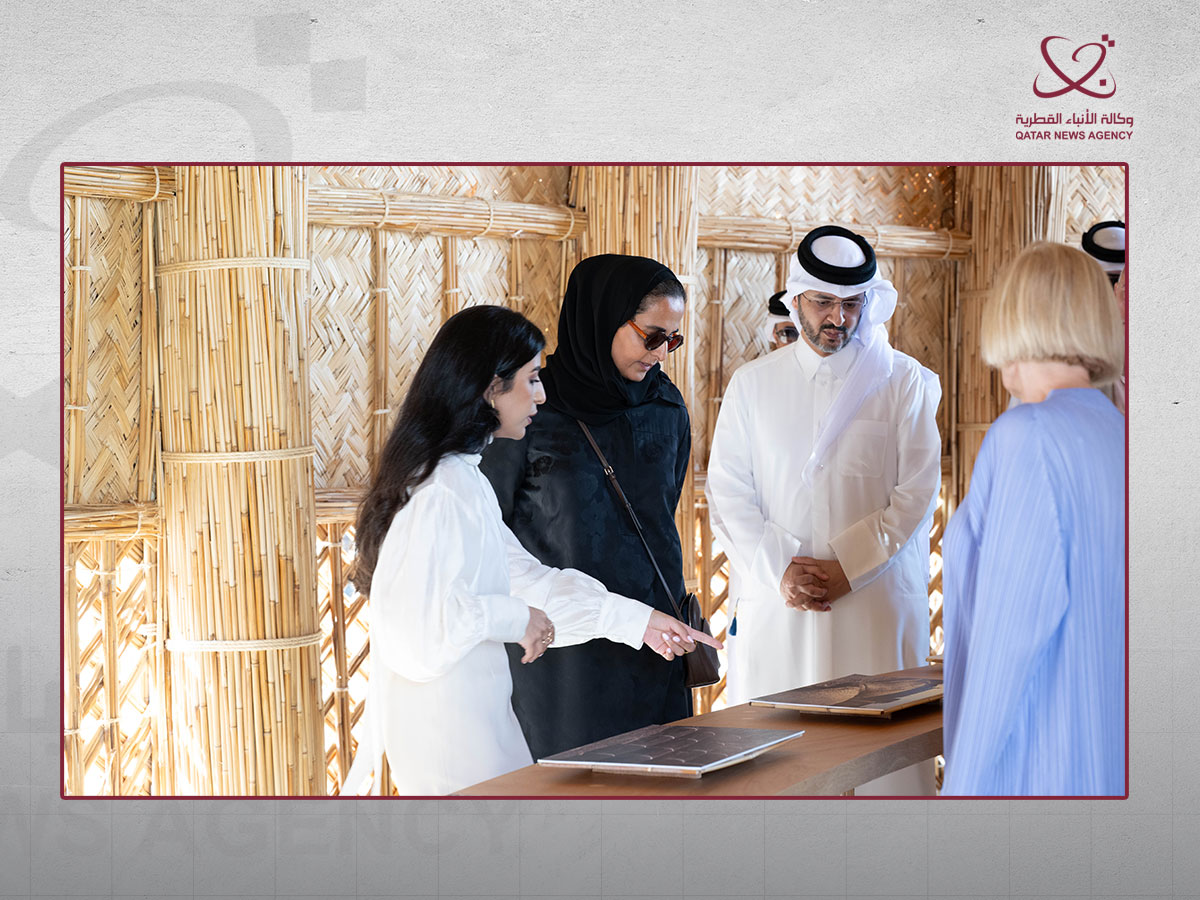
Doha, October 25 (QNA) – HE Chairperson of Qatar Museums (QM) Sheikha Al Mayassa bint Hamad Al-Thani on Sunday opened Beyti Beytak (My Home is Your Home), and exhibition exploring ideas of home, hospitality and belonging through architecture, art and design.
Organised by the future Art Mill Museum and on view until 29 May 2027, the exhibition is presented at the historic Fahad bin Ali Palace, marking the first time the 1953 landmark next to the Amiri Diwan has opened to the public. First presented at the 19th International Architecture Exhibition – La Biennale di Venezia in 2025, Beyti Beytak has been expanded for its presentation in Doha, that includes a new commission by Iraqi architect Ola Znad and archival research tracing Doha’s urban development.
Bringing together more than 40 architects, designers and practitioners from the Middle East, North Africa and South Asia (MENASA) and beyond, the exhibition looks at architecture as a social and cultural practice rooted in home, hospitality, collective care and shared responsibility. Across seven sections, visitors encounter architectural models, drawings, archival material, films and site-specific installations exploring communal places, from desert oases and sacred spaces to private residences and contemporary museums. Set within a palace that combines Art Deco and vernacular Qatari architecture, the exhibition places contemporary practice in conversation with Doha’s own built heritage.
At the centre of the Doha presentation is Souq Al Liqa, a new work by Ola Znad, who specialises in traditional, sustainable reed construction. Inspired by the communal role of women in the Ahwar, the marshes of southern Iraq, the installation honours the Marsh Arab women who have carried knowledge of weaving, dyeing, storytelling and hospitality across generations. Conceived as a living marketplace and cultural ecosystem, it will host public activities throughout the exhibition’s run.
Beyti Beytak brings together pioneering modernists, including Raj Rewal (India), Nayyar Ali Dada (Pakistan), Abeer Seikaly (Jordan) and Minnette de Silva (Sri Lanka), alongside contemporary architects and practices such as Marina Tabassum and Nabil Haque (Bangladesh), AAU Anastas (Palestine/France), Sameep Padora [sP + A] and Balkrishna Doshi, Vastu-Shilpa Foundation (India), DAAZ Studio (Iran), Ahmed Hossam Saafan (Egypt), Sumaya Dabbagh (Saudi Arabia), Diller Scofidio + Renfro (USA), and Meriem Chabani with New South & sOne (France). The exhibition also reflects on the legacy of Egyptian architect and urbanist Hassan Fathy and his commitment to vernacular forms, techniques and materials.
Catherine Grenier, Director of Concept, Art Mill Museum, said, “Beyti Beytak is a clear expression of what the Art Mill Museum will be: an institution that places the creativity of the MENASA region at the heart of a global conversation. Architecture, design and gardens are integral to our vision, and opening the doors of the Fahad bin Ali Palace for the first time allows the public to experience these ideas in one of Doha’s architectural treasures. Through its public programme and publication, the exhibition will continue to evolve throughout its run.”
Aurélien Lemonier, Senior Curator of Architecture, Design, and Gardens at the Art Mill Museum and curator of the exhibition, said, “After Venice, it is a privilege to bring Beyti Beytak home to Doha, where the idea of hospitality is lived every day. This presentation invites audiences to see architecture as an act of generosity and responsibility, from Ola Znad’s new commission to the archival history of Doha’s urbanisation. We hope visitors will leave seeing their own homes, neighbourhoods and city differently.”
The exhibition also marks the launch of Beyti Beytak: Architectures of MENASA, a new publication by the Art Mill Museum, edited by Sean Anderson and Virgile Alexandre. Bringing together critical essays, new research and project documentation, the book extends the exhibition’s exploration of architecture across the region, offering a lasting record of the projects on view and contributing to wider debates on contemporary practice, regional histories and the relationship between architecture and culture.
The exhibition is accompanied by an extensive public programme for schools, universities and families, running until May 2027. It begins today with an opening conversation bringing together architects, practitioners and contributors to the exhibition’s publication.
Over the coming months, school groups can take part in guided tours and hands-on workshops on home, hospitality and materials, while university students can join talks and studio sessions with exhibiting architects and the curatorial team. Families are invited to weekend activities inspired by the exhibition, and a dedicated series of craft demonstrations in weaving, dyeing and storytelling will bring Souq Al Liqa to life.
Beyti Beytak is co-curated by Aurélien Lemonier and Sean Anderson, assisted by Virgile Alexandre, Independent Curator, and Farah Al Sidiky, Art Mill Museum Assistant Curator, with a scientific committee comprising Catherine Grenier, Ibrahim M. Jaidah, Yasmeen Lari, Hafid Rakem and Raj Rewal. The exhibition is designed by Cookies, with visual identity by Gaggero Works. At the Fahad bin Ali Palace, it is presented alongside Wooden Doors of Qatar: From Storage to Story, organised with the Aga Khan Trust for Culture, and Atharna 2026, Qatar Museums’ annual archaeology exhibition, as part of QM’s Fall/Winter 2026 season. (QNA)