Jordan’s Q2 2026 GDP Expands 3.0%, Outperforming Regional Headwinds, International Forecasts
ENV-KUWAIT-SUSTAINABLITYKuwait strengthens environmental sustainability through strategic initiativesBy Zahra Al-Kadhmi

HLT-KUWAIT-SURGERYKuwait advances health sector with robotic, remote surgeryBy Mohammad Al-Moseb

Saudi Arabia’s Voluntary Carbon Market Fuels the Shift to a Low-Carbon

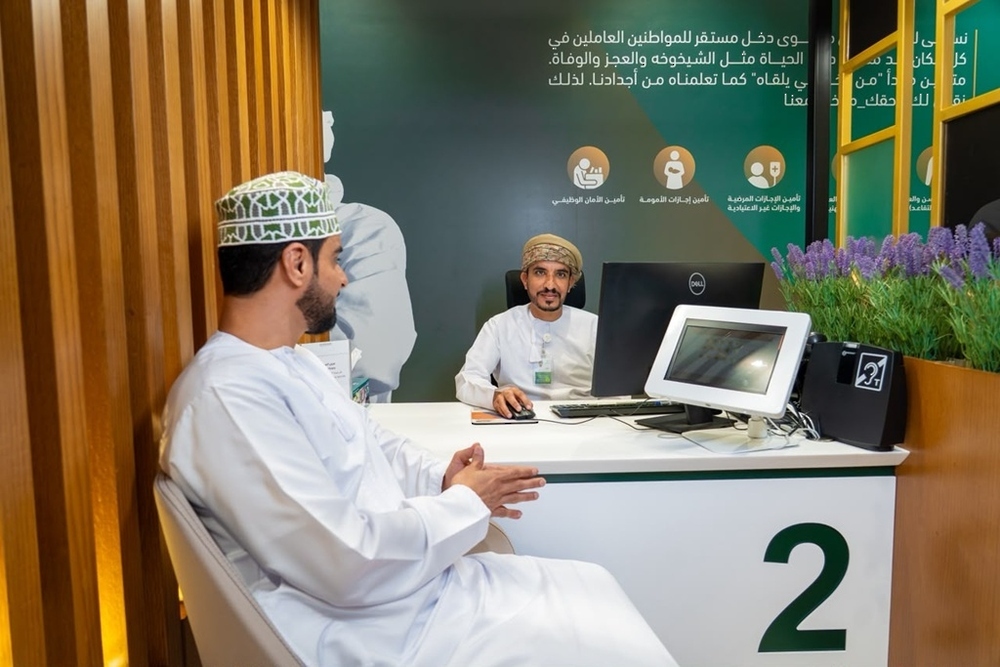
Oman Climbs Nine Points in 2026 Global Marsh Pension IndexMuscat, 26 Oct 2026 (ONA) — The pension system of the Sultanate of Oman has recorded progress in the 2026 Global Marsh Pension Index, achieving a nine-point increase in its overall score. Its overall classification advanced from Category C+ to Category B, placing the Sultanate of Oman 21st out of 55 systems covered by the index. The three sub-indices on which the index is based—adequacy, sustainability, and integrity—all registered improvement.The Sultanate of Oman was among five pension systems worldwide whose classification category improved in the 2026 edition. Its adequacy score was particularly notable, reaching Category A.Kawthar Khamis Al Bartamani, Director of Planning and Vision Follow-up at the Social Protection Fund, explained that the Global Marsh Pension Index is among the specialised international indices for evaluating retirement income systems. It provides a comparative reading of system performance across a broad range of indicators and criteria. She noted that the 2026 edition covered 55 pension systems worldwide, representing approximately 66 per cent of the global population. The index relies on more than 50 indicators distributed across three principal criteria: adequacy, with a weight of 40 per cent; sustainability, with a weight of 35 per cent; and integrity, with a weight of 25 per cent of the total criteria.She stated that the Sultanate of Oman joined the Global Marsh Pension Index (formerly the Mercer Index) for the first time in 2025, with the aim of evaluating its pension system according to international standards and determining the system’s position among countries worldwide. The significance of the index lies in the fact that it does not merely measure the volume of benefits. Rather, it takes an integrated view of the adequacy of pension income, the system’s capacity for long-term continuity, and governance, regulation, and the protection of participants’ rights. The final result therefore provides a multidimensional reading of the retirement system.She affirmed that the results reflect improvement at the level of the overall index and all its sub-criteria. The overall score for the Sultanate of Oman rose from 60.9 points in 2025 to 69.9 points in 2026, an increase of nine points, and the overall classification advanced from Category C+ to Category B, placing the Sultanate of Oman 21st out of 55 systems covered by the index. At the level of sub-criteria, she explained that benefit adequacy achieved 80.3 points, Category A, and 10th place globally. Sustainability recorded 54.7 points, Category C, and 28th place globally. The integrity criterion recorded 74.8 points, Category B, and 37th place globally.She stated that the improvement manifests in an integrated form. It was not linked to a single criterion but was reflected across the three dimensions through which the index measures the performance of the pension system.She indicated that benefit adequacy is among the fundamental pillars in evaluating any pension system, as it examines the system’s capacity to provide an appropriate level of income and protection for beneficiaries. The Sultanate of Oman’s result in this regard acquires additional significance because the adequacy criterion carries the highest weight in calculating the overall index. Reaching Category A therefore provides an important indication of the performance of the Omani system in this regard according to the index’s international methodology.She pointed out that it is important to view adequacy as part of a broader equation. Strong pension systems are those capable of achieving an appropriate level of protection while simultaneously preserving their sustainability and the efficiency of their governance over the long term.She explained that the report indicates that the improvement in the Omani index value was associated with an increase in the minimum pension as a proportion of wages, according to the data used in the measurement, reflecting a figure more representative of wages. The report also characterises the pension income system in the Sultanate of Oman as combining a basic pension represented by the senior citizens’ benefit and a national employment-based, income-linked system managed by the Social Protection Fund. It further notes that the system provides a strong replacement rate across different income levels, in addition to enjoying sound regulation and governance. This reading is important as it places the improvement in its objective context and links it to the elements on which the international methodology relies in evaluating the system.She added that the significance of this result lies in its comprehensiveness. The pension system cannot be evaluated by the magnitude of benefits alone, nor can sustainability be viewed in isolation from the level of protection beneficiaries receive. Reading the results across adequacy, sustainability, and integrity therefore grants a more balanced vision of the system’s performance and helps the Fund identify areas of strength while simultaneously determining areas requiring further development.She added that, from an institutional perspective, international indices represent an important measurement tool. They allow for an examination of achievements according to independent external standards and help transform results into inputs that can be utilised in future planning and development.She indicated that progress in classification represents a positive indicator, but it does not signify the end of the development path. Among the most important advantages of this type of index is that it does not merely demonstrate what has been achieved; it also identifies areas that can be addressed to improve the system’s performance in the future. The report pointed to a number of development opportunities for the Omani system, including enhancing the minimum support provided to lower-income senior citizens, expanding coverage, continuing to develop the level of information provided to participants, and aspects related to the age of benefit eligibility in light of rising life expectancies.She affirmed that these recommendations are read as opportunities for improvement within a continuous path of developing the system and achieving balance between the level of protection and long-term sustainability.She added that the value of international indices does not stop at ranking or classification. It lies in the tool they provide for measurement, comparison, and the identification of gaps and development opportunities. From a planning perspective, these results help in reading the impact of the transformations witnessed by the social protection system and in monitoring its evolution according to measurable indicators, in addition to benefiting from international practices and experiences.She indicated that the detailed analysis of the index results allows for an independent examination of each pillar. What has been achieved in adequacy requires preservation and enhancement, while what appears in sustainability and integrity offers areas for continuous work and development. The ultimate goal is not to improve the Sultanate of Oman’s position in international indices for its own sake, but to utilise these indices in supporting decisions that enhance the system’s efficiency and its capacity to achieve its social objectives sustainably.She affirmed that indicators and figures acquire their true value when they are reflected in people’s lives and their sense of security regarding their future. The result achieved by the Sultanate of Oman provides an international reading of the pension system’s trajectory and confirms that developing the social protection system is a continuous process based on reinforcing what has been achieved, capitalizing on improvement opportunities, and responding to economic, social, and demographic transformations.She explained that the path on which the Social Protection Fund is working is the building of a comprehensive and sustainable system capable of delivering protection to individuals across the various stages of their lives, preserving the rights of future generations, and achieving balance between the adequacy of benefits and their sustainability. The objective is not to reach a particular international classification, but rather for the development measured by these indices to become a tangible impact in people’s lives—a dignified life, greater confidence in the social protection system, and a sustainable capacity to fulfil its obligations towards current and future generations.— Ends/AH