
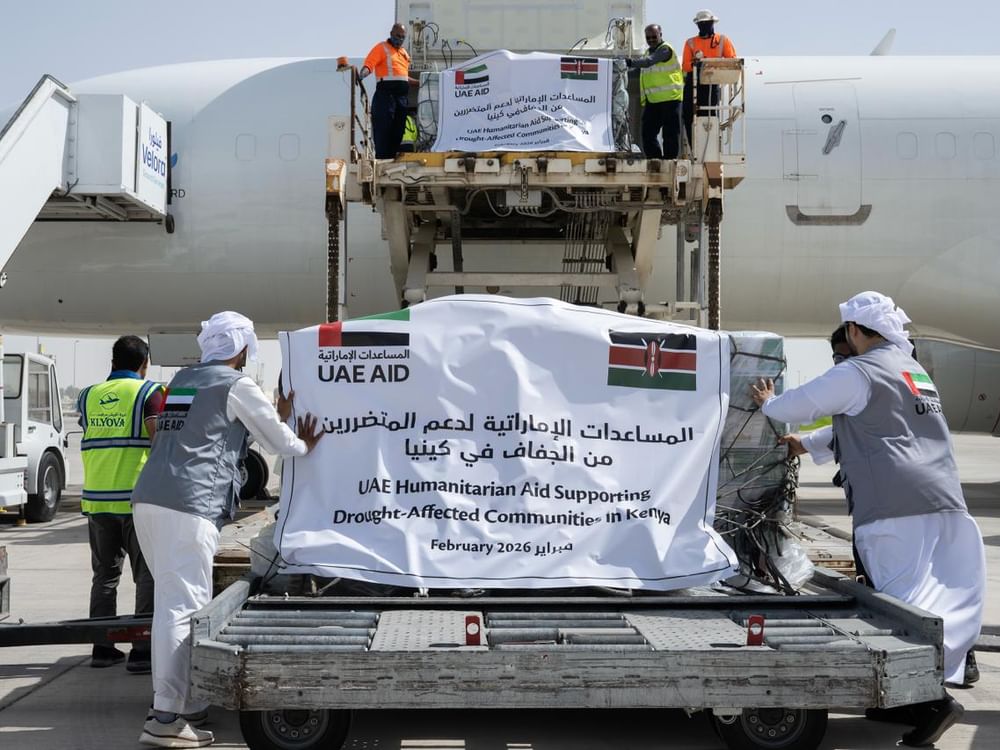
UAE sends 30 tonnes of food aid to support drought-affected communities in Kenya
UAE provides urgent relief to support flood-affected communities in Mozambique
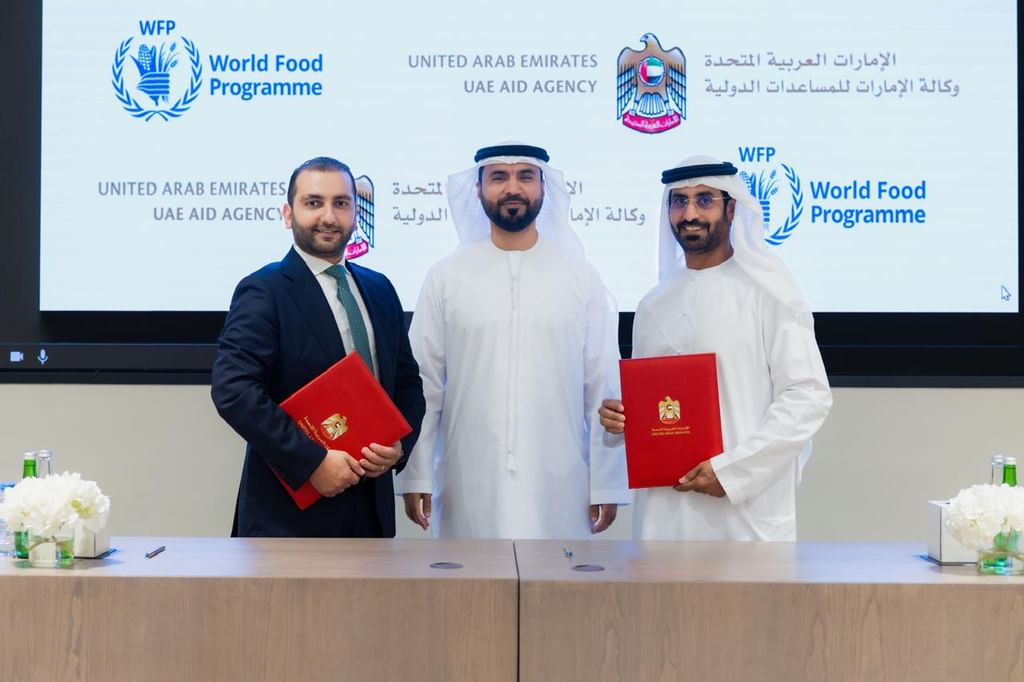
UAE signs cooperation agreement with UN World Food Programme to support humanitarian efforts in sudan
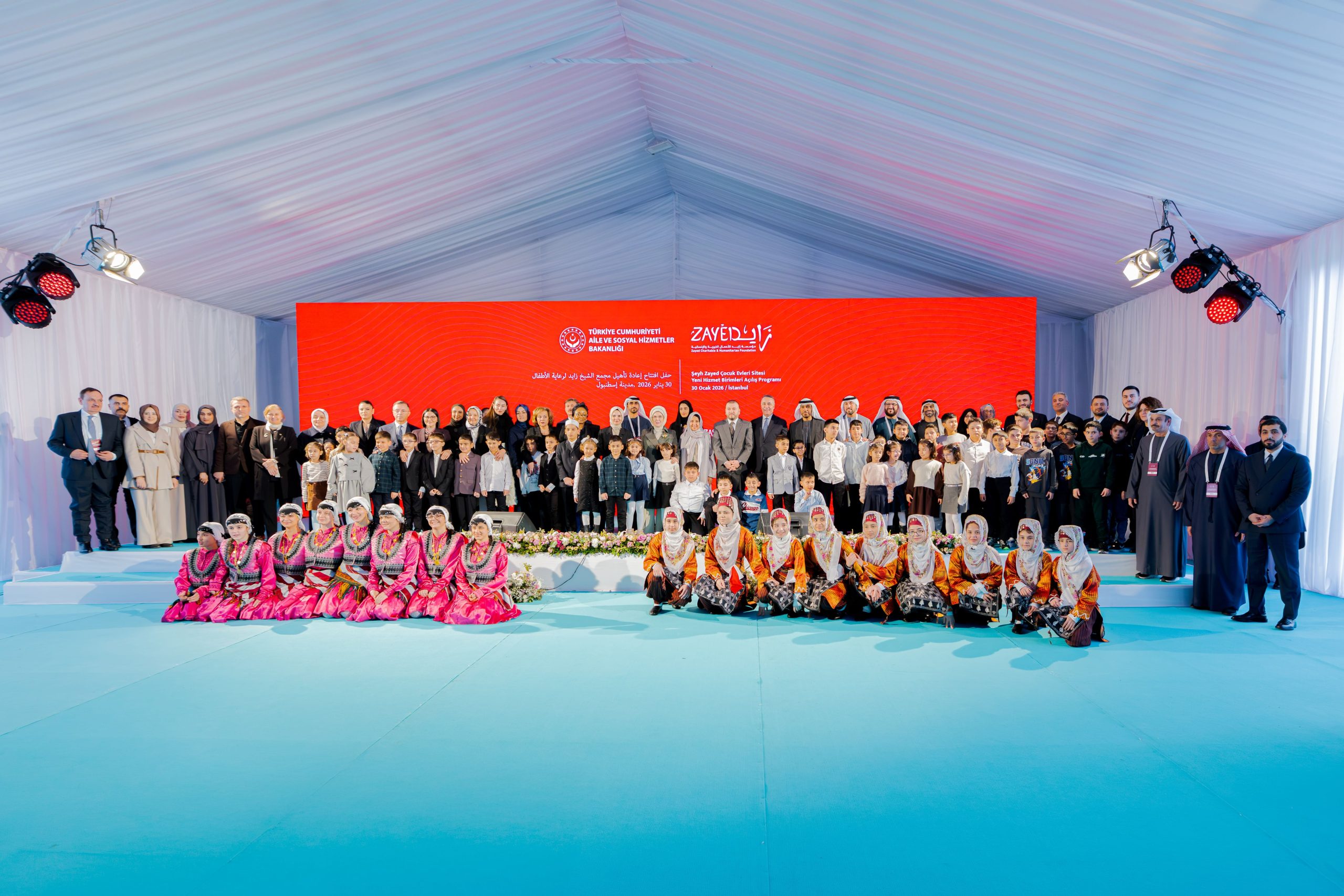
UAE reopens Sheikh Zayed Child Care Complex in Istanbul following comprehensive redevelopment

“Al-Qaffir”: An Omani Drama Exploring Human Struggles
Intertwined with Heritage and Destiny
Muscat, 23 Feb 2026 (ONA) — The Sultanate of Oman Television, as part
of its Ramadan 1447 AH / 2026 programming, presents the highly anticipated
Omani drama series “Al-Qaffir,” featuring an ensemble of
distinguished Omani performers. The series is adapted from Zahran Al Qasimi’s
acclaimed novel “Taghribat Al-Qaffir” or ‘The Water Diviner’ which
was awarded the International Prize for Arabic Fiction (IPAF) in 2023.
The narrative unfolds around the profound connection between humanity
and water, delving into the daily realities of a traditional Omani village
through the eyes of one man bound by destiny to pursue water’s hidden paths.
The titular role of “Al-Qaffir” — one who seeks water beneath the
earth — embodies a vocation that transcends profession, representing an
inherited bond with water from the moment of birth. This connection is
tragically forged through the loss of his mother, who drowned in a village well
while pregnant, and his father, who perished beneath the collapsed roof of an
ancient falaj irrigation channel. The series masterfully evokes the memory of
Oman’s aflaj systems “ancient irrigation system” and their integral role in
sustaining rural life, while weaving together the myths, legends, and oral
traditions that have long surrounded these vital waterways.
Directed by Syrian filmmaker Tamer Marwan Ishaq, with associate
directors Mukhlis Al-Saleh, Hussein Al-Baram, and Osama Mur’i, and executive
direction by Nahla Dourobi and Ali Abdo, the production brings together
seasoned talent and emerging performers making their television debut.
Samira Al-Wahaibi returns to the screen after an absence in the role of
“Kadhiya,” aunt to Abdullah Jamil (father of Salim Al-Qaffir),
portrayed by Mohammed bin Khamis Al-Maamari. The character of Al-Qaffir is
portrayed across two stages of life: child actor Firas Al-Rawahi embodies his
early years, while Mohammed bin Saleh Al-Siyabi assumes the role in young
adulthood. Abdulsalam Al-Tamimi delivers a compelling performance as Hamed, the
village elder, while Zakaria Al-Zedjali portrays Zuhair, the elder’s nephew,
whose machinations form the narrative’s central axis of conflict. The series
deftly interweaves its primary storyline with intersecting human struggles,
creating a rich tapestry of relationships and rivalries.
Noura Al-Farsi portrays Al-Qaffir’s mother, who meets her tragic end in
the village well during the opening episode while carrying her unborn son. The
orphaned child is raised by “Asia,” a village woman sensitively
portrayed by Maryam Al-Maamari. Khalid Al-Ma’ani completes the principal cast
as the village teacher, whose wisdom guides the community through times of
trial. Through its layered storytelling, “Al-Qaffir” illuminates
timeless human conflicts that resonate across generations while celebrating
Oman’s cultural heritage and enduring relationship with water.
In this context, director Tamer Marwan Ishaq elaborated on his creative
vision: “Approaching this project from a directorial standpoint, and
following a thorough engagement with the source novel, I reached an
understanding with the author to introduce additional narrative threads,
characters, and conceptual elements necessary to expand the work into a
30-episode dramatic arc. Our paramount concern throughout this process was
ensuring these augmentations served to amplify the novel’s essential truth
without diminishing its core integrity. The original work is extraordinary and
distinctive; one cannot overlook its innovative concept, its literary resonance
both locally and throughout the Arab world, nor the singular stature it has
attained in the realm of letters.”
He continued: “As a director, I find myself utterly captivated by
this novel. I make no secret of my wonder at its depiction of the Omani village
and the visually rich intersections teeming with detail that it encompasses. My
creative endeavour has been to achieve harmony between the dramatic adaptation,
the foundational narrative, the characters who inhabit it, and the prevailing
atmosphere. Through this process, I have discovered that life in the Omani
village is inextricably woven into documented events and occurrences reaching
far back into the depths of time.”
He further observed: “Works rooted in heritage hold particular
inspiration for me, guiding me toward discoveries about how past generations
shaped their existence to achieve profound harmony with their environment. This
is precisely what I encountered in ‘Al-Qaffir’ as its events progressively
unfold. I must also emphasize the remarkable cohesion among the entire creative
team; there exists a palpable synergy with the artistic vision that will
ultimately manifest on the screens of the Sultanate of Oman Television.”
Actor Abdulsalam Al-Tamimi, reflecting on his involvement, stated:
“I was honoured to be cast in ‘Al-Qaffir,’ adapted from Zahran Al-Qasimi’s
prize-winning novel ‘Taghribat Al-Qaffir,’ or ‘The Water Diviner’ which
garnered the International Prize for Arabic Fiction and achieved widespread
acclaim throughout Oman and the broader region. When we speak of the novel’s
resonance, we must acknowledge a crucial dimension: Oman’s cultural sphere has
truly absorbed its essence and engaged deeply with its conceptual framework.
This is far from a transient work of fiction; it represents a narrative
achievement that has firmly established itself in the consciousness of readers
and observers alike.”
He elaborated on his character: “I portray Sheikh Hamed, a figure
embodying the social order and its authoritative presence within village life.
His character inhabits a domain uniquely his own, a realm not to be
transgressed nor his station usurped. The novelist granted this character a
space to which others must defer, notwithstanding the discovered social
realities of village existence. Among his notable virtues, for instance, is his
eschewal of punitive measures, regarding all villagers as members of his
extended familial circle.”
Actor Samira Al-Wahaibi, who returns to the screen after an absence of
more than 18 years to portray the character Kadhiya, shared her reflections on
this artistic homecoming: “My participation in this production marks my
return following a hiatus spanning nearly two decades. The script gracing the Sultanate
of Oman Television screens represents a cultural heritage narrative of profound
significance, authentically capturing the essence of the Omani village in all
its timeless, intricate detail. I find myself immeasurably enriched by the
character of Kadhiya, who transported me into the heart of the traditional
clay-built neighborhood. I developed an intimate connection with her precisely
because she dwells among her people, devoting her entire existence to nurturing
the orphaned child Al-Qaffir, consecrating her life to his wellbeing.”
She continued, her voice carrying the weight of artistic conviction:
“What particularly captivated my artistic sensibilities is the masterful
interconnectedness binding the characters within this narrative tapestry.
Consider, for example, a scene portraying their momentary discord, only to
encounter them later in an entirely different context—one animated by fraternal
social bonds that transcend earlier tensions, whether gathering around a
communal meal or engaging in earnest dialogue concerning village affairs. This
nuanced portrayal reflects life’s authentic complexity.”
She elaborated with evident admiration: “Director Tamer Ishaq has
accomplished the remarkable feat of completing this ambitious production within
an exceptionally compressed timeframe, demonstrating his consummate skill in
orchestrating a professional ensemble with efficiency and vision. We must also
acknowledge with genuine enthusiasm the young actors of the emerging
generation, who have proven their mettle within this dramatic work, delivering
their roles with exceptional maturity and skill. Their performances herald a promising
constellation of distinguished artistic talents destined to illuminate Oman’s
cultural firmament in the years to come.”
Actor Mohammed bin Khamis Al-Ma’amari offered profound insights into his
portrayal of Abdullah in the series Al-Qaffir, describing a character that
transcends conventional dramatic representation. “When I first encountered
the script, I recognized that Abdullah is far more than a mere father figure—he
embodies living memory itself, plunging into the depths of human reality while
walking upon the earth. This character carries within his being the accumulated
history of an entire family, engaged in perpetual struggle with a society
governed by authority, immutable customs, and the shadow of fear.”
He continued, illuminating the nuanced dimensions of his performance:
“My embodiment of Abdullah—father to Salim Al-Qaffir—gives voice to an
intensely intimate human experience. Here is a man who lost his wife to
drowning in a village well, thereby losing his life’s companion, yet who
refused to permit himself to collapse before his son’s eyes. I constructed the
character around an architecture of internal silence and the fear residing
within a father’s breast, navigating the sensation of profound oppression when
his rightful claims are stripped away and he is compelled to labour under
injustice—all while carefully concealing truth from his son as an act of
protection.”
Al-Ma’amari acknowledged the significant contribution of director Tamer
Ishaq to his artistic process: “Working with Director Ishaq proved
instrumental in my approach to this character. His calm demeanor in
collaboration and meticulous attention to the smallest details created space
for a performance marked by authenticity rather than artifice, allowing the
emotional truth of Abdullah’s journey to emerge organically.”
Reflecting on the source material’s broader significance, he observed:
“The novel transcends being merely a narrative about water or loss—it
serves as a mirror reflecting an entire world. It illuminates the Omani
people’s relationship with their land, with the ancient aflaj irrigation
systems, with the perennial fear of drought, and with the structures of social
authority within the traditional neighborhood. The work carries profound
ethical and human dimensions that resonate universally, making readers feel as
though these characters resemble themselves or those they hold dear.”
Actor Mohammed bin Khalfan Al-Siyabi offers profound insights into his
portrayal of Al-Qaffir in the post-childhood stage, revealing a character whose
dimensions transcend conventional dramatic interpretation. “In my
understanding, Al-Qaffir in his essential nature does not struggle with drought
so much as he struggles with meaning itself. Water—as I interpreted it within
the written text—transcends its function as a mere resource for survival; it
becomes the embodiment of identity and certainty. Salim is not simply a man
searching for water; he is a human being attempting to justify his existence in
a world fundamentally incapable of perceiving what he perceives.”
He continued, his words carrying the weight of deep artistic
contemplation: “When I began approaching this character, I recognized that
his conflict is not dramatic in the conventional sense but rather represents an
eternal, almost metaphysical struggle. He inhabits a state of subtle alienation
because he alone hears the earth’s call while others perceive only its silence.
This profound disparity between individual perception and collective
consciousness generates within him a persistent, unresolved tension. Do I trust
what I feel, or do I surrender to what everyone sees? This existential question
guided my approach to Salim as a sensitive being rather than merely a man
defined by his profession. I came to see him as one carrying a gift resembling
mystical intuition, possessing an almost spiritual relationship with the earth,
as if an unheard dialogue perpetually flows between them.”
Al-Siyabi elaborated on his artistic methodology with remarkable candor:
“On a personal level, I summoned moments from my own life when I believed
in something beyond others’ perception. Salim draws strength from his faith yet
remains vulnerable to doubt like any human being. Regarding performance
technique, I deliberately chose to render the conflict internally rather than
through spoken expression. I worked extensively on stillness because stillness,
in my artistic conviction, represents the highest degree of emotional fullness.
I imbued the body with an invisible weight, as if a perpetual question rests
upon the shoulders. The gaze does not merely observe the surface but transcends
it, searching for hidden layers of reality beneath the visible. Even the voice
I deliberately modulated to remain low and unostentatious, recognizing that Salim’s
essential need is not to convince others but to convince himself. In numerous
moments, I permitted silence to articulate what words cannot, for silence
sometimes carries greater truth than speech.”
He affirmed with quiet conviction: “I believe the character’s
enduring strength lies not in shouting to prove its existence, but in patient
listening and waiting for the water to speak on its behalf. Ultimately, I
perceive that Salim does not merely discover water—he discovers the legitimacy
of his own existence. Every drop of water emerging from the earth constitutes,
in its essence, an acknowledgment that his intuition was no illusion and his
struggle was not in vain.”
Actress Noura Al-Farsi offered profound reflections on her portrayal of
Maryam, mother of Al-Qaffir, describing a character conceived as the embodiment
of enduring pain. “My role in this work manifests as Maryam, the bearer of
anguish, she who meets her fate drowning in the well—an artistic experience
entirely new to me. This character was afflicted with relentless migraine,
enduring events and reversals that ultimately conduct her toward death.”
She added, her words resonating with artistic conviction: “I felt profound
harmony with the character entrusted to me, striving earnestly to achieve
tangible authenticity in my portrayal. The role of Maryam is by no means
transient; it carries significant artistic dimension, for despite her early
departure from the narrative, her presence endures as an indelible influence
throughout.”
Offering a broader cultural perspective on the work’s significance,
Mohammed bin Abdullah Al-Ajmi, Chairman of Oman Cinema Society, delivered
incisive observations on the production’s place within Omani cultural
expression: “Within the Omani cultural landscape—long distinguished by its
social equilibrium and profound historical depth—transformations are rarely
perceived as abrupt disruptions, but rather as gradual trajectories shaped
organically through memory, narrative tradition, and literature. It is
precisely here that the novel “Taghribat Al-Qaffir” or ‘The Water Diviner’
acquires its singular importance. It stands as a distinguished literary
achievement capable of capturing these invisible transformations and transmuting
them into profoundly human narrative that transcends mere storytelling,
contemplating humanity’s essential relationship with place, time, and
collective memory.”
He continued, his analysis illuminating the work’s broader significance:
“The novel, through its poetic language and cohesively wrought symbolic
architecture, succeeds in transforming local particularities into a bridge
toward universal human questions extending far beyond geographical boundaries.
Thus, the ancient aflaj irrigation systems, the villages, and the eloquence of
daily silence emerge as vibrant narrative elements, not merely static backdrops
to human drama. The series likewise achieves the remarkable feat of
transforming the Omani setting into an independent visual protagonist, liberated
from tourist clichés or superficial folkloric imagery. It presents the Omani
village as a richly textured dramatic space encompassing profound human
narratives and silent internal transformations of deep and lasting
impact.”
He concluded with an assessment of the work’s cultural significance:
“This production, in both its literary source and dramatic realization,
represents far more than a successful artistic endeavour. It establishes the
foundation for a mature Omani visual discourse founded upon contemplation and
uncompromising authenticity, affirming that drama can extend organically from
literature rather than merely substitute for it.”
Writer Abdullah Al-Shuaibi offered incisive observations on the
adaptation of literary works for screen, emphasizing the significance of
transforming Omani novels into compelling television productions with adequate
creative and institutional support. “This experience,” he noted,
“demonstrates the considerable potential residing within our literary heritage
for thoughtful television adaptation. I believe Omani drama requires a
departure from conventional approaches—a fundamentally different mindset in
selecting content capable of genuinely attracting viewers. Omani literary
novels are abundant and remarkably diverse in their conceptual frameworks;
adapting them for television is not merely feasible but increasingly
necessary.”
He continued, highlighting the singular achievement of the source
material: “The novel Taghribat Al-Qaffir by Omani writer Zahran Al-Qasimi
garnered the International Prize for Arabic Fiction and multiple translations
into world languages, standing as a crowning achievement within Omani literary
accomplishment. In recognition of this distinction, it has been adapted into a
television series derived faithfully from the novel itself, bearing the same
title, and now reaching Omani and international audiences during this Ramadan
season.”
Al-Shuaibi elaborated on the broader implications for Omani dramatic
production: “What Omani drama urgently requires is an intellectual
framework that diverges from traditional patterns in selecting works capable of
drawing viewers, while simultaneously advancing fresh ideas—as is customary
elsewhere—to present productions reflecting contemporary thought. After all, we
inhabit the first quarter of the twenty-first century; there is no impediment
to allowing both inherited wisdom and modern perspectives to share space within
Omani drama, not confined to Ramadan programming but extending throughout the entire
annual cycle.”
He affirmed the wealth of material awaiting adaptation: “Omani
literary novels are numerous, encompassing diverse ideas, visions, and
philosophical perspectives. Adapting them for television is not only feasible
but necessary and significant. What ultimately appears on screen should emerge
as a new and independent creation regardless of its source material, conceived
with a mindset that does not merely extend those literary works but builds
thoughtfully upon them. This approach allows imagination, visual imagery, and
conceptual frameworks to intersect dynamically, producing compelling and
distinctive productions.”
Al-Shuaibi observed that Oman possesses numerous short stories and
novels meriting attention and transformation into visual works through
sensitive television adaptations. Such adaptations should utilize literary
works as entry points for engaging with television’s distinct contextual
requirements, ensuring suitability for what will be presented visually to
audiences across television platforms, and potentially cinematic venues as
well. Literary writing—particularly narrative and novelistic forms—conveys
worlds suspended between reality and imagination through descriptive language,
deepening its vision of characters, places, and temporal dimensions. Whether
through chronological framing or transcending time through fantasy applicable
across ages, literature offers readers an imagined vision that, through these
intricate details, shapes each recipient’s unique imaginative experience. The
challenge and opportunity lie in translating this singular imaginative
encounter into a shared visual language that honours its source while speaking
effectively to contemporary audiences.
Children’s literature specialist Fatma Said Al-Zaabia offered profound
reflections on the adaptation of Taghribat Al-Qaffir, articulating a vision of
literary transformation that extends far beyond conventional adaptation.
“The aesthetic achievement in transmuting this novel from literary text into
dramatic discourse,” she observed, “operates on a plane far exceeding
mere narrative translation. It establishes the work as a foundational source
within the creative industries, contributing to a broader cultural
economy.”
She continued, her analysis illuminating the production’s deepest
significance: “I find that the most resonant anchor point granting this
adaptation its profound human dimension resides in the presence of the child
Al-Qaffir, who emerges as a symbolic vessel embodying continuity within Omani
dramatic expression. Those responsible for the series chose neither to excise
nor to circumvent this essential element of the novel; rather, they
demonstrated unwavering faith in featuring a young performer who exhibited
remarkable capacity to absorb and transmit the complex meanings embedded within
the work. His performance conveyed significance transcending mere craft,
embodying the rising generation’s capacity to comprehend intricately layered
situations and navigate them with awareness and emotional discipline. In
moments of tension, fear, and anticipation, he appeared capable of reading
subtle signals, transforming anxiety into focused attention—rendering childhood
itself a lens through which society may be understood anew.”
She elaborated on the production’s broader implications for cultural
development: “I perceive this work, through its representation of
childhood consciousness, as approximating an implicit curriculum—the portals of
creative industries and knowledge economy toward shaping tomorrow’s human
being. The child discovers his intrinsic capabilities within authentic cultural
contexts where he assumes significant representational responsibility, thereby
reorganizing his consciousness of self, his participation, and his cultural and
societal presence. What the work achieved through the image of the child
Al-Qaffir constitutes nothing less than a successful model for identifying,
nurturing, and presenting talent to society at its most exalted station.”
She concluded by situating the production within Oman’s developmental
vision: “I find this meaning aligns harmoniously with the human and
society pillar of Oman Vision 2040, which emphasizes an effective system for
creativity and innovation contributing to knowledge economy construction. When
a work presents a child capable of bearing meaning and symbol, it does not
merely showcase individual talent but gestures toward a developmental pathway
susceptible to generalization: through early discovery, sustained training,
supportive environments, and access to professional platforms. This production
thus offers not only entertainment but a blueprint for cultural
cultivation.”
Thus, the
transformation of the novel into a television series becomes an integral
component of the cultural and creative industries, reimagining heritage and
identity within a national product broadcast through official channels, thereby
amplifying culture’s resonance within society and reinforcing investment in the
human being as both the ultimate objective of development and the essential
instrument of the knowledge economy.
Writer
Mohannad Al-Aqous, a distinguished Syrian literary figure residing in the
Sultanate of Oman, offers incisive observations on the production’s deeper
significance, noting that the treatment of childhood allows the recipient to
apprehend the psychological foundations that subsequently animate and explain
character behaviour. He affirms that the presence of a child, with instinctive
emotional authenticity before the camera, creates an aesthetic challenge that
elevates the work’s overall artistic standard.
He elaborates
with compelling literary reference: “Can we forget the boy’s character in
Ernest Hemingway’s The Old Man and the Sea? Who among us did not cherish the
child’s role in Hanna Mina’s The End of a Brave Man? The examples
abound—immortal literary and dramatic masterpieces whose protagonists were
children, whether the child remained a child throughout the narrative or grew
to maturity as the pages advanced, carrying us through their transformative
journey.”
Al-Aqous
situates this production within Oman’s distinctive cultural landscape:
“The Sultanate of Oman stands among the world’s most significant nations
in preserving cultural specificity, evident clearly in the Omani individual’s
profound susceptibility to environmental influences from earliest childhood.
Consequently, narrative treatment of the childhood stage becomes not merely
artistic choice but professional imperative, enabling us to grasp the narrative
thread from its primary source and trace its development through
consciousness.”
He elucidates
the director’s crucial role: “Here emerges the director’s essential
contribution—presenting a technically accomplished image without violating
childhood’s spontaneity or the authenticity of its emotional expression,
thereby attracting the recipient toward a vision that contains both the
imagination of dreams and the reality of foundational events. This delicate
balance distinguishes the work.”
Al-Aqous concludes by situating the
production within broader cultural policy: “As we celebrate and take pride
in Taghribat Al-Qaffir’s success as a novel, we must equally appreciate the
Ministry of Information’s role in encouraging the extension of magnificent
Omani novels into wider life through radio and television production. This
initiative establishes a unique and distinctive cultural phenomenon in which
both cultural elite and general public participate equally, democratizing
access to literary heritage while preserving its essential integrity.”
— Ends/AG/KH