Jordan’s Q2 2026 GDP Expands 3.0%, Outperforming Regional Headwinds, International Forecasts
ENV-KUWAIT-SUSTAINABLITYKuwait strengthens environmental sustainability through strategic initiativesBy Zahra Al-Kadhmi

HLT-KUWAIT-SURGERYKuwait advances health sector with robotic, remote surgeryBy Mohammad Al-Moseb

Saudi Arabia’s Voluntary Carbon Market Fuels the Shift to a Low-Carbon

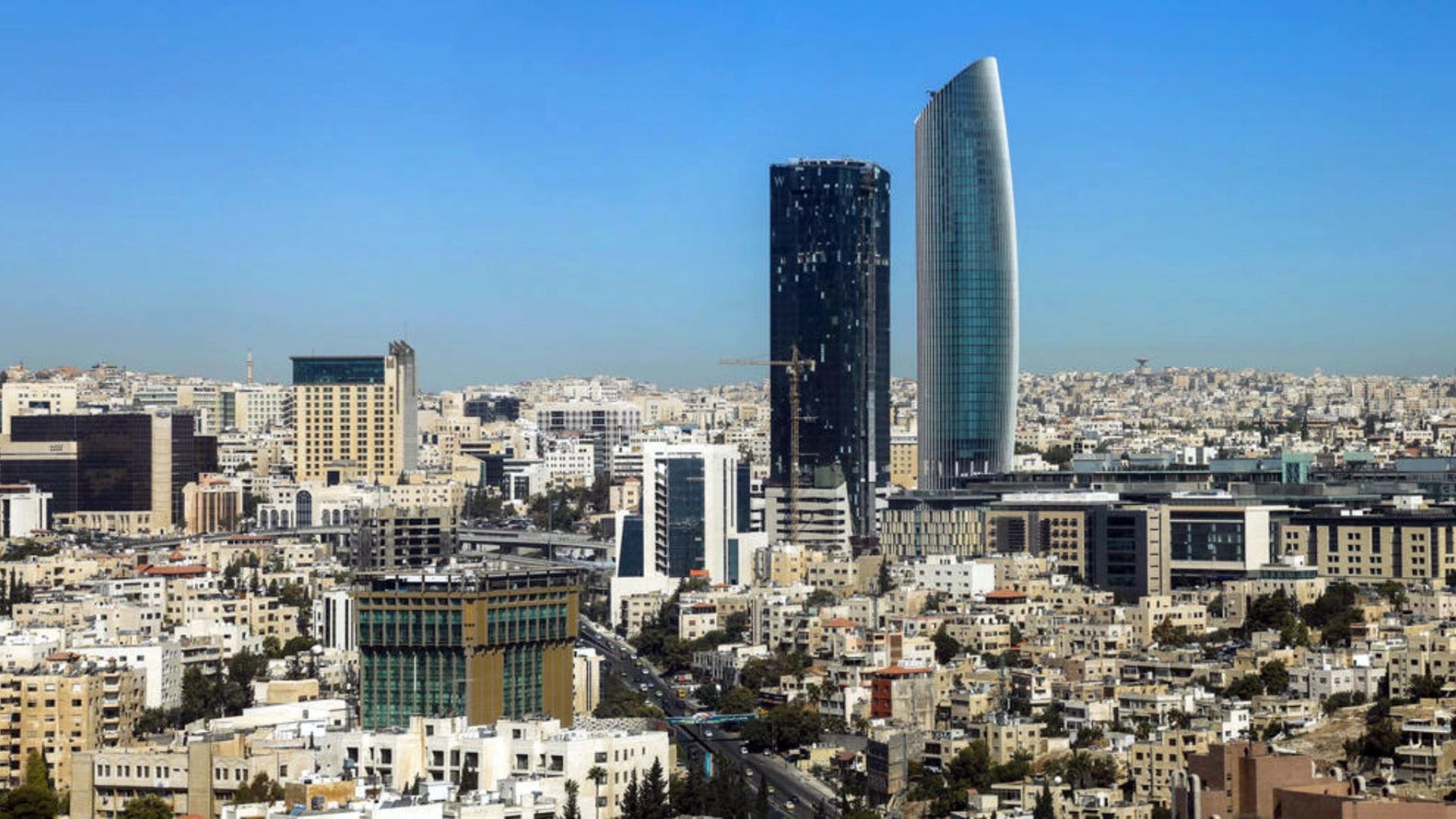
AMMAN, Oct. 25 (Petra) – Amid a volatile regional landscape marked by
supply chain disruptions, soaring freight rates, and heightened
geopolitical uncertainty, Jordan’s economy is delivering a clear
message of stability. Latest economic indicators reveal that the
Kingdom’s real gross domestic product (GDP) grew by 3 percent in the
second quarter of this year–up from 2.8 percent in the corresponding
period last year–outperforming projections set by international
financial institutions.
Far from being a stroke of passive luck, this acceleration reflects
the structural adaptability of Jordan’s productive sectors and a
series of proactive government measures designed to buffer the
domestic market against external shocks. Anchored by a controlled
inflation rate of 2.26 percent and backed by robust foreign exchange
reserves, the national economy is steadily advancing along the
roadmap outlined in the Economic Modernization Vision.
The narrative behind the numbers reveals a structural shift toward
high-value domestic production. Leading the momentum, the
manufacturing sector expanded by 6.2 percent in the second
quarter–more than double the overall macroeconomic growth rate.
Accounting for 17.2 percent of real GDP and contributing 1.04
percentage points to total growth, industrial output has proven to be
the primary engine of economic momentum.
Simultaneously, the agricultural sector surged by 7.8 percent,
contributing 0.34 percentage points to GDP. This agricultural
expansion has provided a critical safety net, fortifying national
food security and protecting domestic markets from unpredictable
global food supply chains. Other key contributors included real
estate activities at 12.2 percent of GDP, public administration and
defense at 7.9 percent, wholesale and retail trade at 7.1 percent,
alongside notable growth in electricity (5 percent) and water supply
(4.1 percent).
Economic analysts emphasize that these figures underscore a resilient
monetary and fiscal architecture capable of navigating regional
instability.
Investment expert Khalid Al-Rababa’h noted that achieving 3 percent
real growth while containing inflation reflects high international
confidence in Jordan’s sovereign credit outlook. He highlighted that
strong performance in manufacturing and agriculture directly enhances
the export competitiveness of Jordanian products while safeguarding
essential supply lines.
Dr. Ala’a Al-Bashayreh, Professor of Economics at the Hashemite
University, pointed out that manufacturing outstripping general
growth signals significant potential for domestic value addition and
import substitution. To sustain this trajectory, Al-Bashayreh argued,
investment incentives must remain targeted toward labor-intensive,
high-value industries that generate tangible employment opportunities
for Jordanian youth.
Adding to the perspective, economic analyst Wajdi Makhamreh observed
that while macroeconomic stability has been successfully maintained,
sustained long-term resilience will depend on supporting small and
medium-sized enterprises (SMEs), diversifying trade corridors, and
ensuring that gains in the productive sectors translate into enhanced
purchasing power across households.
As Jordan continues to implement its strategic major projects, the Q2
performance stands as evidence that the Kingdom’s economic
fundamentals remain solid, adaptable, and poised for sustainable
growth.
//Petra// AA