Saudi Arabia’s Voluntary Carbon Market Fuels the Shift to a Low-Carbon
Under UAE President’s directives, UAE launches urgent relief response for Ghana flood victims
Combating Desertification and Drought: Qatar a Model in Preserving Natural Resources, Establishing Environmental Stability
UAE allocates US$30 million for emergency humanitarian response in El Obeid, calls for civilian protection, safe humanitarian aid access in Sudan

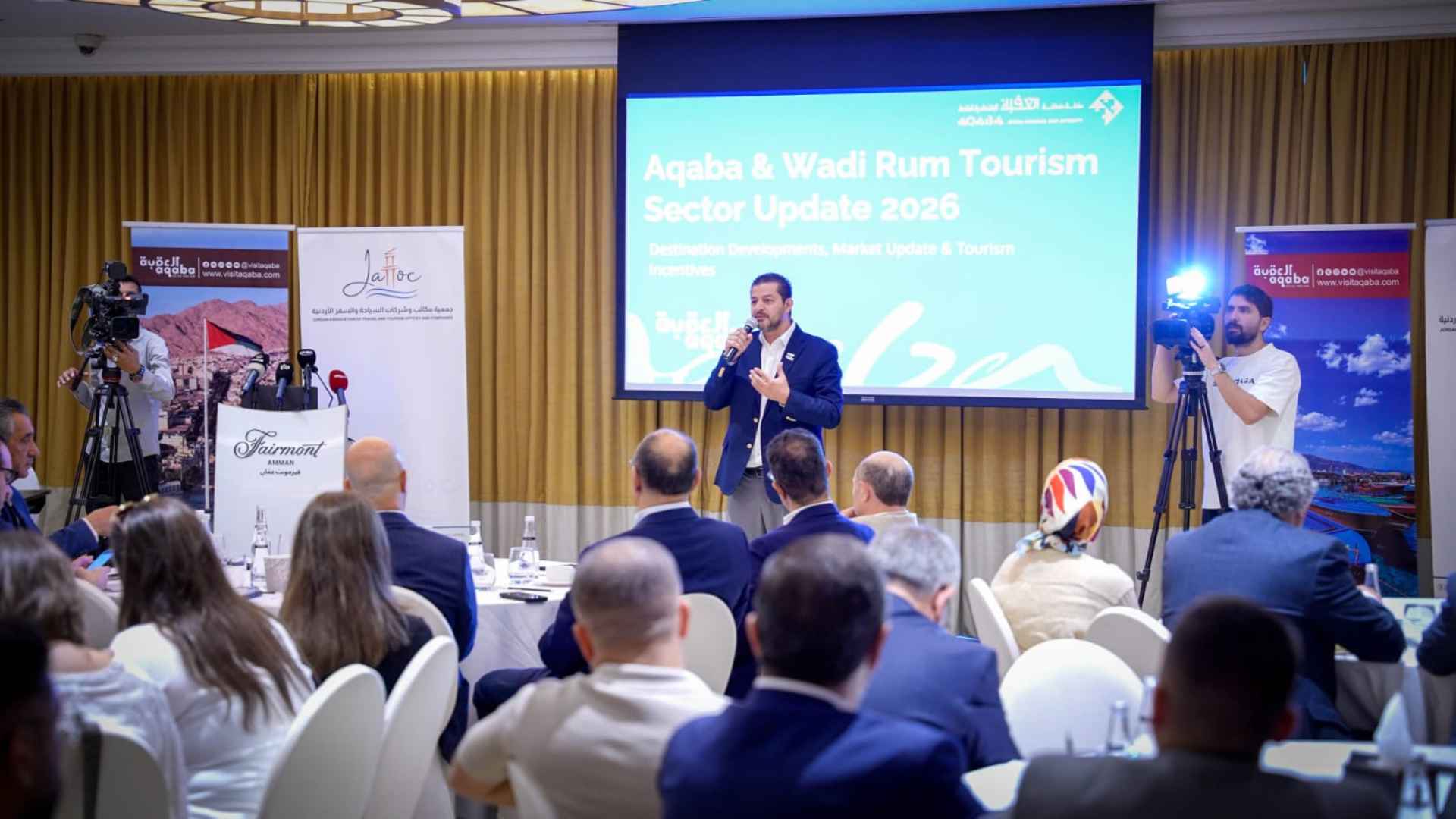
Aqaba, August 23 (Petra) – The Aqaba Special Economic Zone Authority
(ASEZA) launched three new tourism support programs on Sunday for
2026 to boost visitor demand, extend hotel stays, and support
marketing for Aqaba and Wadi Rum.
ASEZA introduced the subsidies at a meeting with tourism leaders,
targeting domestic, international, and business event travel.
Under the new package, domestic travel agencies will receive a JD5
subsidy per hotel night, capped at JD40,000 annually per agency.
International tour operators will receive $15 per visitor for stays
of three nights or more, rising to $25 for stays of five nights or
more, with an annual cap of JD50,000 per agency.
For the business sector, ASEZA will reimburse 10 percent of eligible
expenses for corporate events and exhibitions with two-night stays
and 12 percent for three nights or more (minimum 50 participants),
capped at JD25,000 for domestic events and JD35,000 for international
events.
Latest performance metrics shared by ASEZA show “strong growth” in
the region. Aqaba and Wadi Rum welcomed approximately 1.03 million
visitors in the first half of the year, with hotel stays reaching
382,800 guests and the average stay increasing from 1.9 to 2.2
nights. Diving activities also surged 36.8 percent, drawing 26,076
divers.
To accommodate future demand, Aqaba plans to add 5,125 new hotel
rooms to its current 7,000-room inventory, with 2,500 expected by
2027.
Officials also pointed to expanded direct air connectivity, including
routes to Abu Dhabi, Riyadh, and Moscow, alongside efforts to boost
niche travel, including culinary, sports, and ecotourism.
//Petra// HA