Jordan’s Q2 2026 GDP Expands 3.0%, Outperforming Regional Headwinds, International Forecasts
ENV-KUWAIT-SUSTAINABLITYKuwait strengthens environmental sustainability through strategic initiativesBy Zahra Al-Kadhmi

HLT-KUWAIT-SURGERYKuwait advances health sector with robotic, remote surgeryBy Mohammad Al-Moseb

Saudi Arabia’s Voluntary Carbon Market Fuels the Shift to a Low-Carbon

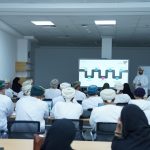
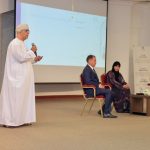
Amman, May 20 (Petra) – The sixth Arab Renewable Energy Dialogue
Workshop commenced in Amman on Wednesday under the theme “Arab Energy
Security is Key to Global Energy Security,” bringing together energy
experts and specialists from across the Arab region and beyond.
Organized by the Arab Renewable Energy Commission, the two-day
workshop includes participants from Kuwait, Jordan, Syria, Iraq,
Palestine, Saudi Arabia, Algeria, Morocco, and Ireland. It aims to
reshape the regional energy landscape and underscore the strategic
link between the stability of global energy supply chains and the
integration and sustainability of the Arab energy system.
The event is being held in partnership with the Royal Jordanian
Geographical Center, the Regional Center for Space Science and
Technology Education for Western Asia, the Center for Strategic
Studies at the University of Jordan, and the Jordanian Renewable
Energy Society. It will also launch the “Arab Energy Sovereignty
2035” initiative.
Senator Farouk Hayari said energy security is a strategic necessity
for Jordan, the Arab region, and the international community,
stressing that the region possesses the resources and geographic
position to play a pivotal role in shaping the global energy future.
He noted that accelerating global transformations in the energy
sector have elevated energy security from an economic concern to a
core pillar of national and regional stability and sustainable
development. Hayari also highlighted Jordan’s energy transition model
as a successful example of diversification toward renewable energy,
particularly solar and wind power, which has helped reduce costs and
enhance energy independence.
Chairperson of the Parliamentary Energy and Minerals Committee, MP
Ayman Abu Hanieh, said global geopolitical and economic shifts have
placed energy at the center of power, stability, and sovereignty
equations. He stressed that countries lacking energy security remain
more vulnerable to external pressures, while diversified energy
systems strengthen resilience and economic stability.
He added that renewable energy has become a matter of sovereignty and
equitable development, affirming that the Arab region has the
potential to become a global energy hub. He also pointed to Jordan’s
efforts to expand renewable energy and green hydrogen projects in
line with the Economic Modernization Vision.
Secretary General of the Ministry of Energy and Mineral Resources,
Amani Azzam, said energy security is now a key component of national
stability, requiring stronger domestic capacities through diversified
energy sources, improved efficiency, and resilient infrastructure.
Chairperson of the Energy and Minerals Regulatory Commission, Ziad
Sa’aydeh, said energy security in Jordan is supported by a
comprehensive national framework based on regulation, legislation,
and investment-friendly policies that ensure supply stability and
service continuity under all conditions.
Director General of the Royal Jordanian Geographic Center, Brigadier
General Engineer Muammar Haddadin, highlighted the growing link
between energy systems and space science, noting the role of
geospatial technologies and remote sensing in supporting sustainable
development and energy planning.
Secretary-General of the Arab Renewable Energy Commission, Mohammed
Taani, said energy security is a cornerstone of national stability
and emphasized the importance of Arab energy integration and
leveraging environmental and economic challenges to generate green
investment opportunities.
The workshop sessions will focus on geopolitical developments and
energy security, the green economy and governance, space technology
applications in energy sovereignty, and strategic networking among
participating delegations.
//Petra// AJ