Jordan’s Q2 2026 GDP Expands 3.0%, Outperforming Regional Headwinds, International Forecasts

ENV-KUWAIT-SUSTAINABLITYKuwait strengthens environmental sustainability through strategic initiativesBy Zahra Al-Kadhmi

HLT-KUWAIT-SURGERYKuwait advances health sector with robotic, remote surgeryBy Mohammad Al-Moseb

Saudi Arabia’s Voluntary Carbon Market Fuels the Shift to a Low-Carbon

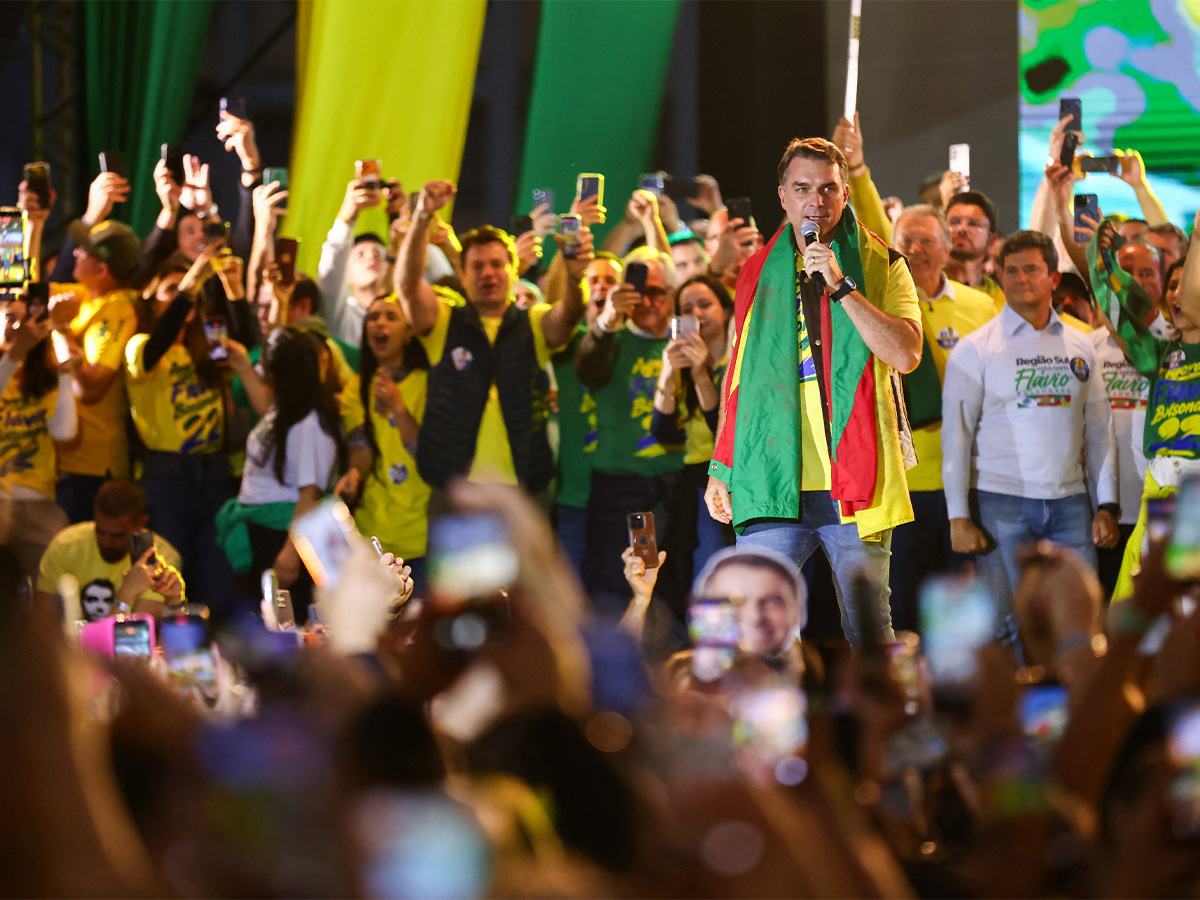
Doha, October 18 (QNA) – Brazil is just a few days away from the Oct. 25 presidential runoff between incumbent President Luiz Inacio Lula da Silva and his rival, Flavio Bolsonaro, in a fiercely contested race that has drawn market attention to the next president’s fiscal and economic policy agenda.
Brazilians will return to the polls for the second time this month to settle the contest. The stakes extend beyond the identity of the winner, insofar as the result will shape the leadership of Latin America’s largest democracy and by far its largest economy over the next four years.
The election’s surprising first-round results laid bare Brazil’s profound political polarization, with Flavio Bolsonaro leading the race after securing approximately 47 percent of the vote, ahead of incumbent President Lula da Silva, who garnered around 45 percent.
Of Brazil’s 213 million people, an estimated 160 million are eligible voters. Neither candidate surpassed the 50 percent threshold, a prerequisite for outright victory in the first round, hence sending both into the decisive runoff scheduled for next Sunday.
The current electoral battle centers on several substantive issues preoccupying Brazilian voters, including economic conditions and living standards, particularly inflation, purchasing power, and proposals to change working hours and the standard workweek. Other key issues include public safety, crime prevention and security-sector reform in major cities, as well as foreign policy and the environment. The two candidates diverge sharply over climate policy, Amazon rainforest protection, relations with global powers and ties with regional economic blocs.
A poll released in mid-October showed Flavio Bolsonaro leading Lula da Silva by 2 percentage points. Bolsonaro, the eldest son of former President Jair Bolsonaro, had the support of 46 percent of respondents, compared with 44 percent for Lula. The result nevertheless amounted to a statistical tie, given the poll’s margin of error of plus or minus 2 percentage points.
In recent days, President Lula da Silva has substantially ramped up his efforts to overturn Bolsonaro’s first-round lead, seeking to win over independent and undecided voters. He secured congressional approval for a shorter workweek- a proposal Bolsonaro had opposed for months before reversing course at the last minute, when passage appeared imminent. Lula has also pledged to ease the debt burden on small-business owners and provide free public transportation on weekends.
Brazil’s Congress approved a constitutional amendment capping the workweek at 40 hours. Some Western analysts say the measure could affect 30 million workers and hand a political victory to left-wing President Lula da Silva, who has vigorously championed the reform. The amendment would give some workers an additional day off each week.
Bolsonaro, by contrast, spent months opposing the amendment before reversing his position last Tuesday, saying that “the majority of Brazilian workers” supported it. On Wednesday, he joined 75 senators in backing the reform, which the lower house had approved in May. The constitutional amendment ends the six-day workweek, currently followed by 16 million people, while reducing the maximum workweek from 44 to 40 hours for more than 30 million workers.
The proposed change is expected to disproportionately affect low-wage workers in retail, restaurants and hotels- one of the groups from which Luiz Inacio Lula da Silva has lost the most support since the 2022 election, when he defeated former President Jair Bolsonaro.
In May, Bolsonaro warned that the pitch could trigger mass unemployment, echoing a concern employer association opposed to the reform have repeatedly raised.
The election has also drawn immense global attention to the Amazon rainforest, one of the world’s largest reservoirs of biodiversity and carbon. Hence, balancing forest protection against agriculture, mining, infrastructure and economic development has become a substantive issue linking Brazil’s domestic politics to the global climate agenda.
During his term, Lula sought to make combating deforestation a cornerstone of environmental policy, pledging to end illegal deforestation by 2030. The Bolsonaro movement, by contrast, has traditionally favored greater resource exploitation and economic development in the Amazon.
The next president will thus govern the country that contains most of the world’s largest tropical rainforest and will substantially shape how Brazil balances conservation against farming, livestock production, mining, roads and development projects.
The dispute isn’t merely environmental; it reflects a complex web of economic and social interests. For farmers and producers, the Amazon represents land, investment and export opportunities.
For Indigenous communities, it means land, identity and survival. For scientists and environmental advocates, it is one of the world’s most vital natural systems in the fight against climate change.
Brazil is by far Latin America’s largest country by land area and population, accounting for approximately 31 percent of the region’s gross domestic product. It is a founding member of the Southern Common Market (MERCOSUR), the Community of Latin American and Caribbean States (CELAC) and the Organization of American States (OAS).
A major economic, agricultural, environmental and diplomatic power, Brazil also belongs to the Group of 20 (G20) and BRICS, is a key economic partner of China, and maintains extensive ties with the United States, the European Union and the Global South.
The next president is due to take office on Jan. 5, 2027. The election will determine not only who enters the Planalto Palace but also the direction of Brazil’s foreign policy.
Lula’s government has made cooperation with the Global South a priority, using Brazil’s membership in groups such as BRICS to advocate a more multipolar international order.
Flavio Bolsonaro, by contrast, has signaled a preference for bilateral ties, particularly with the United States, Argentina and Israel, saying that he would reassess Brazil’s BRICS membership if elected. (QNA)