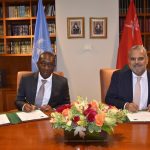
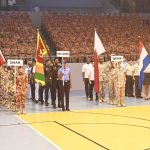
Jordan’s Q2 2026 GDP Expands 3.0%, Outperforming Regional Headwinds, International Forecasts
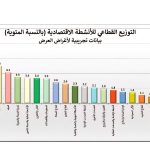
ENV-KUWAIT-SUSTAINABLITYKuwait strengthens environmental sustainability through strategic initiativesBy Zahra Al-Kadhmi

HLT-KUWAIT-SURGERYKuwait advances health sector with robotic, remote surgeryBy Mohammad Al-Moseb

Saudi Arabia’s Voluntary Carbon Market Fuels the Shift to a Low-Carbon

Khartoum, March 7, 2026 (SUNA) – The 2025 performance report of the Council of Ministers revealed that the Ministry of Culture, Information, Antiquities and Tourism ranked first among government ministries in presenting topics discussed during Cabinet sessions last year. According to the report prepared by the Council of Ministers and presented during Session No. (2) for 2026, held in the Sudanese capital, Khartoum, on Thursday and Friday, March 5–6, 2026, the Cabinet held 13 regular and emergency meetings during 2025. During those sessions, the Council discussed 37 topics, while two items were postponed.The report indicated that the Ministry of Culture, Information, Antiquities and Tourism submitted eight topics, all of which were discussed and approved after being prepared by the ministry and reviewed by the competent technical committees. All the submitted items fall within the social and cultural development sector.Among these issues were long-pending files, including the 1970 Convention on the Means of Prohibiting and Preventing the Illicit Import, Export and Transfer of Ownership of Cultural Property, and the 1995 Convention on International Private Law for the Unification of Law Concerning Stolen or Illegally Exported Cultural Objects.Accordingly, the ministry emerged as the most proactive in presenting topics for Cabinet deliberation among ministerial sectors during 2025.This development coincided with the ministry’s intensive activities throughout the same year, despite exceptional circumstances and the limited number of employees currently deployed across the four sectors supervised by the ministry—culture, information, antiquities and tourism—under the decision not to absorb all staff due to the conditions facing the country.During the year, the ministry organized 50 news conferences, providing extensive briefings on the activities of various ministries as well as Sudanese issues that attracted both domestic and international public attention.The ministry also contributed to the recovery of several looted antiquities and helped facilitate the return of a number of international archaeological missions engaged in excavation and research.In addition, it concluded numerous international partnerships and agreements aimed at tracking looted artifacts and restoring museums and archaeological sites.The ministry was also handed over the Suakin Governorate buildings on Suakin Island after their rehabilitation and restoration by the Turkish Cooperation and Coordination Agency (TİKA). Further achievements included the establishment of a new regional center for the Sudan Radio and Television Corporation in Port Sudan, as well as program development within national media institutions compared with their status in 2024, alongside coverage of activities of ministries, government bodies and institutions, and support for the private media sector.Throughout 2025, Sudan also witnessed the organization of numerous cultural and media conferences, workshops and forums, in addition to arrangements for hundreds of Arab and foreign journalists to visit Sudan to observe the impact of the war. Media delegations were also transported to several locations, including flights from Port Sudan to the Wadi Sayyidina Military Zone in Omdurman, even before the liberation of the national capital.Another notable feature of the period was the sacrifice of several staff members, as the ministry lost a number of personnel in separate incidents, the latest being the martyrdom of a group of Sudan Television employees inside the Republican Palace.The period also saw expansion in radio broadcasting, in addition to the preparation of a new Press and Publications Law, which is currently awaiting final approval.Despite limited resources and the absence of a dedicated budget for new construction and institutional establishment, the ministry succeeded in restoring the operation of several cultural, media, antiquities and tourism institutions that had ceased functioning due to attacks by the rebel Rapid Support Forces (RSF) militia, while also implementing numerous significant programs and activities across its various fields of responsibility.The report further noted that the Ministry of Cabinet Affairs presented 11 topics and projects, as well as files with overlapping mandates involving several ministries. While these pertain to multiple sectors related to governance, administration, and economic development, they reflect the supervisory role of the Ministry of Cabinet Affairs in monitoring the work of government institutions and presenting joint projects and cross-sectoral issues to the Council of Ministers.BH/BH