Saudi Arabia’s Voluntary Carbon Market Fuels the Shift to a Low-Carbon

Under UAE President’s directives, UAE launches urgent relief response for Ghana flood victims

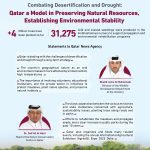
Combating Desertification and Drought: Qatar a Model in Preserving Natural Resources, Establishing Environmental Stability
UAE allocates US$30 million for emergency humanitarian response in El Obeid, calls for civilian protection, safe humanitarian aid access in Sudan


Khartoum, April 8, 2026 (SUNA) – Undersecretary of the Ministry of Culture, Information, Antiquities and Tourism, Dr. Geraham Abdel-Gadir, affirmed that cultural security constitutes a fundamental pillar of Sudan’s national security framework. He noted that antiquities represent the nation’s identity and symbols of unity, and that preserving them safeguards Sudan’s civilization for future generations. Speaking on Wednesday at a workshop on strengthening the capacities of customs officers and law enforcement entities to combat illicit trafficking in cultural property—organized in cooperation with the National Commission for Education, Culture and Science and UNESCO—he highlighted the importance of coordinated national efforts. He explained that the workshop forms part of a broader series of initiatives involving judicial bodies, intelligence services, the public prosecution, tourism police, and central investigations, alongside relevant ministries, to protect Sudanese antiquities, prevent their smuggling, and recover looted artifacts for display in national museums. Dr. Abdel-Gadir underscored the role of the cultural and tourism economy as a key indicator of economic strength, particularly in the post-war phase, given its contribution to income diversification and public benefit.He further noted that the workshop aims to enhance protection mechanisms at both national and regional levels, including capacity-building, recovery of stolen artifacts, and international coordination on restitution and restoration efforts. He also revealed plans to reopen the Sudan National Museum and the Khalifa House Museum in the second half of this year, as part of efforts to restore normal life in Khartoum State and provide public access to Sudan’s heritage, especially for students and researchers.BH/BH