Deputy Director of Learning and Outreach Department at Mathaf to QNA: Knowledge and Art Should be Accessible to Everyone
Doha, May 20 (QNA) – Museums in the modern era are no longer merely spaces for storing and displaying artifacts to visitors. They have transcended this traditional role to become more vibrant and interlinked with their surrounding communities through educational and interactive programs.
This community involvement is amplified by the celebration of International Museum Day, held this year under the theme “Museums Unite a Divided World,” coinciding with the 80th anniversary of the International Council of Museums (ICOM). This underscores ICOM’s ongoing commitment to supporting museums as vital platforms for cultural exchange, education, and sustainable development.
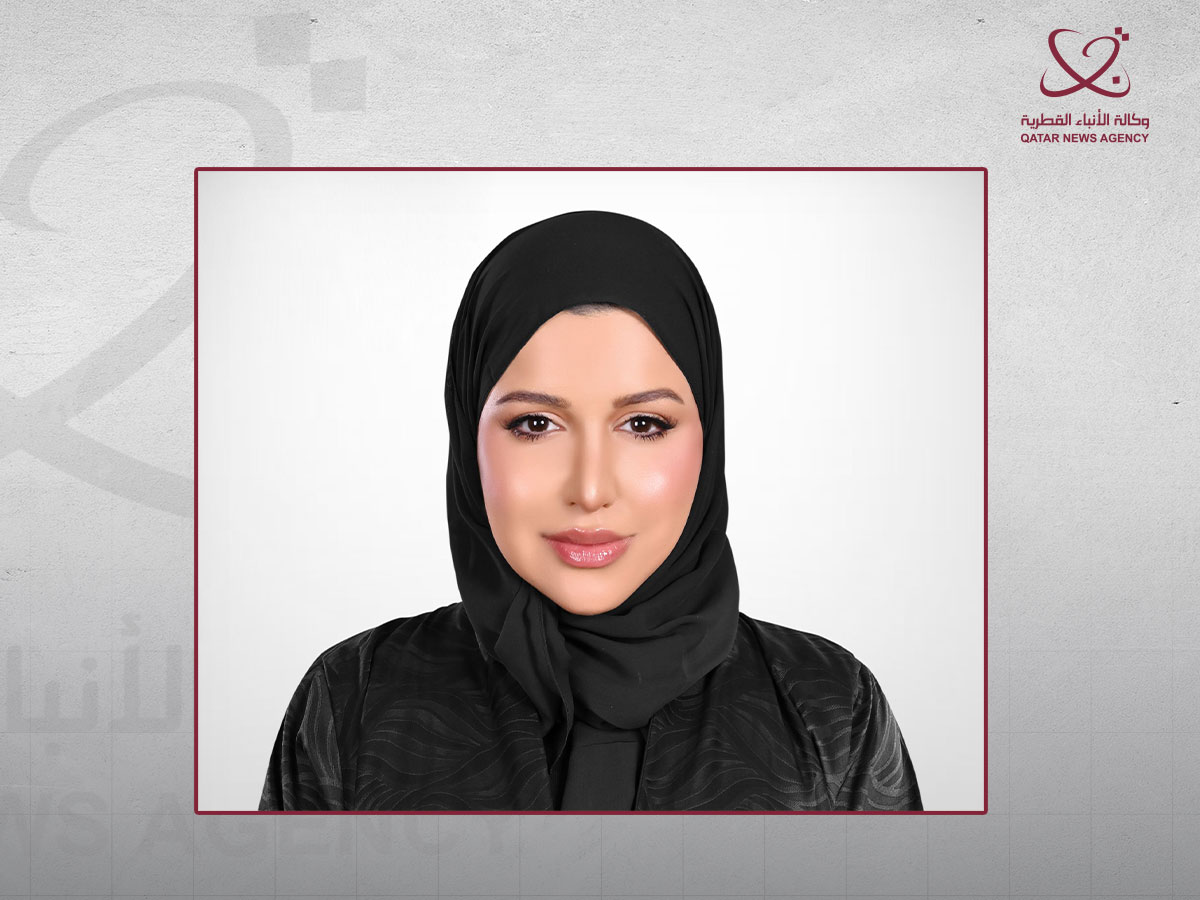
In this regard, Deputy Director of Learning and Outreach at Mathaf: Arab Museum of Modern Art Eman Abdulla Al Abdulla stated in an interview with the Qatar News Agency (QNA), the philosophy behind Mathaf’s educational and cultural programs is to make art a space for dialogue, learning, and community engagement, not just a viewing experience.
She added they are keen to design programs that are linked to the exhibitions they hold in order to deepen visitors’ understanding of the artworks and their associated cultural and intellectual contexts, in addition to offering independent programs that address broader themes related to modern and contemporary Arab art.
She pointed out that the museum places great importance on the diversity of age groups, offering educational programs and workshops for children, teenagers, university students, families, as well as interested individuals and specialists, thus ensuring an educational experience that suits the interests and needs of each group.
Regarding the ‘Darwaza’ event, the community art project that celebrates creativity, inclusivity, and cultural identity, which the museum previously organized, and whether this project will continue in the coming years or is temporary, Eman Al Abdulla explained that for the Arab Museum of Modern Art, the event was not just a passing activity, but a human and community experience that affirmed how art can open doors between people and create a genuine sense of belonging and participation.
She added that they don’t view art as an elitist or exclusive space, but rather as a space that embraces everyone with all their differences, experiences, and ages. That’s why it was important for ‘Darwaza’ to reflect the values of inclusivity and openness, and to provide a genuine space for families, youth, the elderly, and people with disabilities to participate, so that everyone feels they have a place and a voice within this cultural landscape.
She noted that the interaction with the project confirmed that society today is not just looking for events, but for experiences that make them feel close, connected, and meaningful. Therefore, this type of initiative must continue and develop with a deeper and more impactful spirit, keeping pace with the needs of society and building sustainable bridges between art and people.
She emphasized that the museum’s role today is no longer limited to displaying artworks, but has become a humanitarian and cultural role that contributes to building dialogue, fostering understanding, and creating spaces where everyone feels they are part of a broader community based on understanding and communication.
Regarding the coordination of educational programs in Qatar Museums, and whether each museum has its own unique way of inspiring its visitors, Deputy Director of the Learning and Outreach Department at the Mathaf: Arab Museum of Modern Art Eman Abdulla said that there is real coordination and continuous integration between the educational and cultural programs in Qatar Museums, because they do not work as separate institutions, but rather within a single cultural system that believes that knowledge and art should be close to the community and available to everyone.
She pointed out that despite this integration, each museum has its own spirit and its own different way of addressing people. Museums are not supposed to be similar because the strength of the cultural scene lies in this diversity, and each museum starts from its identity, its story, the questions it poses, and the type of relationship it wants to build with its audience.
At the Mathaf: Arab Museum of Modern Art, she explained that art is not presented as a definite answer but rather as an opportunity for reflection, dialogue, and inquiry. The museum emphasizes that visitors should feel part of the experience rather than a recipient. Therefore, programs are designed to focus on individual experiences, memories, and interactions with contemporary issues and the surrounding society, she added.
She also expressed her belief that the most beautiful aspect of this diversity among museums is that it gives the public more than one way to see and understand the world. Some find themselves in history, others in modern art, and still others in interactive or community experiences, and ultimately all these paths converge on a single goal for the museum to be a space that inspires people, opens new horizons for thinking, and creates a deeper sense of connection to culture and identity, she said.
Regarding the museum’s partnerships with a number of entities to ensure the success of educational and awareness programs for museum visitors from the community, Eman Abdulla indicated that the Mathaf: Arab Museum of Modern Art believes that true cultural work is not built in isolation, but rather through partnerships and relationships capable of creating a broader and deeper impact within the community.
She noted the ongoing commitment to building effective cooperation with universities, schools, cultural institutions, community centers, embassies, and local and international bodies, viewing education and culture as a shared responsibility rather than the responsibility of just one institution.
She explained that these partnerships are not merely organizational collaborations, but rather spaces for exchanging knowledge and expertise and creating new experiences that connect art to people’s daily lives, pointing out that through these collaborations, diverse segments of society can be reached, including youth, families, the elderly, and people with disabilities, indicating that programs can be offered that make each group feel represented and included within the cultural landscape.
She added that they are keen to ensure that their programs combine academic depth with human experience; therefore, working with universities, researchers, artists, and specialists to provide workshops, dialogue sessions, and educational experiences that open the door to thinking and discussion, instead of receiving information.
She expressed her belief that the importance of these partnerships today goes beyond the idea of organizing an event because they actually contribute to building a more aware, open, and connected society with art and culture, adding that every entity with which the museum collaborates adds a different perspective, which makes the cultural experience richer, closer to people, and more capable of creating a sustainable impact.
Regarding the outcomes of educational programs and their evaluation mechanisms, Deputy Director of Learning and Outreach at Mathaf: Arab Museum of Modern Art Eman Abdulla Al Abdulla said that the evaluation is not solely based on the number of participants, but also encompasses several other aspects.
She explained that the evaluation of educational programs is not only determined by the level of participation, although this reflects its importance and the level of interest it generates. Rather, it is measured by the level of genuine engagement the programs produce among participants and their contribution to developing critical and creative thinking skills.
She also noted that the museum is keen to monitor the continued engagement of some participants with the art and cultural scene, whether through developing their talents or their subsequent participation in future initiatives and programs. She considers this a significant indicator of the success of these programs and the sustainability of their impact.
Regarding the unique nature of the Arab Museum of Modern Art, and whether this affects visitor numbers, she said that for a long time, there was a prevailing notion that modern and contemporary art was only for the elite or a group with a specific artistic and intellectual background. But the reality today is completely different. People have become more curious and open-minded, and there is a genuine interest in discovering and understanding art, even without prior knowledge.
She added that at the Arab Museum of Modern Art, they don’t treat art as something that everyone should understand in the same way. Rather, they see it as a space for reflection, feeling, questioning, and dialogue. Visitors aren’t required to have a ready-made answer to a work of art. Sometimes, it’s enough for the work to evoke an idea, a memory, or a feeling, and this in itself is an important experience.
She pointed out that the museum’s role is not limited to displaying artworks, but extends to developing tools and methods that bring art closer to people and alleviate the psychological barrier that some may feel towards modern art.
She noted that the museum places a strong emphasis on educational programs, guided tours, interactive workshops, and community experiences, ensuring that visitors feel the art is accessible and speaks to them, regardless of their age, background, or experience.
She explained that this type of art doesn’t alienate people; instead, it sparks their curiosity. Modern art doesn’t always offer a direct meaning, but opens a space for discovery and personal interpretation, making the experience unique and profound on a human level.
She noted that they see this daily in the diversity of their audience, as well as first-time visitors. They consider this a significant indicator that when art is presented in a humanistic and community-oriented way, it becomes accessible to everyone, not just a select few.
The Arab Museum of Modern Art offers an Arab perspective on modern and contemporary art, supports creativity, fosters dialogue, and inspires new ideas. Founded in 2010, it is considered one of the country’s most prominent cultural landmarks.
The museum’s 15th anniversary comes as part of the 18-month “Nation of Evolution” campaign, celebrating Qatar’s cultural journey over five decades since the founding of the National Museum of Qatar, and 20 years since the founding of Qatar Museums, in collaboration with the “Qatar Creates” initiative, which is establishing the country as a global center for art, culture and creativity. (QNA)