Saudi Arabia’s Voluntary Carbon Market Fuels the Shift to a Low-Carbon

Under UAE President’s directives, UAE launches urgent relief response for Ghana flood victims

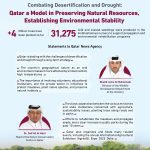
Combating Desertification and Drought: Qatar a Model in Preserving Natural Resources, Establishing Environmental Stability
UAE allocates US$30 million for emergency humanitarian response in El Obeid, calls for civilian protection, safe humanitarian aid access in Sudan


A specialized workshop on digital media stressed the importance of combating misinformation and rumors, and strengthening public awareness through the dissemination of accurate information, the development of digital verification tools, and support for responsible professional journalism amid growing challenges in the digital sphere. The workshop, organized by the Awareness Center for Press and Media Services under the title “Digital Media Between Quality and Disinformation,” brought together journalists, experts, and academics to discuss the risks posed by online rumors and ways to limit their societal impact. Media expert Zuhair Banga, presenting a paper titled “Social Media and the Manufacturing of Rumors,” said that integrating individual, institutional, educational, and legal efforts is the most effective approach to countering online misinformation, particularly during crises. He called for adherence to accuracy and credibility, the use of digital monitoring and fact-checking tools, and a stronger role for civil society organizations in promoting digital awareness. In a separate presentation titled “Achieving Information Sovereignty and Combating Disinformation,” Col. Khalid Mohamed Abdullah described rumors as a tool of psychological warfare aimed at weakening public morale and undermining internal cohesion. He praised the resilience of Sudan’s internal front and called for greater public vigilance, responsible media practices, and efforts to strengthen the social fabric. Participants said rumors have evolved from isolated acts into an organized industry involving production, distribution, and promotion, stressing the need for rapid fact-checking, stronger civic education, and ethical responsibility to protect national security. Journalist Abdel-Azim Salih called for promoting a culture of verification and enhancing cooperation between media institutions and information providers to address the spread of misinformation more effectively. Meanwhile, media professor Mona Mohamed Hashim said some social media platforms operate on financial incentives that contribute to the spread of rumors, urging the adoption of stronger legal and regulatory measures to curb the phenomenon and preserve social cohesion.BH/BH