Saudi Arabia’s Voluntary Carbon Market Fuels the Shift to a Low-Carbon

Under UAE President’s directives, UAE launches urgent relief response for Ghana flood victims
Combating Desertification and Drought: Qatar a Model in Preserving Natural Resources, Establishing Environmental Stability
UAE allocates US$30 million for emergency humanitarian response in El Obeid, calls for civilian protection, safe humanitarian aid access in Sudan

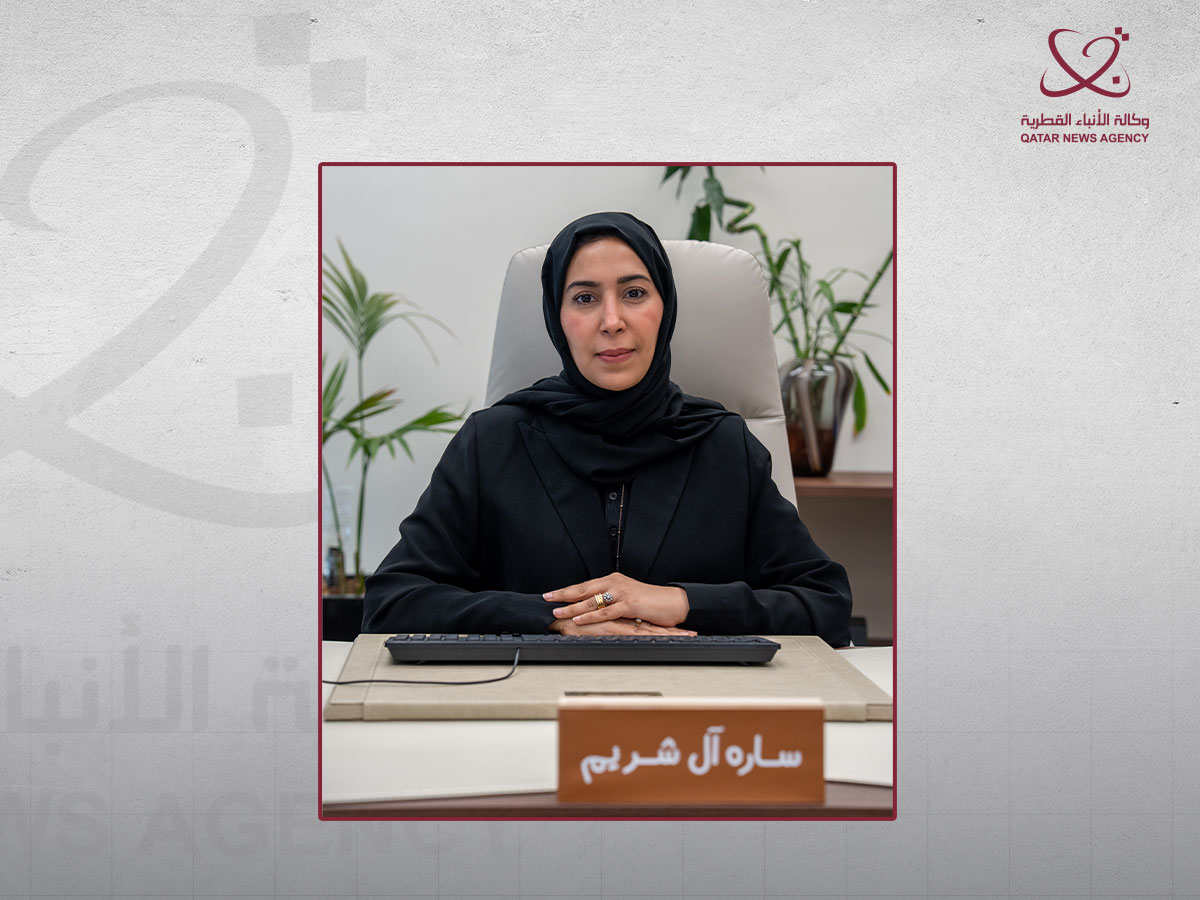
Doha, August 24 (QNA) – The Ministry of Education and Higher Education is stepping up efforts to develop curricula that equip students with knowledge, life skills and future-ready competencies, while strengthening their national identity and Islamic values, said Director of the Curriculum and Learning Resources Department Sara Issa Al Sharim.
Speaking to Qatar News Agency (QNA) ahead of the new academic year, Al Sharim said five school subjects underwent development during the 2025-2026 academic year: history and geography for Grade 11, French and science for Grade 10, and information technology. She noted that 612 coordinators and teachers had been trained on the newly developed curricula.
The department is also responsible for developing 18 compulsory and elective subjects and conducted 106 field visits to schools to monitor curriculum implementation across various subjects, she added.
Al Sharim explained that the Curriculum and Learning Resources Department adopts a continuous, evidence- and data-driven approach to curriculum development, taking into account national and global developments, the needs of learners and society, and learning outcomes. These considerations are then reflected in standards, content and learning experiences that are practical, measurable and responsive to evolving educational needs.
She added that the process also involves ongoing assessment, scientific review and drawing on national and international expertise to ensure that curricula remain aligned with future requirements while preserving Qatar’s national identity, reflecting its social context and supporting its future aspirations.
Al Sharim said that the national curriculum serves 154,564 students in government schools, from kindergarten through Grade 12, including adult education students, as well as 193,500 students in private schools who study Arabic language, Islamic studies and Qatar history as part of the curriculum.
She underscored the Ministry’s commitment to developing well-rounded learners equipped with the knowledge, life skills and values needed to succeed in life and prepare for the future, while enabling them to pursue lifelong learning and adapt to change.
She stressed that the curricula seek to combine high-quality learning with the promotion of Islamic values and national identity, while fostering critical thinking, creativity, communication and problem-solving skills. They also address the diverse needs of learners by providing flexible and equitable learning opportunities that enable every student to discover and develop their potential.
Al Sharim noted that Qatar’s curricula have undergone significant transformation in recent years, moving beyond knowledge acquisition to equip students with the ability to apply what they learn in real-life contexts. The reforms have also strengthened digital competencies and fostered critical thinking, creativity and innovation.
Educational pathways have been diversified, while specialized education has been expanded to better match students’ abilities and interests and strengthen alignment with the needs of higher education and the labor market. These efforts also aim to prepare students to play an active role in building strong families and contributing to society, in line with Qatar National Vision 2030’s goal of developing qualified human capital to support sustainable development and the knowledge economy.
She noted that the department publishes 535 school textbooks annually, with a total print run of 4,415,260 copies.
Al Sharim emphasized that recognizing the diversity of students’ abilities and needs is a fundamental principle in designing the learning process. This is reflected in flexible teaching strategies, learning resources, assessment methods and support systems that provide each student with appropriate opportunities to learn and progress in line with their individual abilities and potential.
The Ministry also draws on leading international educational experiences and practices as a source of learning and comparison, she said, noting that these experiences are carefully studied and adapted to align with Qatar’s educational priorities, as well as the needs and aspirations of its society.
She stressed that the aim is not to replicate international models, but to learn from the best practices and adapt them in ways that add value to education in Qatar.