Saudi Arabia’s Voluntary Carbon Market Fuels the Shift to a Low-Carbon

Under UAE President’s directives, UAE launches urgent relief response for Ghana flood victims

Combating Desertification and Drought: Qatar a Model in Preserving Natural Resources, Establishing Environmental Stability
UAE allocates US$30 million for emergency humanitarian response in El Obeid, calls for civilian protection, safe humanitarian aid access in Sudan

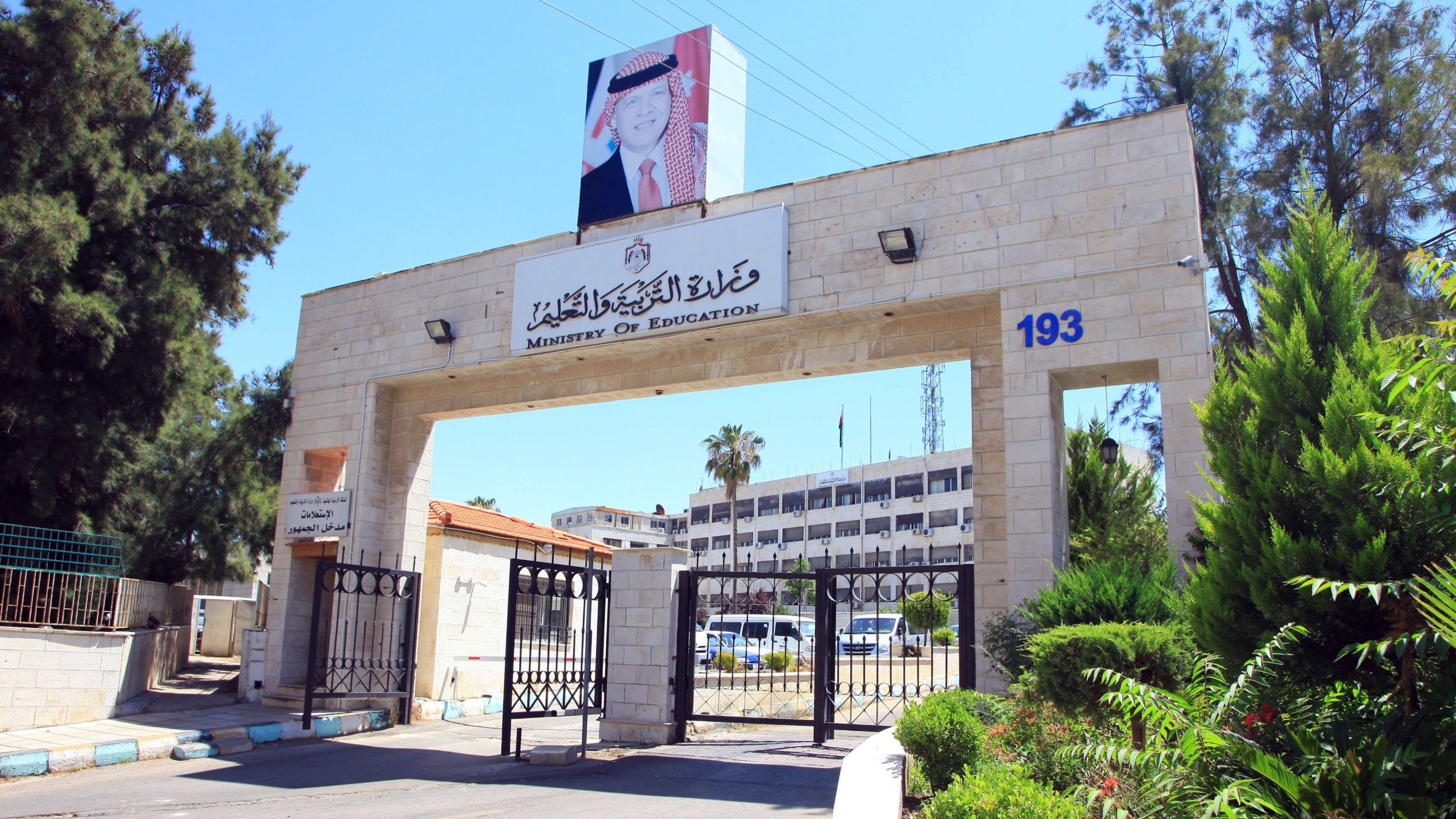
Amman, Aug. 17 (Petra) — The Ministry of Education and Human
Resources Development has announced an increase in allocations for
the University Student Support Fund to JD40 million, following the
allocation of an additional JD10 million in implementation of Royal
directives.
The increase is expected to raise the number of students benefiting
from grants and loans to about 63,000. A new mechanism for
distributing grants and loans among the Kingdom’s districts will also
take effect starting with the 2026-2027 academic year.
Director of the Student Support Fund Unit Muhannad Al-Khatib said the
additional JD10 million will be financed from revenues generated by
the sale of special vehicle license plate numbers. The latest
increase brings the Fund’s allocations to JD40 million, compared with
JD20 million two years ago.
The government had raised the Fund’s allocations in the 2025 budget
by 50 percent, from JD20 million to JD30 million. This allowed about
10,000 additional students to benefit from the Fund, bringing the
expected number of beneficiaries to around 63,000, compared with a
previous annual average of 53,000.
Al-Khatib said the latest increase follows Royal directives issued on
Jan. 12, 2026, calling for an additional JD5 million for the Fund. He
noted that government efforts over the past two years have included
increasing the Fund’s allocations and diversifying its sources of
financing.
For the 2025-2026 academic year, the number of students nominated for
domestic grants and loans increased from 53,132 to 60,341, an
increase of more than 7,000 students. The ministry later nominated an
additional 4,500 students to replace applicants who did not complete
the procedures required to receive loans, bringing the total number
of nominees to 64,841.
The share of eligible applicants receiving grants and loans
consequently increased from 78 percent to 84 percent. Loans made
available following applicants’ withdrawal were directed to districts
where support had not covered all eligible applicants.
Al-Khatib said the University Student Support Fund has provided full
and partial grants and loans to more than 747,430 students since its
establishment in 2004 through the end of 2025, with total expenditure
reaching JD687,458,263.
Of the total beneficiaries, 36,356 students received full grants at a
cost of about JD110.94 million, while 272,121 received partial grants
costing approximately JD232.31 million. Another 438,953 students
benefited from loans at a cost of about JD344.21 million. Loan
beneficiaries accounted for 58.7 percent of all beneficiaries.
Al-Khatib also referred to a Cabinet decision issued in July 2025 to
allocate revenues from all special vehicle license plate numbers sold
through public auctions to support the Fund. In December 2025, the
Cabinet approved JD10 million to cover the fees of eligible students
and enable them to register for the second semester of the 2025-2026
academic year.
Regarding the Fund’s outstanding financial obligations, Al-Khatib
said debts owed to public universities had previously reached about
JD80 million. He attributed the accumulated obligations to the
expansion of the number of beneficiaries without sufficient financial
allocations in previous years, particularly during the COVID-19
pandemic. The outstanding amount has since fallen to about JD14
million and is expected to be fully settled before the end of 2026.
Al-Khatib said the previous distribution mechanism, which allocated
support equally among districts, had resulted in differences in
coverage rates. While coverage reached 100 percent in some districts,
it was around 50 percent in other districts with higher population
densities.
Under the new mechanism, each district will receive an equal basic
allocation, while the remaining grants and loans will be distributed
according to demand and population density.
The basic annual allocation for each district will comprise 550
grants and loans: 250 loans and 150 partial grants for bachelor’s
degree students, in addition to 150 partial grants for intermediate
diploma students.
Al-Khatib stressed that the new mechanism will not affect students’
eligibility requirements, selection criteria or the approved points
system. The change applies only to the distribution of the number of
grants and loans among the Kingdom’s districts.
He clarified that population density will not be used to award
students additional points. Instead, it will be taken into account
when determining the amount of support allocated to each district
after the eligibility requirements have been applied.
//Petra//WH