Jordan’s Q2 2026 GDP Expands 3.0%, Outperforming Regional Headwinds, International Forecasts
ENV-KUWAIT-SUSTAINABLITYKuwait strengthens environmental sustainability through strategic initiativesBy Zahra Al-Kadhmi

HLT-KUWAIT-SURGERYKuwait advances health sector with robotic, remote surgeryBy Mohammad Al-Moseb

Saudi Arabia’s Voluntary Carbon Market Fuels the Shift to a Low-Carbon

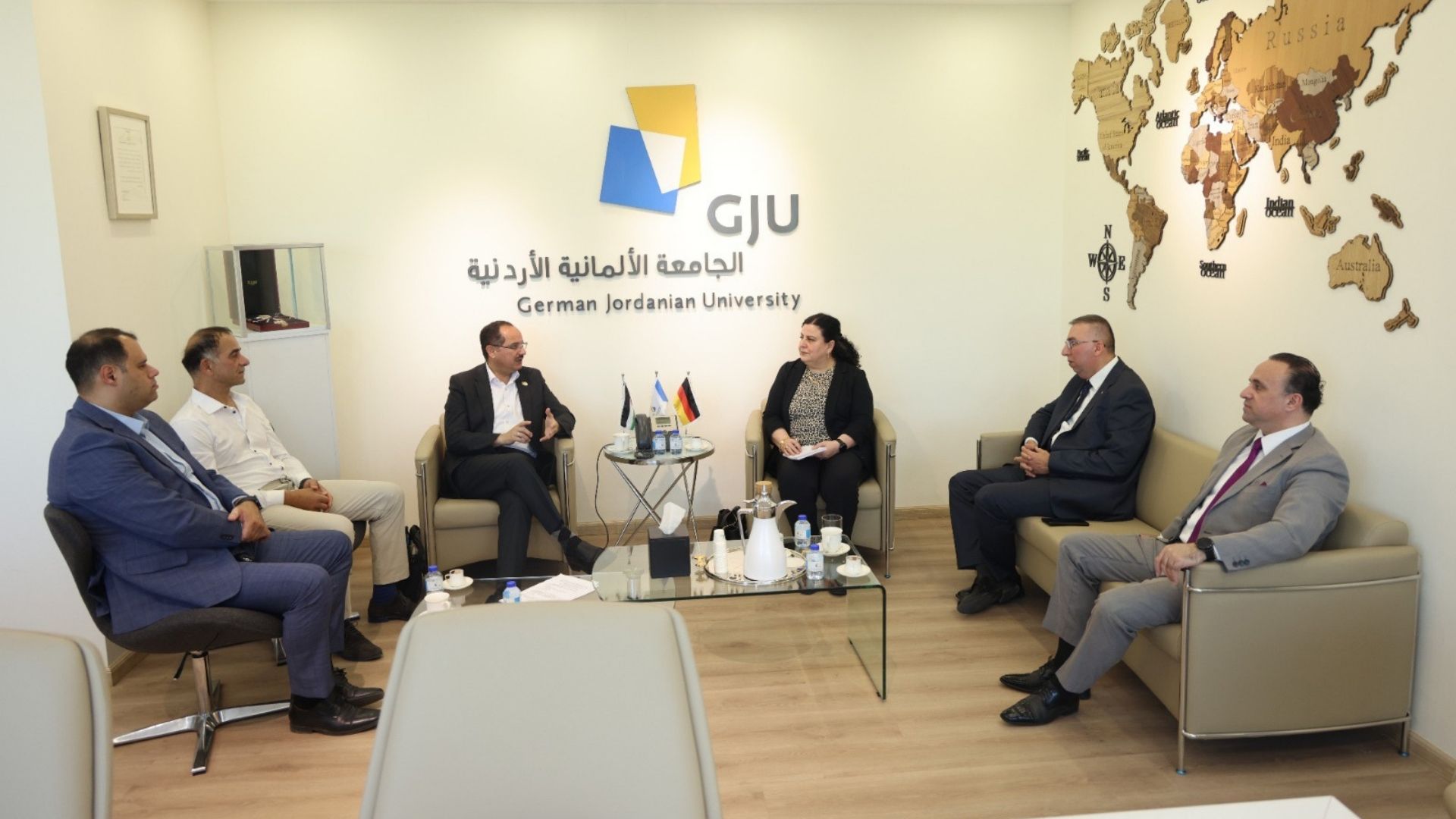
Madaba, May 24 (Petra) — The United Nations Food and Agriculture
Organization (FAO) and the German Jordanian University (GJU)
discussed ways to strengthen cooperation in developing academic
curricula and integrating climate adaptation and sustainability
concepts into educational programs to help prepare qualified cadres
capable of addressing future environmental challenges.
The discussions took place during a meeting between GJU President
Ala’aldeen Halhouli and a FAO delegation that included a policy and
education specialist, a climate change specialist, and a curriculum
development consultant.
The visit came within the framework of the “Building Resilience to
Cope with Climate Change in Jordan through Improving Water Use
Efficiency in the Agriculture Sector (BRCCJ)” project, implemented by
FAO with support from the Green Climate Fund, in partnership with the
Jordanian government and the United Nations Development Program
(UNDP).
The project targets governorates within the Dead Sea Basin, including
Madaba, Karak, Tafileh, and Ma’an, and aims to enhance resilience to
climate change by improving water-use efficiency in the agricultural
sector through developing more adaptive water systems, improving
livelihoods and food security, and strengthening the integration of
climate adaptation concepts into policies, institutions, the private
sector, and civil society.
The two sides reviewed the results of an analysis of engineering
curricula at the university, which showed strong integration of
sustainability and environmental engineering concepts, in addition to
advanced academic content in water and energy fields. They also
discussed opportunities to further develop these curricula to enhance
students’ and graduates’ readiness to address climate challenges and
sustainable development requirements.
Halhouli said the university continues efforts to strengthen
sustainability and climate action concepts within its academic and
research system, reflecting its commitment to supporting innovation
and applied education linked to contemporary environmental and
development challenges.
He added that cooperation with FAO represents an important step
toward developing an educational environment more closely connected
to climate change issues, contributing to preparing graduates with
the skills and knowledge needed to support sustainable development
pathways and enhance resilience to future climate challenges.
//Petra// NQ