Saudi Arabia’s Voluntary Carbon Market Fuels the Shift to a Low-Carbon

Under UAE President’s directives, UAE launches urgent relief response for Ghana flood victims

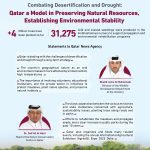
Combating Desertification and Drought: Qatar a Model in Preserving Natural Resources, Establishing Environmental Stability
UAE allocates US$30 million for emergency humanitarian response in El Obeid, calls for civilian protection, safe humanitarian aid access in Sudan

Aqaba, July 2 (Petra) – The Aqaba Special Economic Zone Authority (ASEZA), in coordination with the Aqaba Water Company, convened the second and final consultation session on Tuesday to review the draft comprehensive environmental and social impact assessment study for the Disi-Aqaba Water Conveyor Project.
The session was held as part of the Infrastructure Enhancement Project, funded by the United States Agency for International Development (USAID), and in fulfillment of environmental approval requirements stipulated under Environmental Protection Regulation No. (21) of 2001 and its amendments, applicable within the Aqaba Special Economic Zone.
The Disi-Aqaba Water Conveyor Project constitutes a strategic initiative to enhance water security and support sustainable development in southern Jordan. The project entails constructing an additional water conveyance line parallel to the existing infrastructure, with a targeted annual capacity of 12 million cubic meters. Once completed, the project is expected to increase total water supply to Aqaba to approximately 28 million cubic meters annually.
The session brought together stakeholders from various government ministries, non-governmental organizations, environmental associations, academic institutions, and major investors. Participants were briefed on the project’s scope, objectives, and projected benefits, as well as the legislative and administrative frameworks governing its execution.
The project will utilize 22 wells from the existing field an increase from the current 20 wells with 12 million cubic meters to be delivered via a new 68-kilometer transmission line, while the current line will continue to transport 16 million cubic meters annually.
The newly constructed North Aqaba Reservoir will receive water from the enhanced transmission line, significantly boosting regional water storage and distribution capacity to meet rising residential and commercial demand.
The session also addressed proposed mitigation measures and best environmental practices to manage and reduce potential environmental and social impacts associated with the project.
//Petra// AJ
02/07/2025 14:00:05