Saudi Arabia’s Voluntary Carbon Market Fuels the Shift to a Low-Carbon

Under UAE President’s directives, UAE launches urgent relief response for Ghana flood victims
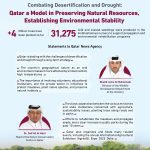
Combating Desertification and Drought: Qatar a Model in Preserving Natural Resources, Establishing Environmental Stability
UAE allocates US$30 million for emergency humanitarian response in El Obeid, calls for civilian protection, safe humanitarian aid access in Sudan


Amman, May 19 (Petra) – The Minister of Culture, Mustafa Rawashdeh, on Monday said that the Jordanian state was founded on religious and historical legitimacy, tolerance, rational participation, moderation, plurality, and diversity values embedded in the cultural and civilizational heritage established by the Hashemites, from the late King Abdullah I to His Majesty King Abdullah II.
Delivering a lecture titled “The Role of Culture in Building Development” at the Moderation Forum for Thought and Culture in Amman, Rawashdeh stressed that culture has been a core component of the state’s identity since its early days. He cited the founding of a royal intellectual council by the late King Abdullah I at Raghadan Palace, which hosted literary discussions, poetry debates, and intellectual exchanges that welcomed thinkers from across the Arab world.
Addressing a large audience of intellectuals and cultural stakeholders, Rawashdeh described culture as a “societal file” encompassing values, beliefs, customs, language, arts, and human knowledge a body of legacy passed through generations.
He argued that culture serves as the invisible foundation of sustainable development, particularly in an era shaped by technological advances and evolving global norms on human rights and cultural frameworks.
Culture, he noted, is no longer confined to expression through arts and literature but has emerged as a transformative force that enhances livelihoods and drives productivity.
Jordan, he explained, has strategically linked culture to economic modernization, reform, and inclusive development. Programs such as the Family Library, cultural governorates, Jerash Festival for Culture and Arts, art training centers, and the Cultural Support Fund aim to distribute development gains equitably across the kingdom.
Culture also bears the responsibility of promoting national and human values, raising collective awareness, and advancing the quality of life, Rawashdeh said. “Its importance lies in its power to shape collective consciousness and foster creativity and innovation all essential for any successful development project,” he added.
Rawashdeh described Jordan’s cultural and artistic industries as promising markets, highlighting the country’s rich artistic heritage in ceramics, Arabic calligraphy, textile arts, and architecture. He pointed to Jordan’s growing appeal as a film production hub, with many international movies shot in its diverse landscapes a trend that has benefited local communities and artists.
He also underlined the role of cultural tourism, calling Jordan an “open-air museum” that features ten cities of the ancient Decapolis and numerous historical, religious, and archaeological sites.
Culture today, he stressed, has evolved into a soft power that shapes global political, economic, and diplomatic narratives. Cultural products like films, music, and literature contribute to a country’s image, relay its voice to the world, and build international goodwill based on mutual respect and cultural exchange.
In a strong rebuke of extremist ideologies, Rawashdeh said true culture opposes exclusion, hate, and violence. “Nihilistic culture can never be creative, productive, or humanistic. It does not align with Jordanian values and is often driven by foreign agendas.”
He criticized the private sector’s weak investment in cultural industries, citing fear or lack of awareness, despite the fact that global studies estimate culture and arts contribute around 13% to global GDP.
The Ministry of Culture, he noted, has prioritized creative industries within its national strategic plan, expanding arts centers to equip youth with practical skills in music, visual arts, ceramics, sculpture, and handicrafts. The ministry also facilitates marketing support and has established a cultural support fund to empower young people and women in their creative projects.
Rawashdeh also touched on the ministry’s push toward digital transformation, including the creation of specialized departments to align with the digital age.
He concluded by referencing an ongoing national project focused on documenting Jordan’s narrative and achievements.
At the end of the lecture, which included an open discussion, Rawashdeh was presented with an honorary plaque by forum head Marwan Faouri.
//Petra// AF
19/05/2025 22:34:41