Saudi Arabia’s Voluntary Carbon Market Fuels the Shift to a Low-Carbon

Under UAE President’s directives, UAE launches urgent relief response for Ghana flood victims

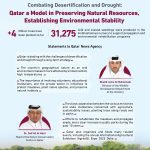
Combating Desertification and Drought: Qatar a Model in Preserving Natural Resources, Establishing Environmental Stability
UAE allocates US$30 million for emergency humanitarian response in El Obeid, calls for civilian protection, safe humanitarian aid access in Sudan


Rabak, August 9, 2026 (SUNA) – A joint meeting between the Ministry of Health and the Health Services Coordination Council in White Nile State was held on Sunday, chaired by Federal Minister of Health Dr. Haitham Mohamed Ibrahim and White Nile State Minister of Health and Social Development Dr. Al-Zain Saad Adam. The meeting was attended by directors of directorates at the federal and state health ministries, Executive Director of the Health Insurance Fund’s White Nile branch Dr. Ayman Mohamed Al-Juzouli, and Director of Police Health Services, Colonel (Police) Sanaa Mustafa. The meeting discussed the current health situation in the state, the future vision for the health sector, the challenges facing the delivery of health services, and ways to address them. The Federal Health Minister said White Nile State is witnessing significant progress in the health sector, noting that the state’s health situation has achieved considerable stability, particularly in health emergencies, the continuity of services, and the availability of medicines. He explained that the coming period will witness arrangements for the establishment and opening of a number of specialized health institutions and centers, including specialized centers for cardiac diseases and oncology, in addition to the opening of Habani Hospital for Women and Obstetrics in Al-Duweim, Al-Jabalain Hospital, the Children’s Hospital in Rabak, as well as medical supply warehouses. The Minister noted that the need to expand health services remains substantial due to the large numbers of refugees and internally displaced persons (IDPs) in the state. He pledged to complete health services and support the recovery of the health sector through cooperation and joint efforts between the Ministry of Health and the state government. He commended the strong coordination among health-sector partners in the state, directing that necessary precautions be put in place for health interventions in vulnerable areas. He also called for encouraging the private sector to contribute to the development of health services and attract medical specialists, alongside training medical personnel in rare specialties. For his part, White Nile State Minister of Health and Social Development Dr. Al-Zain Saad Adam reviewed the main challenges facing the health sector, foremost among them the large numbers of refugees and internally displaced persons, the need to complete specialized medical services, and the provision of computed tomography (CT) scans at government hospitals. He pointed to the need to localize services in mental health, neurosurgery, intensive care, and orthopaedic surgery, in addition to specialized ear, nose and throat surgeries and strengthening emergency health services. In the same context, the Executive Director of the Health Insurance Fund in White Nile State, Dr. Ayman Mohamed Al-Juzouli, affirmed the existence of a strategic partnership between the Health Insurance Fund and the Ministry of Health, contributing to the support and development of health services in the state. The Director of Police Health Services, Colonel (Police) Sanaa Mustafa, also praised the strong coordination between Police Health Services and the Ministry of Health, affirming that police hospitals serve as health facilities providing services to the state’s residents and supporting the overall health system.BH/BH