Saudi Arabia’s Voluntary Carbon Market Fuels the Shift to a Low-Carbon

Under UAE President’s directives, UAE launches urgent relief response for Ghana flood victims
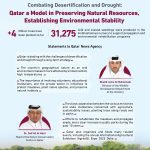
Combating Desertification and Drought: Qatar a Model in Preserving Natural Resources, Establishing Environmental Stability
UAE allocates US$30 million for emergency humanitarian response in El Obeid, calls for civilian protection, safe humanitarian aid access in Sudan

PORT SUDAN, June 10, 2026 (SUNA) — Minister of Health Dr. Haitham Mohamed Ibrahim on Wednesday met with the Humanitarian Aid Commissioner (HAC) Salwa Adam Benya at the Commission’s office to discuss arrangements and coordination of humanitarian work, as well as regulatory frameworks governing the operations of organizations in the upcoming phase. The meeting addressed administrative arrangements and organizational mechanisms aimed at safeguarding state sovereignty while facilitating the work of health organizations through a unified “one-stop” coordination mechanism, with emphasis on strengthening coordination between federal and state levels. It also discussed the importance of addressing operational challenges and developing clear plans to regulate the work of organizations, while commending the significant role of international partnerships in supporting the health system through service delivery, humanitarian response, and rehabilitation projects, as well as future response plans and strategic support. For her part, the Humanitarian Aid Commissioner stressed that the meeting reinforced institutional integration between the Ministry of Health and the Commission, ensuring unified visions and coordinated action. She emphasized the importance of state sovereignty and regulatory oversight over humanitarian work for all organizations operating in Sudan, whether in government-controlled or other areas, and underscored the necessity of joint approval by both the Ministry and the Commission for all projects. The meeting also highlighted procedures to facilitate the work of organizations in war-affected areas under the supervision and approval of the Commission, in order to prevent any violations of state sovereignty or the emergence of parallel systems for accrediting organizations in Sudan. It further stressed the importance of directing humanitarian projects toward reconstruction, rehabilitation, restoration of health systems, support for emergency operations, introduction of solar energy solutions, rehabilitation of health facilities, and provision of medical equipment and supplies, in order to strengthen the resilience of the health sector in facing ongoing challenges.BH/BH