Saudi Arabia’s Voluntary Carbon Market Fuels the Shift to a Low-Carbon

Under UAE President’s directives, UAE launches urgent relief response for Ghana flood victims
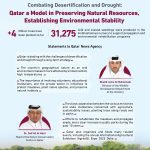
Combating Desertification and Drought: Qatar a Model in Preserving Natural Resources, Establishing Environmental Stability
UAE allocates US$30 million for emergency humanitarian response in El Obeid, calls for civilian protection, safe humanitarian aid access in Sudan

Geneva, May 22, 2026 (SUNA) – Federal Health Minister Dr. Haitham Mohamed Ibrahim met on Friday at the headquarters of the Global Fund in Geneva with Ibrahim Faria, Head of Africa and Middle East Management at the Global Fund to Fight AIDS, Tuberculosis and Malaria, and his team, on the sidelines of the 79th World Health Assembly. The meeting discussed partnership between Sudan and the fund, and ways to strengthen support provided to Sudan in combating malaria, tuberculosis, and HIV/AIDS, as well as strengthening the health system. Discussions also addressed priorities for the eighth funding cycle (GC8) and ensuring access to services for all populations. Representatives of the Global Fund praised the partnership with Sudan spanning more than two decades and commended the Ministry of Health’s efforts to continue delivering health services despite complex circumstances. They also congratulated Sudan on implementing the long-lasting insecticidal mosquito net campaign. The fund’s representatives stressed the importance of ensuring continued access to services across Sudan, including Darfur, Kordofan, and areas with a high burden of malaria, tuberculosis, and HIV/AIDS, alongside maximizing the impact of available financing under the eighth funding cycle, rationalising operational costs, and avoiding overlap with funding from other partners. For his part, the Health Minister expressed appreciation for the Global Fund’s continued support for Sudan, praising the fund team’s efforts to maintain an appropriate level of financing despite global funding reductions. He invited the fund’s team to visit Sudan in the coming period to assess the health situation and implementation processes on the ground. He affirmed Sudan’s commitment to providing health services to all populations across the country, pointing to gradual improvements in the security situation and the return of large numbers of citizens, creating better opportunities for programme implementation and reducing some operational costs that had increased during the war period. The minister also reviewed government efforts to support malaria control, including the launch of the national campaign to make Sudan malaria-free on April 20 and the signing of an agreement with the Gezira Agricultural Scheme to contribute to indoor residual spraying activities as part of corporate social responsibility efforts. The meeting further discussed the importance of aligning Global Fund support with financing from other partners, including the World Bank, the Global Alliance for Vaccines and Immunization (GAVI), the Islamic Development Bank, the African Development Bank, the King Salman Humanitarian Aid and Relief Center (KSRelief), and the Qatar Fund for Development, in a way that enhances integration and prevents duplication in health programme financing. Discussions also covered ways to improve the efficiency of supply chains, reduce operational costs, and sustain investments made through COVID-19 response funding, including mobile clinics, oxygen plants, and medical incinerators. The Global Fund also praised the process for selecting the principal recipient of Sudan’s grant, describing it as one of the best experiences in terms of transparency, quality of discussion, and management of conflicts of interest, while underscoring the importance of maintaining this momentum during the transition to new implementation arrangements. The meeting concluded with agreement to continue coordination between the Ministry of Health and the Global Fund to prepare a strong and focused funding request for the eighth funding cycle, ensure access to services for all populations, enhance efficiency, strengthen national programmes, and mobilize additional resources to support Sudan’s health system.BH/BH