
Jordan’s Q2 2026 GDP Expands 3.0%, Outperforming Regional Headwinds, International Forecasts
ENV-KUWAIT-SUSTAINABLITYKuwait strengthens environmental sustainability through strategic initiativesBy Zahra Al-Kadhmi

HLT-KUWAIT-SURGERYKuwait advances health sector with robotic, remote surgeryBy Mohammad Al-Moseb

Saudi Arabia’s Voluntary Carbon Market Fuels the Shift to a Low-Carbon

Amman, Oct. 21 (Petra) — Industrial exports rose by more than 90%
between 2020 and 2025, reaching nearly JD8.9 billion compared with
JD4.7 billion in 2020, according to Fathi Jaghbir, Chair of the
Jordan and Amman chambers of industry.
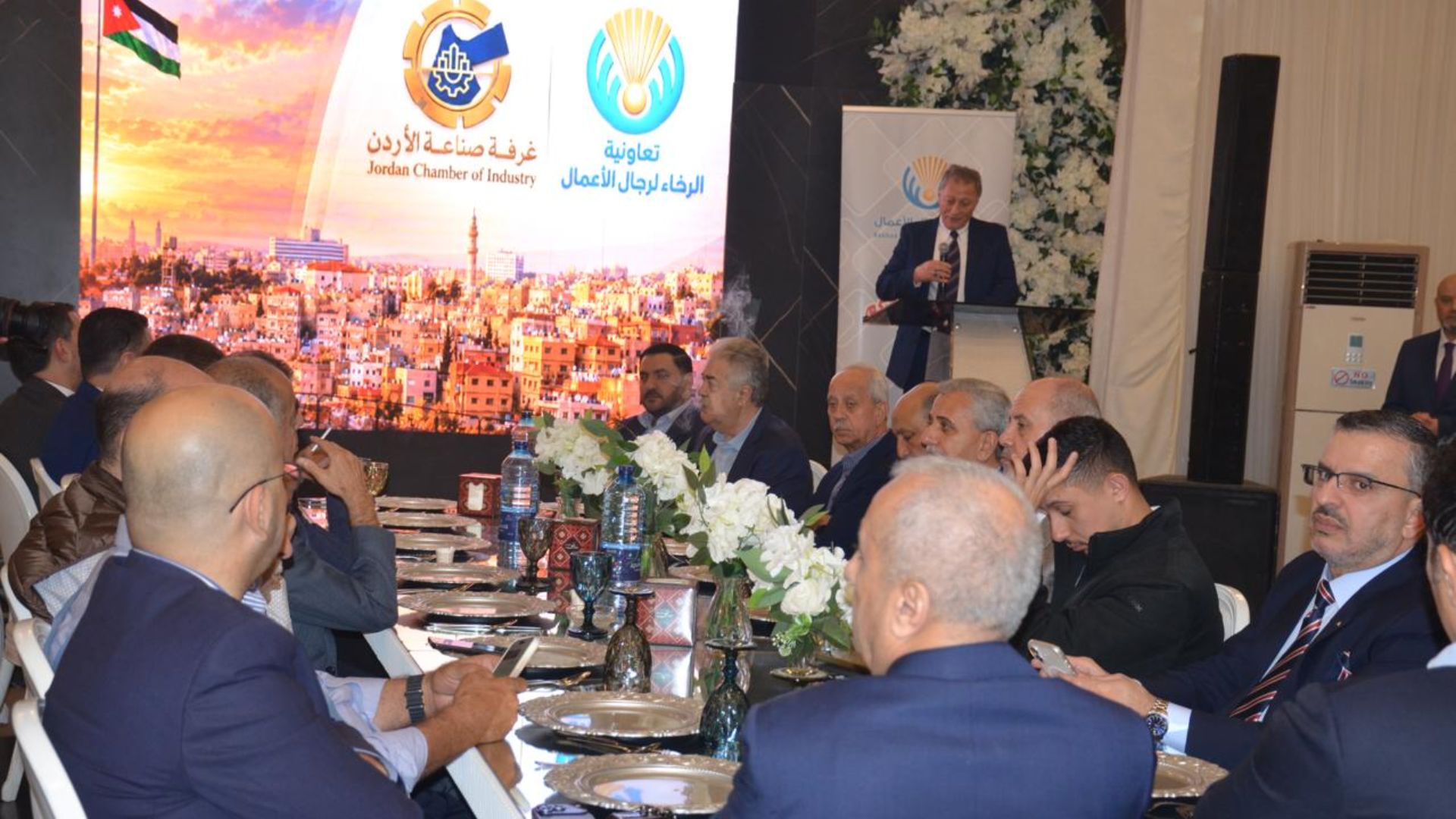
Speaking at a meeting organized by the Rakhaa Businessmen
Association, Jaghbir said the industrial sector had made significant
progress in recent years, accounting for 40% of Jordan’s economic
growth in 2025.
He attributed part of the sector’s development to strong Royal
support, which helped stimulate production and create employment
opportunities.
Jaghbir stressed the importance of stronger cooperation between the
industrial and commercial sectors, including exchanging information
on market needs and investment opportunities and coordinating efforts
to address shared challenges. Such cooperation, he said, would help
develop practical proposals to improve the business environment and
expand growth opportunities.
Rakhaa Businessmen Association Chair Rasmi Mallah said Jordanian
industry had demonstrated creativity, adaptability and responsiveness
to national needs during the COVID-19 pandemic.
He noted that Jordanian manufacturers had shown their ability to turn
challenges into practical solutions that supported production and
strengthened food and pharmaceutical security.
Mallah emphasized that the relationship between manufacturers and
traders should be viewed as a long-term partnership built on trust,
knowledge sharing and mutual benefit.
He said effective cooperation begins with understanding each other’s
needs, allowing manufacturers to identify market demand while helping
traders recognize the quality, diversity and competitiveness of
Jordanian products.
Manufacturers transform ideas into products, while traders connect
those products with consumers and markets, he explained, saying that
the complementary roles of production, marketing, distribution and
exports contribute to business growth and job creation.
He expressed the association’s interest in developing practical
cooperation with the Jordan and Amman chambers of industry and
continuing meetings that bring together manufacturers, traders and
distributors.
Established in Amman in 1996, the Rakhaa Businessmen Association
seeks to connect business owners and economic professionals across
sectors and promote entrepreneurial ideas and skills.
//Petra// AJ