
Saudi Arabia’s Voluntary Carbon Market Fuels the Shift to a Low-Carbon

Under UAE President’s directives, UAE launches urgent relief response for Ghana flood victims

Combating Desertification and Drought: Qatar a Model in Preserving Natural Resources, Establishing Environmental Stability
UAE allocates US$30 million for emergency humanitarian response in El Obeid, calls for civilian protection, safe humanitarian aid access in Sudan

Amman, Aug. 25 (Petra)– Rasmi Khazaalah – As the impacts of climate
change intensify across the Arab region, Jordan is emerging as a
model that can be built upon, thanks to its scientific expertise,
skilled human resources, and academic and research institutions,
despite facing rapidly rising temperatures, water scarcity, dwindling
natural resources, and mounting pressure on food and energy sectors.
Experts and researchers participating in the Second Conference on
Climate Change and Health in the Arab Region (CCHAR-II 2026), which
opened in Amman on Monday under the patronage of HRH Princess Sumaya
bint El Hassan, said Jordan is not limited to diagnosing the impacts
of climate change, but has the scientific capabilities needed to move
toward a more advanced stage based on developing practical solutions
that link climate, health, food, water, and energy within an
integrated system.
Speaking to the Jordan News Agency (Petra), they said Jordan has a
genuine opportunity to turn its geographic position, human resources,
and research capabilities into strengths, enabling it to approach
climate change not only as a crisis requiring a response, but also as
an opportunity to generate knowledge, foster innovation, develop
clean energy, improve food, water and health security, and build
greater resilience to the climate of the future.
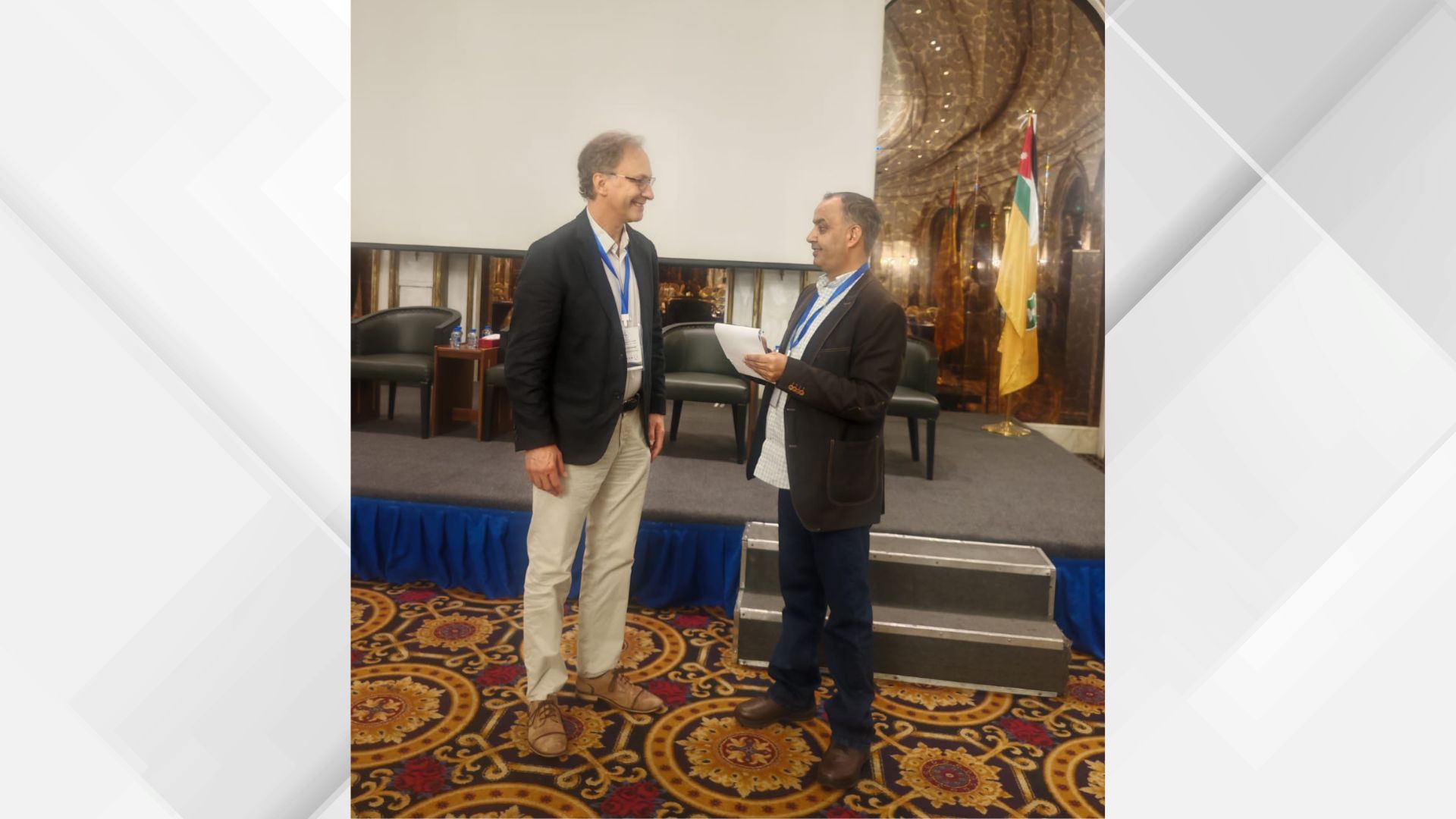
Harvard University environmental health professor Dr. Marc Weisskopf
said Jordan has a genuine capacity to address climate challenges,
supported by qualified human resources, universities, and researchers
who use scientific methods to understand climate and environmental
changes and their impacts.
He stressed the importance of linking climate, food, health, and
energy issues, as they are interconnected and cannot be addressed in
isolation. Developing an integrated climate-focused system, he said,
could provide a more effective foundation for responding to future
challenges.
Weisskopf noted that Jordan is among the countries most affected by
rising temperatures, while its location at the heart of an Arab
region facing accelerating climate change, growing climate
instability, water scarcity, and increasing desertification adds to
the scale of the challenges. At the same time, he said, these
challenges create opportunities to develop practical, science-based
solutions.
He explained that the participation of US research teams in the
conference aims to bring them closer to the realities on the ground
in Jordan and provide a direct understanding of the nature and scope
of its challenges. This would allow researchers to convey a more
accurate picture to US universities and research centers and
encourage greater research interest and cooperation focused on Jordan
and the climate issues it faces.
For his part, Texas A&M University professor of agricultural and
biological engineering Dr. Mokhtar Rabie said Jordan was among the
first countries in the region to address climate change
scientifically, relying on information and evidence to assess
problems and determine their dimensions.
Jordan has a solid database in the fields of climate and the
environment and has succeeded in diagnosing a significant portion of
its challenges, he said. This puts the Kingdom before an even more
important stage: moving from diagnosis and research to implementing
practical and effective solutions, particularly in the climate and
energy sectors.
Rabie said that having knowledge and data is a fundamental step in
addressing climate change, but the real challenge lies in translating
that knowledge into policies, projects, and solutions capable of
producing a tangible impact on people’s lives and on economic and
productive sectors.
Researcher Liri Luky Garcia of the University of California, San
Diego, said the level of research and studies conducted in Jordan on
the interconnections between climate, energy, food, and water
reflects significant scientific efforts made over recent years to
highlight these issues and seek appropriate solutions.
She pointed to genuine opportunities for Jordan to address climate
change scientifically, saying that the challenges posed by high
temperatures and resource scarcity could, if properly leveraged,
become new opportunities in the clean energy sector.
She cited the potential to capitalize on high temperatures and
abundant renewable energy resources to develop emerging sectors,
including green hydrogen, which could help Jordan diversify its
energy sources, create new economic opportunities, reduce emissions,
and adapt to the impacts of climate change.
The views of the three experts converge on a key point: Jordan now
has an important foundation for developing a more integrated climate
response. Scientific knowledge, universities, specialized expertise,
and databases represent key strengths, while linking climate with
health, water, food, and energy provides a broader framework for
understanding risks and addressing them.
//Petra// MF