Jordan’s Q2 2026 GDP Expands 3.0%, Outperforming Regional Headwinds, International Forecasts

ENV-KUWAIT-SUSTAINABLITYKuwait strengthens environmental sustainability through strategic initiativesBy Zahra Al-Kadhmi

HLT-KUWAIT-SURGERYKuwait advances health sector with robotic, remote surgeryBy Mohammad Al-Moseb

Saudi Arabia’s Voluntary Carbon Market Fuels the Shift to a Low-Carbon

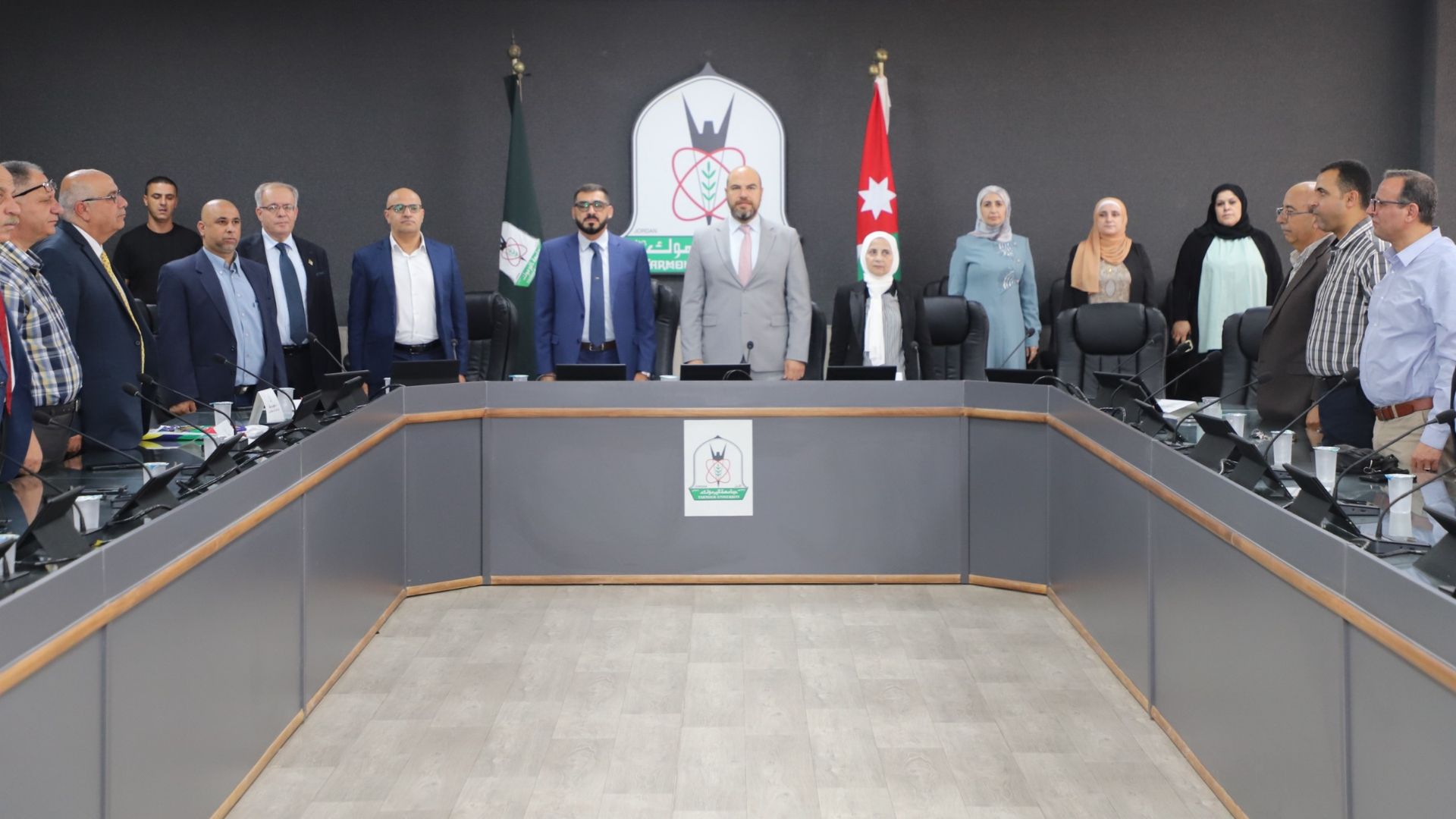
Irbid, Oct. 18 (Petra) — The Irbid Governorate Environment
Directorate, in cooperation with the Center for Sustainable
Development Studies (CSDS) at Yarmouk University and the Irbid
Flowers Environmental Association, held a workshop on Sunday titled
“Agriculture vs Climate Change: Adaptation Challenges and
Sustainability Opportunities.”
The event brought together parliamentarians, academics, specialists,
and representatives from official institutions and the local
community.
Opening the workshop, Yarmouk University President Malik Al-Sharairi
highlighted the need for interdisciplinary integration and joint
research to combat climate change and develop innovative,
science-backed solutions. He noted that climate change has evolved
beyond an environmental issue into a developmental, economic, and
social challenge that directly impacts water and food security,
natural resource sustainability, and agricultural livelihoods.
Hanan Malkawi, Director of the Center for Sustainable Development
Studies, pointed out that climate impacts are increasingly evident in
declining water resources, erratic rainfall, and rising temperatures,
putting growing pressure on Jordan’s agricultural sector amid
existing water scarcity.
Director of the Irbid Environment Directorate Mustafa Al-Zyoud
stressed that mitigating climate impacts requires an integrated
approach based on informed planning and sustainable management of
water and soil resources.
President of the Irbid Flowers Environmental Association Ashraf Abu
Khalil underscored the importance of supporting Jordanian farmers as
key partners in environmental protection and resource conservation.
The workshop featured two panel sessions moderated by Environmental
Awareness Specialist at the Irbid Environment Directorate, Mohammad
Al-Draizi.
The first session examined climate policies, legislation, climate
finance, and the role of technological innovation and remote sensing
in precision agriculture and water stress management. Papers were
presented by Eng. Shurouq Bani Atta from the Environment Directorate,
MP Hamza Al-Hawamdeh, and Dean of the Faculty of Arts at Yarmouk
University Khaled Al-Hazaymeh.
The second session focused on integrated water resource management,
climate-smart agricultural adaptation strategies, and disaster risk
reduction within food value chains, focusing on ancient olive trees
as a case study.
Presenters included Ziad Al-Ghazawi from the Jordan University of
Science and Technology (JUST), Director of the Iksaab Center for
Sustainable Development; Mazen Abu Qamar; and President of the
Development for People and Environment Association Ahmad Al-Shraideh.
Participants reaffirmed the need to align public policies with
scientific research and climate-smart agricultural practices to build
sector resilience and safeguard the Kingdom’s food security.
//Petra// AF