Jordan’s Q2 2026 GDP Expands 3.0%, Outperforming Regional Headwinds, International Forecasts
ENV-KUWAIT-SUSTAINABLITYKuwait strengthens environmental sustainability through strategic initiativesBy Zahra Al-Kadhmi

HLT-KUWAIT-SURGERYKuwait advances health sector with robotic, remote surgeryBy Mohammad Al-Moseb
Saudi Arabia’s Voluntary Carbon Market Fuels the Shift to a Low-Carbon

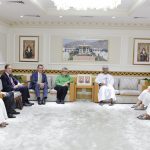
Amman, Sept. 23 (Petra) — The Lower House of Parliament and the
European Parliament’s Delegation for Relations with the Mashreq
countries discussed Wednesday ways to strengthen the
Jordanian-European strategic partnership and expand cooperation in
political, economic, investment, and security fields.
The discussions took place during the 13th Jordan-EU
interparliamentary meeting and also addressed regional and
international developments and issues of mutual concern.
House Speaker Mazen Qadi said the region is facing growing challenges
that require de-escalation, mutually beneficial partnerships, respect
for state sovereignty and international law, and dialogue as a means
of addressing crises.
He described Jordan-EU relations as “deep-rooted,” saying they have
developed over decades into a comprehensive strategic partnership
based on shared interests and mutual trust.
Qadi highlighted the first Jordan-EU summit, held in Amman earlier
this year, as an important milestone that demonstrated the two sides’
commitment to working together for regional stability, peace,
security and prosperity.
He also highlighted His Majesty King Abdullah II’s address to the
United Nations General Assembly, saying it presented the
international community with its legal, political and moral
responsibilities and offered a comprehensive Jordanian vision for
addressing regional crises, foremost among them the Palestinian
issue.
Qadi underlined that the address is a roadmap to a just and lasting
peace that can only be achieved through the two-state solution,
leading to the establishment of an independent and sovereign
Palestinian state on its national territory.
He welcomed the joint statement issued at the Jordan-EU summit,
particularly its reaffirmation of the two-state solution and
rejection of annexation, displacement and settlement activities, as
well as its emphasis on preserving the historic and legal status quo
of Islamic and Christian holy sites in Jerusalem under the Hashemite
custodianship.
He also stressed the importance of Jordan’s upcoming Jordan-EU
Investment Conference in November and called on European partners to
expand cooperation in investment, technology, energy, water and
economic development.
Qadi said parliamentary diplomacy provides an important platform for
dialogue and stronger ties between peoples, calling for continued
Jordanian-European parliamentary cooperation.
He also highlighted cooperation in security and defense,
counterterrorism, border management and combating smuggling and
extremism, describing it as an important component of the partnership
that serves the security of Jordan, Europe and the region.
For his part, François-Xavier Bellamy, head of the European
Parliament’s Delegation for Relations with the Mashreq countries,
stressed the importance of strengthening relations with Jordan,
particularly parliamentary ties.
Bellamy said the two sides share responsibility for addressing the
region’s current challenges and reaffirmed the EU’s support for
Jordan in confronting regional conflicts and threats to security and
stability. He described Jordan as a pillar of peace and an important
regional actor, while commending the Kingdom’s support for refugees
over the years.
Bellamy also reaffirmed the European Parliament’s support for the
two-state solution and the Palestinian people’s right to establish
their own state, describing it as the path toward resolving the
conflict and achieving peace.
He welcomed Jordan’s political modernization process and the work of
the Lower House of Parliament, saying the European Parliament seeks
to cooperate with Jordan through parliamentary and political channels
in various fields.
The European delegation said the Palestinian issue remains a central
challenge facing the region, noting that Israeli policies and actions
on the ground have repercussions for regional security and stability.
It reaffirmed the Palestinian people’s right to self-determination
and to establish an independent state, while expressing concern over
what it described as declining respect for human rights and
international law.
The delegation also praised His Majesty King Abdullah II’s address to
the U.N. General Assembly, describing it as a clear articulation of
Jordan’s position on regional issues.
The two sides stressed the importance of continued parliamentary
dialogue and expanding economic ties through increased European
investment in Jordan, greater access for Jordanian exports to
European markets, technology transfer and development, and strategic
projects.
The meeting also tackled economic challenges, including joint
programs for training and employment, as well as labor mobility
programs between Jordan and European countries, with the aim of
creating mutual benefits and reducing the loss of skilled workers.
Cooperation opportunities in renewable energy, water, food security,
transportation, infrastructure and technology were also discussed,
with the European side highlighting Jordan’s importance as an EU
partner and the potential for expanded economic and investment
cooperation.
On regional issues, the meeting addressed the Palestinian issue and
developments in Syria, Lebanon, Yemen and Sudan, as well as regional
security, migration, energy and developments related to Iran.
The Jordanian side reiterated the need to address the root causes of
regional crises and uphold international law and international
legitimacy, while reaffirming its call for a just resolution to the
Palestinian issue and the establishment of an independent Palestinian
state with East Jerusalem as its capital.
The two sides stressed that the Jordanian-European partnership
extends beyond economic cooperation to include security, stability,
energy, water, food security, migration, refugees, development, and
technology, emphasizing the importance of continued European support
for Jordan and expanded development and investment projects.
//Petra// AJ