Saudi Arabia’s Voluntary Carbon Market Fuels the Shift to a Low-Carbon

Under UAE President’s directives, UAE launches urgent relief response for Ghana flood victims
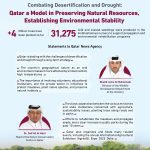
Combating Desertification and Drought: Qatar a Model in Preserving Natural Resources, Establishing Environmental Stability
UAE allocates US$30 million for emergency humanitarian response in El Obeid, calls for civilian protection, safe humanitarian aid access in Sudan

Amman, May 28 (Petra) – Minister of Public Works and Housing Maher Abu Samen reaffirmed on Wednesday His Majesty King Abdullah II’s commitment to strengthening Jordan’s education sector, noting that the Kingdom has achieved significant progress in improving school infrastructure and providing a safe and conducive learning environment.
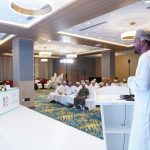
Speaking at the “Schools of the 21st Century” conference, Abu Samen emphasized that these developments represent a qualitative leap in educational infrastructure, thanks to a strategic partnership between the Jordanian government, the European Union (EU), and the German Development Bank (KfW).
He highlighted the importance of unified efforts to create safe, inclusive, and sustainable educational environments for all students, viewing such investments as essential to Jordan’s long-term vision.
Minister of Education and Higher Education Azmi Mahafzah also addressed the conference, praising the strong cooperation between the ministries and international partners in advancing education a foundation for a brighter future.
He expressed appreciation for EU and KfW support, which helped construct seven modern schools equipped with renewable energy systems and inclusive facilities.
The new schools include 160 classrooms serving over 6,280 students and have helped eliminate six rented buildings, reduce overcrowding in 19 schools, and end the second-shift system in five. They are designed to meet the needs of students across age groups, including those with disabilities, while promoting values of inclusion and community engagement.
The project also equipped 500 examination halls for electronic high school (Tawjihi) exams, benefiting over 1,000 Syrian refugee students.
EU Program Manager Wieke Waterschoot emphasized that the initiative aligns with Sustainable Development Goal 4, which promotes quality, inclusive education. She praised Jordan’s resilience in accommodating approximately 160,000 Syrian refugee children and noted the pressures on the education system, especially following the COVID-19 pandemic.
While acknowledging the Ministry of Education’s efforts to maintain stable student-teacher ratios, she stressed the need for continued investment. The EU, she added, has directly supported the construction of the seven schools in Amman, Irbid, and Mafraq, recognizing education as a key driver of long-term societal development.
The conference featured documentary presentations on the project, technical sessions discussing lessons learned, and a panel on sustainable school design with contributions from engineering experts. At the close of the event, school design guidelines developed by consulting teams in collaboration with the ministries were distributed.
The €36 million EU grant financed the construction and furnishing of the seven schools, the setup of computerized exam centers, and training programs for ministry engineers in international contracting and procurement.
//Petra// AO
28/05/2025 17:07:06