Saudi Arabia’s Voluntary Carbon Market Fuels the Shift to a Low-Carbon

Under UAE President’s directives, UAE launches urgent relief response for Ghana flood victims

Combating Desertification and Drought: Qatar a Model in Preserving Natural Resources, Establishing Environmental Stability
UAE allocates US$30 million for emergency humanitarian response in El Obeid, calls for civilian protection, safe humanitarian aid access in Sudan

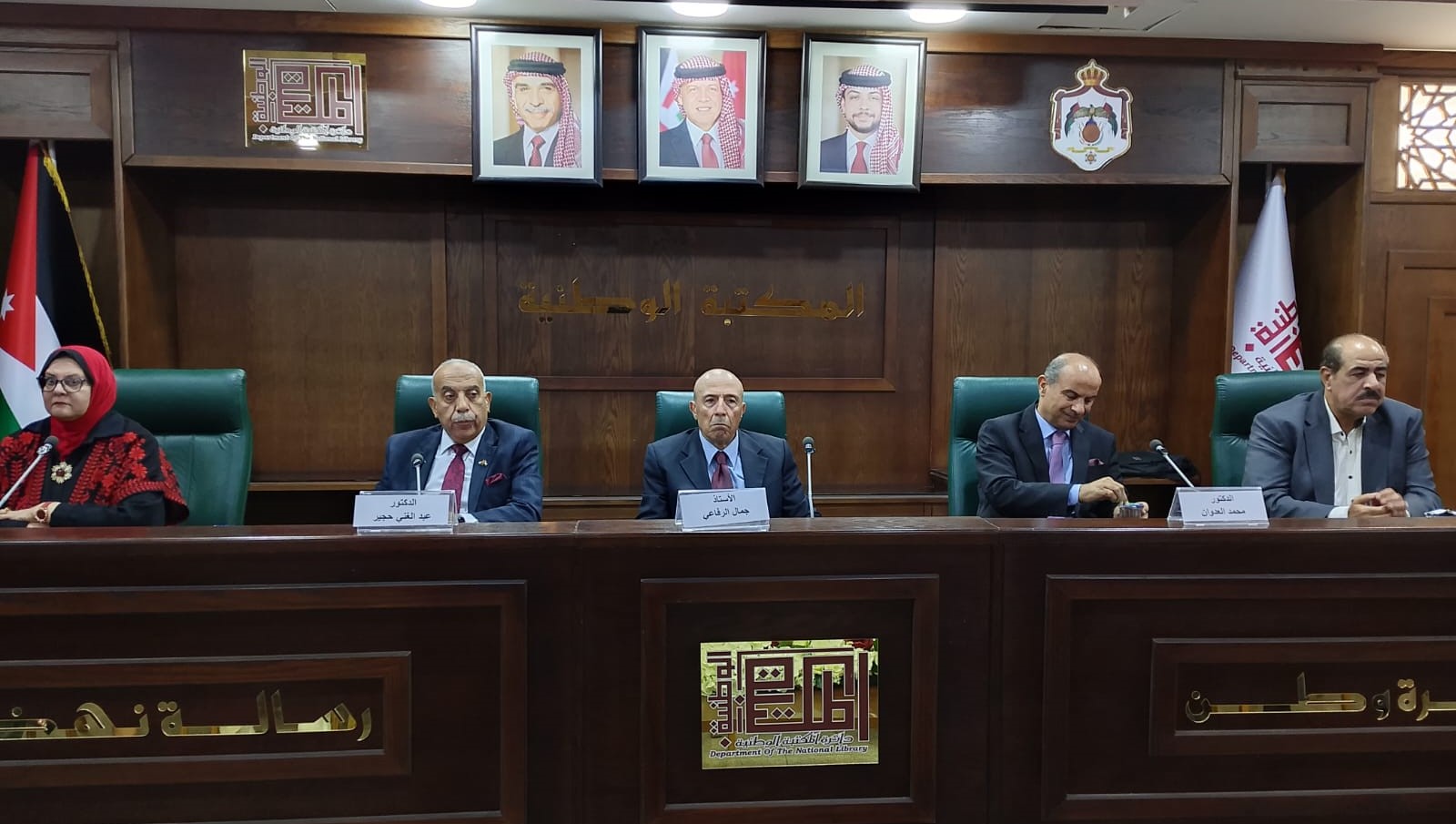
Amman, Aug. 10 (Petra) — A seminar titled “Jerusalem Amid Current
Developments” on Monday examined the status of the holy city, the
political and on-the-ground challenges facing it, the impact of
international and regional shifts on its future, and Jordan’s role
and Hashemite custodianship in protecting Muslim and Christian holy
sites.
Participants said Jerusalem was not merely a passing political issue
but represented a religious, historical, and national cause. They
stressed the need to preserve its Arab, Muslim, and Christian
identity and confront attempts to alter its historical and legal
status amid mounting Israeli violations in the city and its holy
sites, particularly following Israel’s war on the Gaza Strip.
They stressed that Hashemite custodianship was a key pillar in
protecting the holy sites and preserving their identity, underscoring
the importance of continuing political, legal, and diplomatic efforts
to counter measures aimed at changing Jerusalem’s identity and
historical status.
At the opening of the seminar, organized by the Jerash Festival for
Culture and Arts administration in cooperation with the Jordanian
Writers and Literatures Union, union president poet Alyan Al-Adwan
stressed the importance of the festival’s cultural and intellectual
events.
He praised the festival administration’s role in supporting culture,
intellectuals, and writers and welcomed its cooperation with the
association and the participation of prominent researchers and
thinkers in addressing the Jerusalem issue.
The seminar featured four main sessions. The first, titled
“Jerusalem: The Compass and the Key to a Solution,” was addressed by
former minister Hazem Qashou. He said Jerusalem represented the
compass for Jordan and the Hashemites and was a symbol of Arab
identity because of its religious, historical, and political
significance.
Qashou said Jordan’s position on the holy city was rooted in a
historical and religious mission, adding that the country’s
connection to Jerusalem was an integral part of its national
identity.
Jordan, he said, represented an important key to the Jerusalem issue
by virtue of its geography, history, and political standing, while
its ties to the city had been strengthened through the Hashemites’
longstanding role in caring for and defending its holy sites.
In the second session, titled “Jerusalem, the Hashemites and the
Hashemite Kingdom of Jordan,” former director of the Hashemite Royal
Jordanian Documentation Center Mohammad Issa Al-Adwan reviewed
aspects of the historical relationship between Jordan and Jerusalem,
drawing on historical documents and correspondence concerning the
city’s place in the eyes of the Hashemite leadership and Jordanians.
Al-Adwan said Jerusalem was the place closest and dearest to
Jordanians and the Hashemites, citing historical documents detailing
King Abdullah I’s interest in the city, which culminated in his
assassination there.
The documents concerning Jerusalem reveal the depth of its importance
to Arabs and Muslims, particularly the Hashemites, he said,
describing the city as “Jordan’s dagger” and noting that attempts to
control it and alter its identity dated back decades.
He said documents compiled over years of research confirmed Jordan’s
historic role as a refuge and source of support for the Palestinian
people, as well as its role in preserving Jerusalem and its holy
sites.
In the third session, titled “Jerusalem and International and
Regional Developments,” researcher and writer Jamal Al-Rifai referred
to the 1995 U.S. decision to recognize Jerusalem as Israel’s capital,
which was implemented in 2017.
He highlighted developments in the city since the eastern part was
occupied in 1967 and measures targeting its residents and landmarks,
including the demolition of the Mughrabi Quarter.
Al-Rifai also addressed Israeli violations in the West Bank and
Jerusalem, particularly following Israel’s war on the Gaza Strip. He
stressed the importance of adhering to international law and relevant
international resolutions and resolving disputes through peaceful
means rather than imposing facts on the ground by force.
In the fourth session, titled “Escalating Israeli Attacks on Places
of Worship and Worshippers in Jerusalem and the Role of Hashemite
Custodianship in Protecting Holy Sites,” Abd Al-Ghani Hujeir
addressed the scale of violations against holy sites in Jerusalem.
He pointed to an increase in Israeli incursions into Al-Aqsa Mosque,
saying more than 25,000 settlers had entered the compound during the
first half of the current year.
He also highlighted reported attacks on holy sites, Christian
residents, and places of worship, as well as the performance of
religious rituals, attempts to undermine the existing historical and
legal status quo, restrictions on worshippers, urban policies aimed
at changing Jerusalem’s character, and excavations around Al-Aqsa
Mosque.
Hujeir stressed Jordan’s important role in protecting the holy sites
through diplomatic and legal action against attempts to alter
Jerusalem’s existing historical and legal status quo.
He also highlighted the role of the Ministry of Awqaf and Islamic
Affairs in overseeing the holy sites and the continuation of the
Hashemite restoration and development of Muslim and Christian holy
sites.
Writer Sawsan Al-Muhtadi, who moderated the seminar, stressed the
importance of addressing the Jerusalem issue through a
multidimensional approach combining political and historical
perspectives; international and regional developments; the situation
on the ground at the holy sites; and the role of Hashemite
custodianship in protecting them and preserving their Arab, Muslim,
and Christian identity.
At the conclusion of the seminar, the union’s president honored the
participating speakers and presented them with certificates of
appreciation for their contributions and intellectual and documentary
work on the Jerusalem issue.
//Petra// AF