Saudi Arabia’s Voluntary Carbon Market Fuels the Shift to a Low-Carbon

Under UAE President’s directives, UAE launches urgent relief response for Ghana flood victims
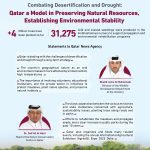
Combating Desertification and Drought: Qatar a Model in Preserving Natural Resources, Establishing Environmental Stability
UAE allocates US$30 million for emergency humanitarian response in El Obeid, calls for civilian protection, safe humanitarian aid access in Sudan

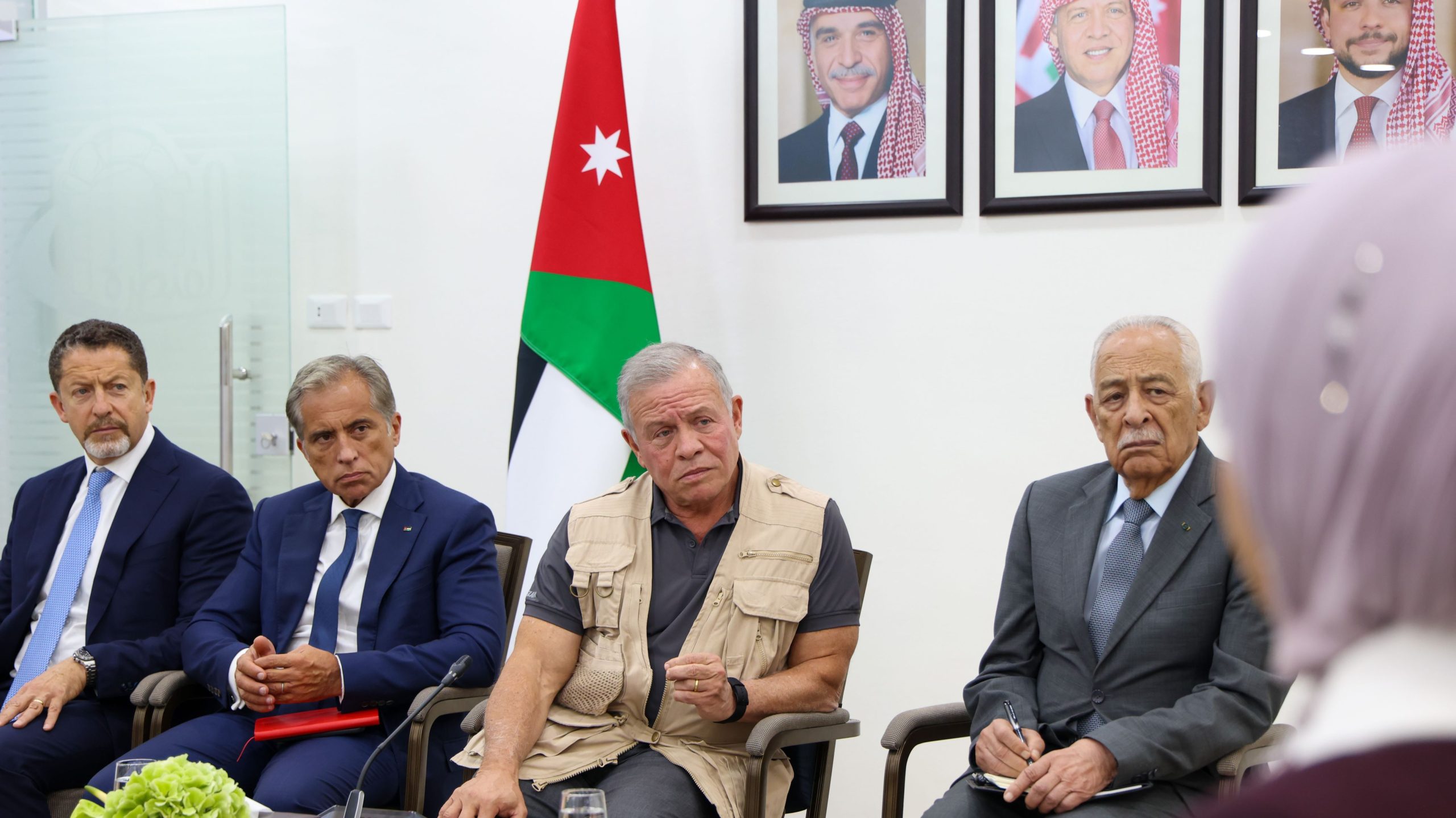
Maan, Aug. 12 (Petra) — His Majesty King Abdullah II’s visit to Maan
Governorate underscored the strong bond between the leadership and
the people, conveying messages of reassurance and confidence in the
future while reaffirming that Jordan remains secure through the unity
of its people and their support for their leadership.
The visit also carried clear development priorities, placing young
people at the forefront through a focus on economic empowerment and
expanding opportunities for employment and productive activity.
It further reflected a field-based approach centered on direct
engagement with citizens and listening to their demands, supporting
comprehensive development in Maan and strengthening its position as a
promising environment for investment and growth within an integrated
national vision.
Maan Governor Khaled Al-Hajjaj said His Majesty the King’s continued
visits to Maan and other governorates reflected his commitment to
reaching citizens, identifying their needs and listening to their
demands, adding that they demonstrated the Hashemite leadership’s
closeness to the people and the depth of the bond between them.
He said the people of Maan would remain loyal to Jordan and the
Hashemite leadership, committed to national principles and rejecting
anything that could threaten the country’s security and stability,
undermine its unity, or jeopardize its resources and achievements.
Al-Hajjaj said the king’s directives and continued attention to Maan
had contributed to its development, particularly through a focus on
education, infrastructure, and basic services, as well as investment
across various sectors, especially in Petra, enhancing its tourism
and economic standing and benefiting residents.
He said the king’s directives placed particular emphasis on young
people in Maan by supporting initiatives and projects that empower
and train them, create jobs, and encourage their participation in the
labor market and productive sectors.
Maan, he added, has promising growth opportunities given its tourism,
economic, and investment potential, stressing the need to continue
attracting investment towards productive sectors to create jobs,
improve services, and promote sustainable development.
President of Al Hussein Bin Talal University Aatef Al-Kharabsheh said
the king’s visit represented an advanced model of direct engagement
with citizens and reflected a leadership approach based on proximity
to people and genuine attention to their concerns and aspirations.
He said the visit was distinguished by the spontaneous and personal
nature of the king’s meetings with residents of Maan. The king
personally took notes of citizens’ concerns and demands without
barriers or intermediaries, demonstrating transparency and
seriousness in following up on issues on the ground.
Al-Kharabsheh said the king gave special attention to retired
military personnel, prioritizing listening to them in recognition of
their national role and sacrifices.
He also highlighted the king’s emphasis on strengthening tourism
cooperation between Jordan and Egypt, which could maximize the
benefits of their shared tourism assets and open new opportunities
for travel between the two countries, both of which have rich
historical and civilizational heritage.
The king also stressed Jordan’s balanced and moderate foreign policy,
which has enabled the country to maintain stability despite regional
challenges and reinforced its position as a pivotal state capable of
building effective regional and international partnerships,
Al-Kharabsheh said.
He said the king also discussed promising development projects in
Maan, notably the dry port project, which could bring a qualitative
shift to the logistics sector and strengthen the governorate’s
position as a regional commercial hub. The Maan Development Company
also plays a key role in attracting investment, creating jobs, and
stimulating local economic growth, he added.
Journalist and writer Ramadan Al-Rawashdeh said Jordan had remained a
country where justice prevails since its establishment in 1921,
stressing that Jordanians stood behind the king in protecting the
country’s security against threats from any source.
He said Jordan remained safe through the unity of its people and
their support for the king, noting that tribes and all segments of
Jordanian society stood united in confronting any threat to the
country.
Al-Rawashdeh praised the Jordan Armed Forces-Arab Army for defending
the country’s airspace, land, and waters, as well as the security
agencies, particularly the General Intelligence Directorate, for
protecting Jordan and thwarting attempts by transnational terrorist
organizations to infiltrate the country.
He said the king’s statement that “Jordan, the country of brave men,
is nothing to fear for” carried a message not only to Jordanians but
also to various parties in the region and beyond that Jordan was
capable of protecting its territory, airspace, and resources.
He also praised the efforts of the armed forces and security agencies
in combating drug smuggling along Jordan’s northern borders, saying
their response had helped curb a threat to the country’s security and
stability.
Director of the Al Qantara Centre for Human Resources Development
Rakan Al-Rawad said the king’s visit to the center reaffirmed his
continued support for Jordanian youth, particularly young people in
Maan and the Southern Badia, and his commitment to developing their
talents and capabilities and supporting innovation and creativity.
He said the king was briefed on the center’s programs and services,
which have benefited about 51,000 residents of Maan and the Southern
Badia. The king also toured facilities offering English-language
classes and training in smart systems design, electronics, and
programming, as well as a children’s choir room.
Al-Rawad said the king’s meeting with young men and women benefiting
from the center’s programs and listening to their experiences and
ideas reflected his commitment to empowering young people and
encouraging them to use their skills and experience to serve and
develop their communities.
Sociology professor at Al Hussein Bin Talal University’s Faculty of
Educational Sciences, Aida Muhajer Abu Tayeh said women in Maan had
received royal support that had expanded their participation in
political and public life.
She said women’s presence in Maan had become increasingly visible in
recent years in urban, rural, and Badia communities, particularly in
higher education, employment, and public affairs.
The development had helped women build education, experience, and
skills, which could be leveraged to expand their participation in
employment, leadership, and decision-making, Abu Tayeh said.
She added that women had gained greater opportunities to compete and
participate in programs covering leadership, political awareness,
entrepreneurship, project management, and digital skills,
strengthening their capacity to contribute to economic and social
development.
The meeting with the king also provided an opportunity to highlight
challenges facing women in Maan, particularly employment and access
to finance, she said, stressing that royal support should encourage
continued efforts to turn women’s skills and capabilities into
genuine economic and development opportunities by strengthening
women’s organizations, linking training with financing and markets,
and enhancing women’s role as active partners in local development.
//Petra// AF