Saudi Arabia’s Voluntary Carbon Market Fuels the Shift to a Low-Carbon

Under UAE President’s directives, UAE launches urgent relief response for Ghana flood victims

Combating Desertification and Drought: Qatar a Model in Preserving Natural Resources, Establishing Environmental Stability

UAE allocates US$30 million for emergency humanitarian response in El Obeid, calls for civilian protection, safe humanitarian aid access in Sudan

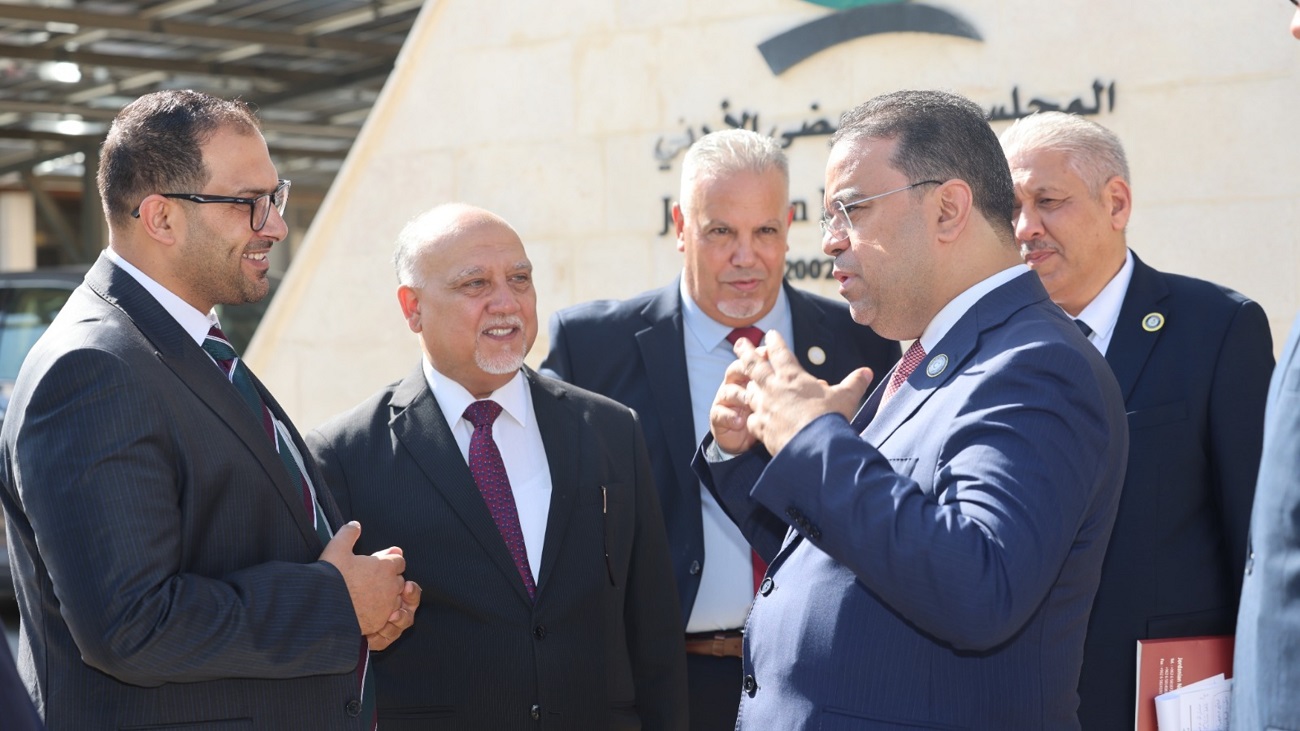
Amman, Aug. 12 (Petra) — Strengthening cooperation with Jordan in
human resources development, vocational training and labor market
management is a priority for Libya, Libyan Minister of Labor and
Rehabilitation Ali Al-Abed said.
In an interview with the Jordan News Agency (Petra) during his visit
to the Kingdom, Al-Abed said Libya is interested in benefiting from
Jordan’s experience in developing human resources and managing the
labor market. He also highlighted Jordan’s experience in vocational
training and nursing.
Al-Abed said Jordan provides opportunities for Libyans in education,
healthcare and other service sectors, adding that he feels at home
when visiting the Kingdom.
He said his visit followed an official invitation from Minister of
Transport and Labor Nidal Al-Qatamin to sign a memorandum of
understanding aimed at strengthening cooperation in vocational
training and benefiting from Jordan’s experience in regulating and
managing foreign labor. He said the Libyan Government of National
Unity is also interested in vocational training, rehabilitation and
labor market regulation.
He said Libya plans to form a technical team from its Ministry of
Labor to visit the control and inspection center at Jordan’s Ministry
of Labor to review labor market monitoring mechanisms, programs and
procedural guidelines and their implementation.
The Libyan side also plans to study Jordan’s National Employment
Program and the incentives provided to support the integration of
young people into the private sector. Al-Abed said Libya’s labor
market is developing and that this growth is reflected positively in
the national economy.
On vocational training, Al-Abed highlighted the role of Luminus
Technical University College and said an agreement had been reached
to train Libyan trainers and provide them with accredited
certificates in several technical fields.
He also referred to understandings on opening a branch of the college
in Libya to transfer expertise, develop skills and establish
specialized training programs that meet the needs of the Libyan labor
market.
During the delegation’s visit to the Jordan Nursing Council, Al-Abed
said developing Libya’s healthcare sector depends on continuous
training and professional development for nursing staff, given its
impact on the health system.
He said work had begun on establishing the Libyan-Jordanian Center
for Nursing and Midwifery in cooperation with the Libyan Ministry of
Health. The center would draw on Jordanian experience in nursing,
including clinical simulation, the legislation and regulations
governing the Jordan Nursing Council, continuing training and
examinations, and the use of technology and artificial intelligence
in the sector.
A technical team will be formed to prepare a plan for establishing
the center in Libya. Al-Abed also said arrangements would be made for
a planned visit by the Libyan health minister to meet with his
Jordanian counterpart and the Jordan Nursing Council, with the aim of
obtaining international and Jordanian accreditation for training
courses and ensuring the quality of certificates and examinations.
He said September has been set for beginning the implementation of
the recommendations and outcomes of the visit through expedited
procedures, stressing that establishing the center is a top priority.
Al-Abed attributed Jordan’s experience in the health and
institutional sectors to the attention and follow-up of King Abdullah
II. He also highlighted Jordan’s security and stability, leadership
and qualified human resources.
//Petra//WH