Jordan’s Q2 2026 GDP Expands 3.0%, Outperforming Regional Headwinds, International Forecasts
ENV-KUWAIT-SUSTAINABLITYKuwait strengthens environmental sustainability through strategic initiativesBy Zahra Al-Kadhmi

HLT-KUWAIT-SURGERYKuwait advances health sector with robotic, remote surgeryBy Mohammad Al-Moseb

Saudi Arabia’s Voluntary Carbon Market Fuels the Shift to a Low-Carbon

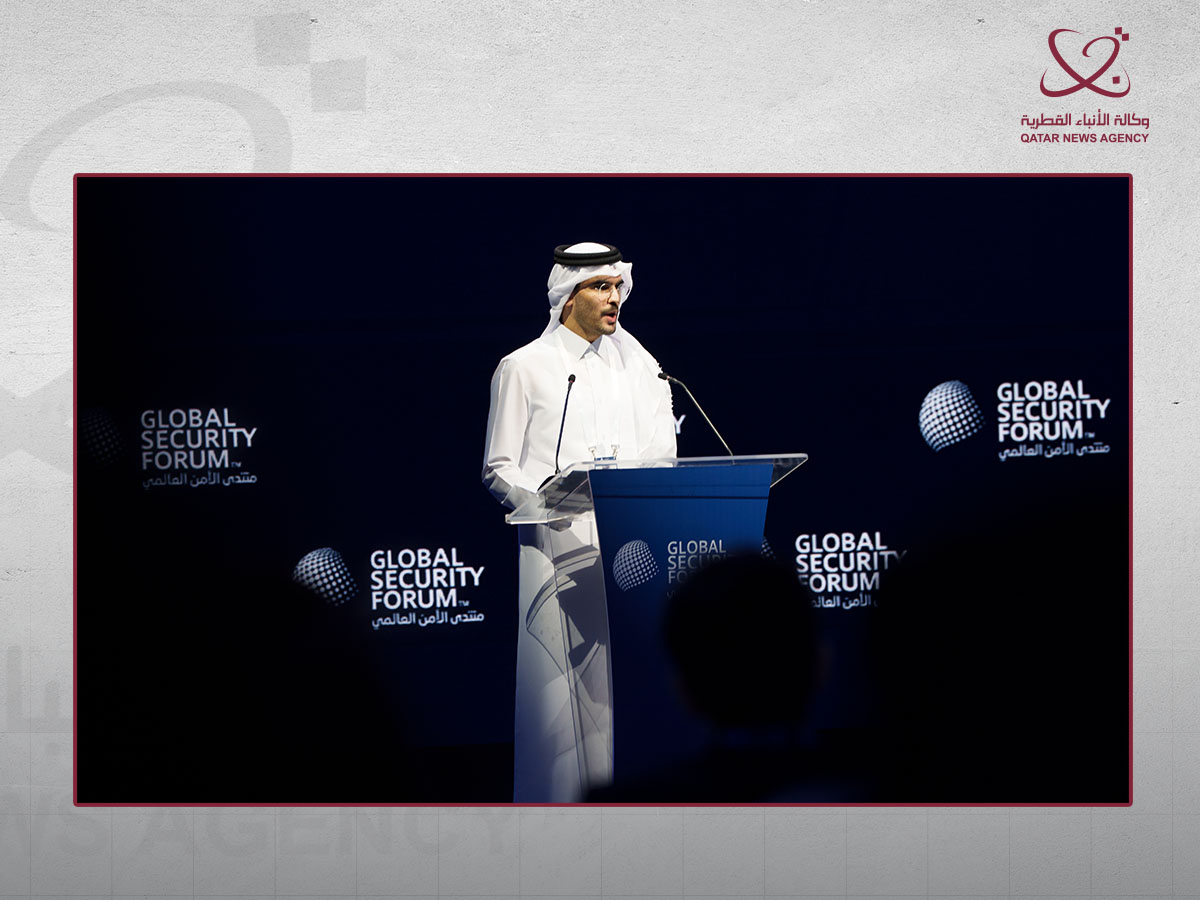
Doha, October 21 (QNA) – Director General of the National Cyber Security Agency (NCSA) Ahmed Mohammed Al Mutawa Al Hammadi affirmed that the State of Qatar considers international cooperation a fundamental pillar of its cybersecurity strategy.
In his remarks during the third and final day of the Global Security Forum 2026, hosted by Doha, he noted that issues concerning alliances and cooperation have never been raised with such clarity and significance among the world’s nations as they are today.
In this context, he noted that international relations and alliances have undergone radical shifts as the world moves increasingly toward a multipolar order. He added that the strategic need to forge alliances based on common ground and mutual interests has become greater than ever, ensuring their effectiveness in protecting the interests of states and safeguarding their sovereignty.
NCSA Director General highlighted that nations are rapidly accelerating the adoption of digitalization across many of their vital functions and operations, alongside the integration of emerging technologies and artificial intelligence; furthermore, digital tools and assets have become widely available on a global, commercial scale.
He pointed out that these developments have given rise to significant strategic threats, which could, in certain areas, be turned to one’s advantage, but have also compounded the risks to the interests, functions, and sovereignty of states.
NCSA Director General added that the adoption of emerging technologies has increased the complexity of cyberattack methods, leading to a rise in automated attacks and threats targeting supply chains. He indicated that the cost of data breaches has already reached significant levels, while the global cost of cybercrime has climbed into the trillions of dollars, a figure expected to continue rising over time, thereby posing grave risks to global security interests and the sovereignty of nations.
He noted that as these threats and challenges grow, the value of exchanging lessons learned and experiences, from which we can all benefit, becomes increasingly significant. He pointed out that, despite the relatively recent establishment of the NCSA, it has successfully leveraged international partnerships to serve both national and international security.
At the bilateral level, he said, the NCSA has signed and implemented a number of regional agreements with key allies and partners, including the United States, the United Kingdom, the Kingdom of Saudi Arabia, and the Republic of Singapore, which NCSA greatly values.
NCSA Director General expressed his aspiration to sign and implement further agreements, with the aim of exchanging lessons learned and expertise in areas such as policy development, the protection of critical national infrastructure, the building of institutional and human capacity, and the establishment of cooperation rooted in executive and operational action.
Regionally, the NCSA collaborates with regional blocs, within the frameworks of the Gulf Cooperation Council (GCC) and the Arab League, to align perspectives on policies, strategies, and standards, and to strengthen operational cooperation. This is particularly relevant given the persistent threats facing the region, especially those targeting its critical infrastructure. It is of strategic importance to establish a regional framework and structure that enable the formation of a unified front against these threats.
Internationally, he noted that the Agency participates in a number of organizations and initiatives that address various cybersecurity issues, such as the United Nations’ global mechanism for incident response and containment teams, the Organization of Islamic Cooperation, the International Telecommunication Union, and the Common Criteria framework.
These entities work to establish standards and rules governing conduct in cyberspace, share best practices in policy and governance, and enhance global cyber readiness through well-established international capacity-building initiatives.
He underscored the importance of recognizing that the more we expand the exchange of expertise and succeed in applying it effectively within national contexts, the safer the world becomes in the digital age in which we live. He emphasized that the key to protecting interests, safeguarding sovereignty, and fostering prosperity lies in leveraging all available avenues for dialogue and putting them into practical action, alongside establishing frameworks that enable the implementation of initiatives in a comprehensive and integrated manner.
Concluding his remarks, NCSA Director General Ahmed Mohammed Al Mutawa Al Hammadi emphasized that the more diverse the channels relied upon to discuss and address issues, the greater the lessons and experiences that can be shared, ultimately adding tangible value to our contributions and solutions as we confront the growing security challenges we face today. (QNA)