Saudi Arabia’s Voluntary Carbon Market Fuels the Shift to a Low-Carbon

Under UAE President’s directives, UAE launches urgent relief response for Ghana flood victims

Combating Desertification and Drought: Qatar a Model in Preserving Natural Resources, Establishing Environmental Stability
UAE allocates US$30 million for emergency humanitarian response in El Obeid, calls for civilian protection, safe humanitarian aid access in Sudan

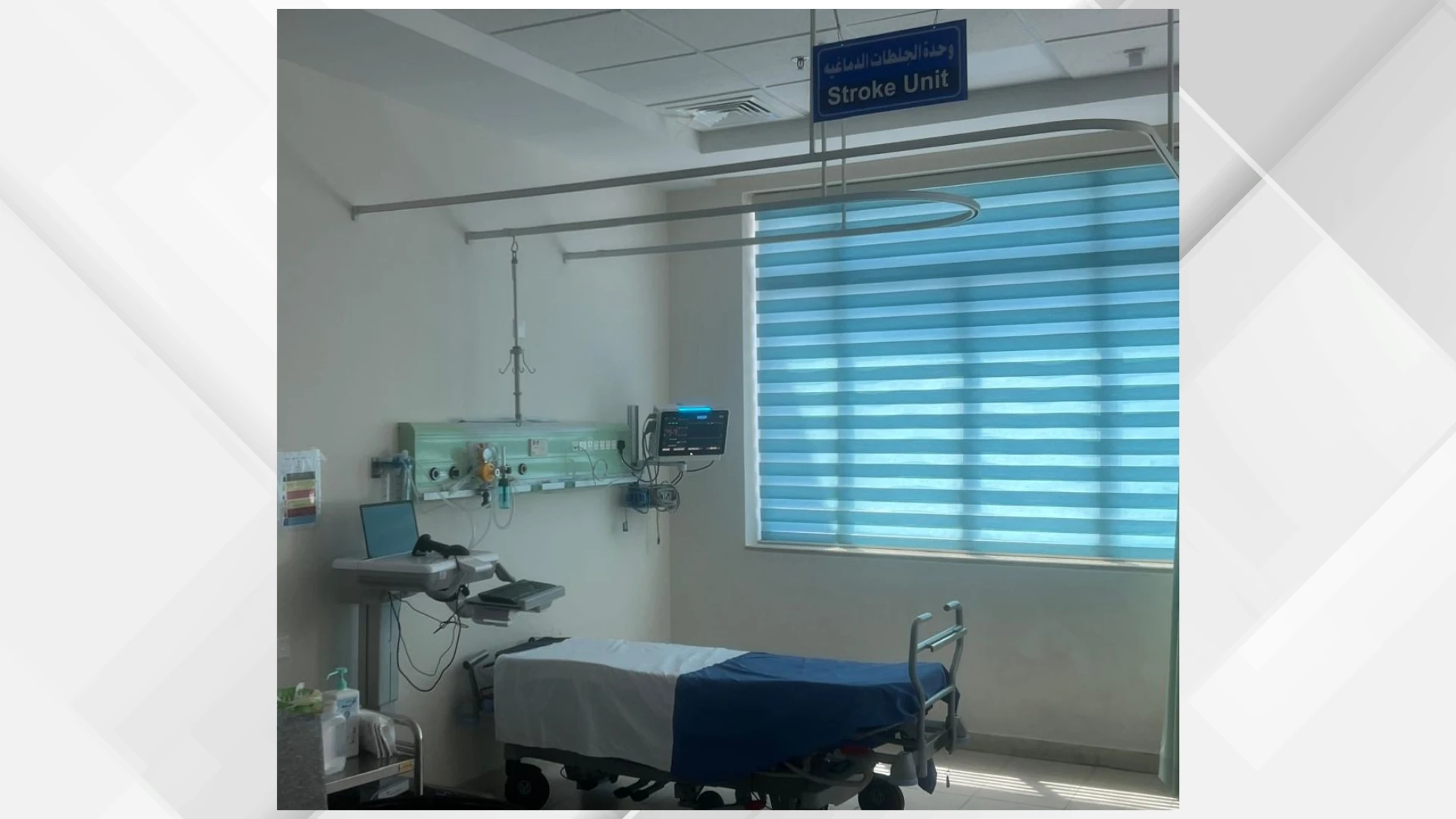
Irbid, Aug. 11 (Petra) — A newly established stroke unit at Princess
Basma Teaching Hospital is accelerating the diagnosis and treatment
of stroke patients in northern Jordan, providing specialized care
during the critical first hours after symptoms appear.
Located within the hospital’s Emergency Department, the three-bed
unit is designed to shorten the time between a patient’s arrival,
diagnosis and the start of treatment, reducing the risk of
complications and long-term disability.
Hospital Director Walid Halabi told the Jordan News Agency (Petra)
that the unit represents a significant addition to specialized
medical services in the northern region, allowing stroke patients to
receive rapid assessment and continuous monitoring from the moment
they arrive at the hospital.
The unit is equipped with continuous vital-sign monitors,
electrocardiogram equipment and devices to monitor oxygen levels,
blood pressure and blood glucose. It is also supported by medical
imaging and laboratory services required to diagnose strokes and
determine the appropriate treatment plan.
Halabi said trained medical and nursing teams operate the unit, which
can manage patients according to the severity of their condition and
their need for specialized care.
The hospital has received around 20 stroke cases since the unit began
operating, he said, adding that plans call for expanding capacity,
upgrading equipment and specialized services and providing further
training for medical and nursing staff as needs and resources allow.
Qais Saadi, consultant neurologist at Princess Basma Teaching
Hospital and assistant professor at Yarmouk University’s Faculty of
Medicine, said the unit’s location inside the Emergency Department is
particularly important because treatment outcomes are closely linked
to how quickly patients are assessed after the onset of symptoms.
Stroke symptoms can include sudden facial drooping, difficulty
speaking, numbness or weakness on one side of the body affecting the
arm, leg or face, as well as a sudden loss of balance, Saadi said.
He urged anyone experiencing such symptoms to seek immediate medical
attention at the nearest hospital.
Patients suspected of having a stroke undergo a clinical assessment,
a CT scan of the brain and required blood tests to determine the
appropriate treatment.
Saadi said some patients may be eligible for clot-dissolving
medication within four and a half hours of the onset of symptoms,
provided they reach hospital within the treatment window and have no
medical contraindications.
The decision to administer the medication is made after evaluating
the patient’s condition and medical history and completing the
necessary tests, he added.
Having a dedicated unit inside the Emergency Department helps shorten
the time needed to administer clot-dissolving treatment to eligible
patients, who then require continuous monitoring of vital signs.
The hospital’s Neurology Department provides round-the-clock medical
coverage for stroke cases, with an on-duty physician overseeing
diagnosis, determining eligibility for treatment and arranging
subsequent monitoring, imaging and other examinations.
Princess Basma Teaching Hospital has a capacity of 504 beds, with the
potential for further expansion, in addition to 53 emergency beds.
The hospital also includes 13 operating rooms, specialized medical
departments and units, and an integrated Emergency Department.
//Petra// RZ