Saudi Arabia’s Voluntary Carbon Market Fuels the Shift to a Low-Carbon

Under UAE President’s directives, UAE launches urgent relief response for Ghana flood victims

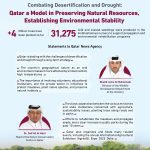
Combating Desertification and Drought: Qatar a Model in Preserving Natural Resources, Establishing Environmental Stability
UAE allocates US$30 million for emergency humanitarian response in El Obeid, calls for civilian protection, safe humanitarian aid access in Sudan


Amman, June 22 (Petra) – A traffic injury occurs every 30 minutes in Jordan, a pedestrian is run over every two hours, and one person dies in a traffic accident every 16 hours, according to the 2024 annual traffic report issued by the Public Security Directorate (PSD).
These figures underline the urgent need for sustained awareness campaigns, stricter law enforcement, and continued infrastructure development to improve road safety.
The report recorded a total of 190,175 traffic accidents last year, including 11,950 that resulted in 543 deaths, 855 serious injuries, 6,597 moderate injuries, and 10,823 minor injuries.
Accidents were most concentrated in densely populated urban areas, with collision-related incidents making up 57.7 percent of injury-causing accidents, while fatal accidents accounted for 4.1 percent.
Despite improvements in transportation infrastructure, traffic accidents continue to pose significant threats to lives, property, and national development. The rising population now totaling 11.734 million and vehicle ownership have further intensified traffic-related challenges. The report noted that the number of registered vehicles reached 2,008,765, with an additional 783,156 foreign vehicles entering the Kingdom in 2024.
Vehicle ownership has drastically increased from one vehicle per 69 people in 1970 to one per six in 2024, with an annual vehicle growth rate of 2.85 percent over the past four years.
To curb rising accident rates, authorities have introduced several reforms. The 2023 amendment to the Traffic Law introduced stricter penalties for violations such as speeding, mobile phone use while driving, reckless behavior, and driving under the influence of drugs.
The establishment of the Higher Council for Road Safety (HCRS) marked a major institutional step, bringing together public and private stakeholders to formulate national strategies aimed at halving traffic-related deaths and injuries by 2030, in alignment with the Sustainable Development Goals.
The methodology for calculating the economic cost of traffic accidents has also been revised to account for both direct and indirect costs. These include legal and healthcare expenses, vehicle repair, loss of productivity, increased insurance premiums, and social costs such as pain, suffering, and the emotional toll on families.
The PSD emphasized that solving the traffic crisis requires a holistic approach not only through legislative reform and infrastructure upgrades, but also through fostering a culture of traffic awareness. The report highlighted the vital role of families, schools, and the media in educating youth and instilling responsible road behavior.
The report concludes with a call for an integrated national effort, combining state institutions and society, to improve compliance, reduce accident-related losses, safeguard lives, and support Jordan’s broader development goals.
//Petra// AO
22/06/2025 15:42:07