Saudi Arabia’s Voluntary Carbon Market Fuels the Shift to a Low-Carbon

Under UAE President’s directives, UAE launches urgent relief response for Ghana flood victims

Combating Desertification and Drought: Qatar a Model in Preserving Natural Resources, Establishing Environmental Stability

UAE allocates US$30 million for emergency humanitarian response in El Obeid, calls for civilian protection, safe humanitarian aid access in Sudan

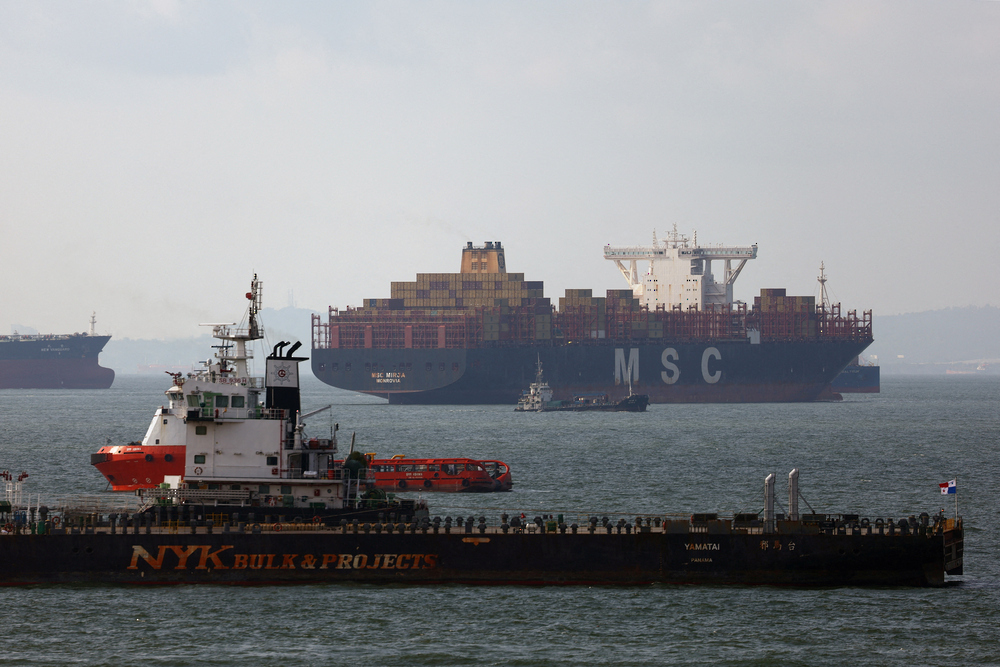
Potential Fuel Oil Supply Shortage
Looms in Third Quarter
Singapore, 7 Sep 2026 (ONA) — Fuel
oil markets for shipping and power generation are facing a potential supply
shortage in the third quarter of 2026, as mounting pressures on refineries from
wars disrupting crude processing and tanker movements have pushed processors to
prioritise diesel and other products over fuel oil.
Although crude prices have not seen
significant gains in recent months, refined product prices have risen due to
damage to refineries in Russia and the Middle East from attacks, along with
disrupted supply flows from shipping restrictions, while China has cut refining
capacity and exports to avoid depleting inventories.
The supply shortfall threatens to
increase costs for shipowners and power generators already grappling with
war‑related disruptions, while higher bunker fuel costs could push up shipping
rates.
Asia is expected to be the hardest
hit by the supply shortage, given its heavy reliance on Gulf oil flows
disrupted by the war on Iran, according to Reuters.
Data from Kepler showed that
Singapore, the world’s largest bunkering hub, imports more than half of its
nearly one million barrels‑per‑day needs, consistent with assessments from
Rystad Energy.
Consultancy Energy Aspects forecasts
a fuel oil supply deficit of around 218,000 barrels per day in the third
quarter — the first shortfall estimated by the firm since the third quarter of
2025, when the deficit stood at about 6,000 barrels per day.
Fuel oil joins gasoline, diesel and
jet fuel among refined products struggling to keep pace with demand. US diesel
prices hit record highs on Friday, as renewed US‑Iran hostilities and Ukrainian
attacks on Russian refineries have exacerbated supply disruptions.
Refiners’ shift towards increasing
output of certain products to capture higher margins has reduced fuel oil
production.
In a sign of tightening supplies,
independently held gasoline stocks at the Amsterdam‑Rotterdam‑Antwerp hub fell
to their lowest in about five years on 27 August 2026, while distillate stocks
on the US East Coast, including diesel, hit a record low in the week ending 28
August.
Fuel oil inventory and price levels
reflect market pressures, with stocks down about 30 percent from three‑year
seasonal averages at key hubs in Singapore and Amsterdam‑Rotterdam‑Antwerp.
Data from ZeroNorth showed that very
low sulphur fuel oil, the main bunker fuel, has risen 76 percent in Singapore
to just under $825 a tonne, or about $130 a barrel, since the start of the Iran
war up to 1 September, exceeding Brent’s 40 percent gain over the same period.
Ukrainian drone attacks have hit
Russian refinery output, cutting fuel oil exports in August to a record low of
591,000 barrels per day, compared with an average of over 860,000 barrels per
day in 2025, according to Kepler data.
Kepler data also showed that fuel
oil exports from the Middle East fell 45 percent year‑on‑year to an average of
447,000 barrels per day during the March‑August period.
— Ends/Khalid