
Jordan’s Q2 2026 GDP Expands 3.0%, Outperforming Regional Headwinds, International Forecasts
ENV-KUWAIT-SUSTAINABLITYKuwait strengthens environmental sustainability through strategic initiativesBy Zahra Al-Kadhmi

HLT-KUWAIT-SURGERYKuwait advances health sector with robotic, remote surgeryBy Mohammad Al-Moseb

Saudi Arabia’s Voluntary Carbon Market Fuels the Shift to a Low-Carbon

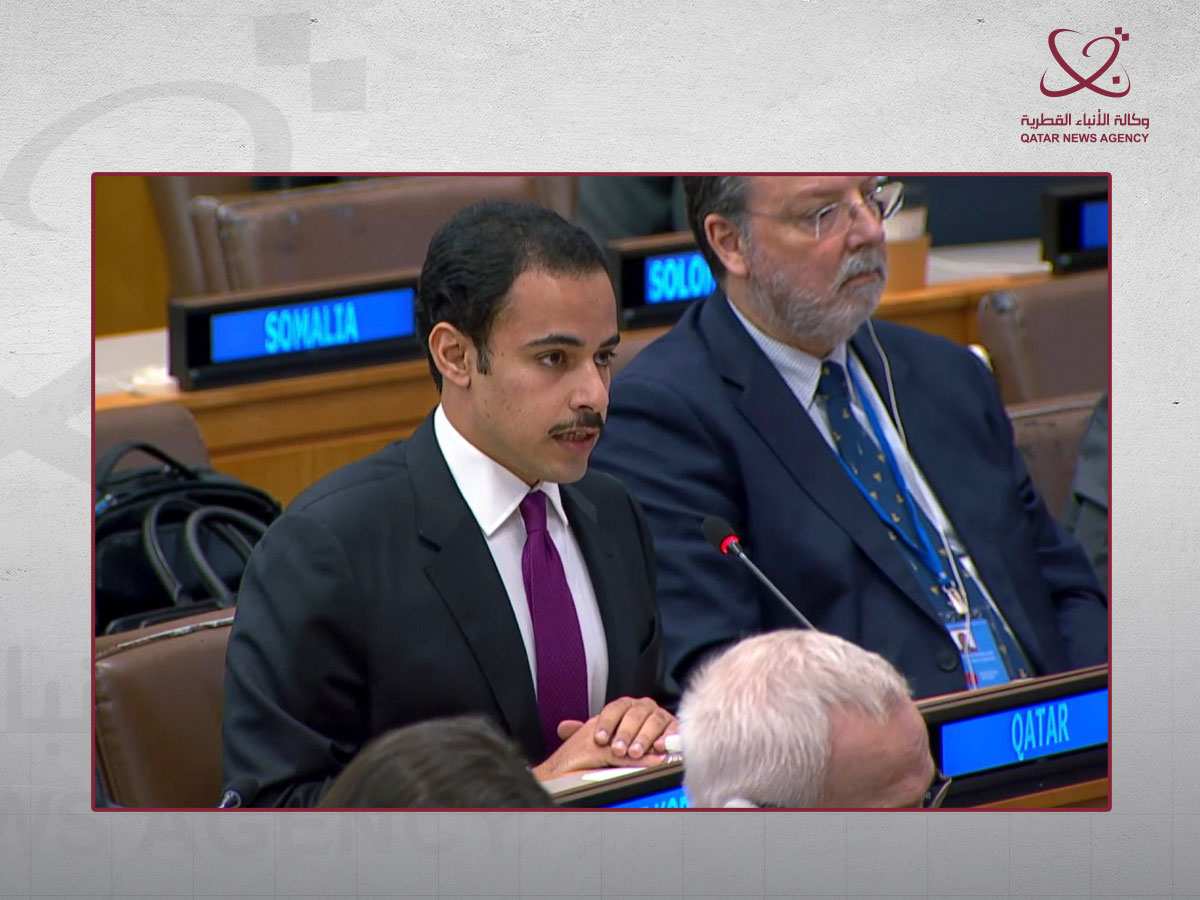
New York, October 23 (QNA) – The State of Qatar has underscored that the significant risks arising from the misuse of information and communication technology (ICT) necessitate intensified joint efforts to maintain international peace and security, noting that rapid developments in digital transformation, including artificial intelligence applications, demand a robust ICT infrastructure that strengthens cybersecurity and ensures the protection of critical facilities providing essential services across various fields.
This came in a statement delivered by Abdullah Nasser Al Kaabi, a member of the Qatari delegation participating in the meetings of the First Committee of the UN General Assembly during its 81st session, under the agenda item titled “Other disarmament measures and international security,” held at the UN headquarters in New York.
Regarding Qatar’s efforts to address challenges in the field of communication technology, he reaffirmed the vital role of the National Cyber Security Agency of the State of Qatar. Established in 2021, the Agency is tasked with maintaining and regulating cybersecurity, as well as safeguarding the State’s vital interests against threats in cyberspace. He further highlighted the Agency’s key activities, including those of the National Cyber Security Academy, a center of excellence for cybersecurity that contributes to capacity building and the empowerment of professionals working in the cybersecurity sector.
Al Kaabi underlined the importance of the global mechanism on developments in the ICT field within the context of international security and the promotion of responsible state behavior in the use of such technology. The mechanism serves as a continuation of the Open-Ended Working Group on security of and in the use of information and communications technologies (2021–2025), in whose deliberations the State of Qatar participated. He also expressed the State of Qatar’s support for the mechanism’s work and activities, emphasizing the necessity of maintaining its intergovernmental nature and ensuring that states lead its proceedings. (QNA)