Saudi Arabia’s Voluntary Carbon Market Fuels the Shift to a Low-Carbon

Under UAE President’s directives, UAE launches urgent relief response for Ghana flood victims

Combating Desertification and Drought: Qatar a Model in Preserving Natural Resources, Establishing Environmental Stability
UAE allocates US$30 million for emergency humanitarian response in El Obeid, calls for civilian protection, safe humanitarian aid access in Sudan

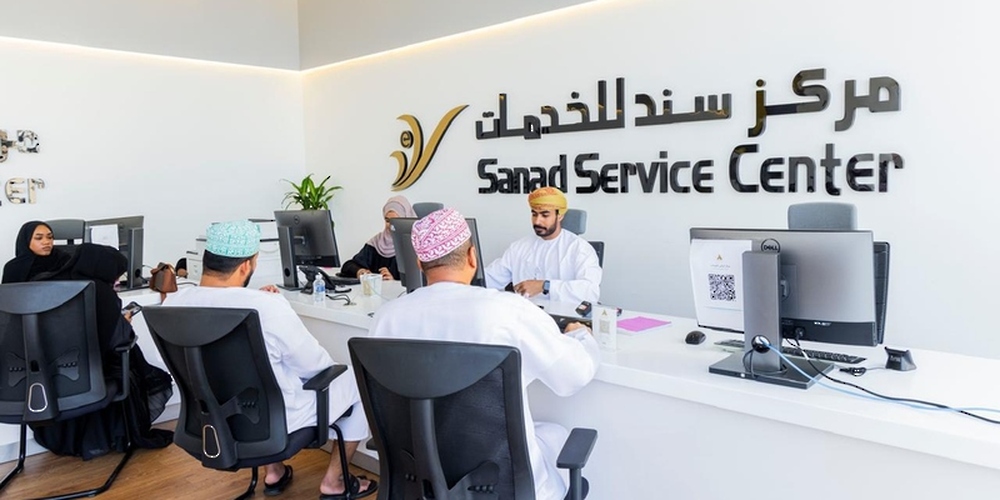
Sanad
Service Centers Process Over 400,000 Transactions
Muscat,
16 Aug 2026 (ONA) — The number of authorized Sanad Service Centers reached
922 across the various governorates of the Sultanate of Oman by the end of the
first half of the current year.
During
the first half of the current year, these centers processed more than 400,000
transactions. They provide approximately 400 services in cooperation with a
number of government and private entities, in addition to creating over 2,200
job opportunities for the national workforce.
The
Ministry of Commerce, Industry and Investment Promotion continues to implement
its developmental programs and initiatives to elevate Sanad Service Centers
through organizational expansion and digital transformation. This comes within
the framework of its efforts aimed at enhancing the efficiency of these
centers, raising the quality of services provided to beneficiaries, and
expanding the scope of both government and private services.
The
Ministry highlighted the vital role these centers play in supporting the
national economy, empowering small and medium enterprises (SMEs), and enhancing
access to government and private services across the various governorates of
the Sultanate of Oman.
Fathi
Nasser Al Mahamouli, Assistant Director of Sanad Service Centers at the
Ministry of Commerce, Industry and Investment Promotion, stated that these
centers serve as a platform for providing integrated government and private
services, acting as a partner in digital transformation. He pointed out that
the centers have witnessed growth in the number of services provided, an
increase in the number of electronically linked entities, and an expanded use
of digital platforms, alongside an improvement in the quality of the services
delivered.
He
affirmed that Sanad Service Centers have contributed to bringing services
closer to the beneficiary and reducing the need to visit the relevant authorities
directly, which has saved time and effort while cutting transportation costs.
The Ministry is also working on developing performance indicators that measure
transaction completion times, first-visit completion rates, and beneficiary
satisfaction levels to ensure continuous improvement.
He
explained that in recent years, the segment of beneficiaries has expanded to
include entrepreneurs, small and medium enterprises, and investors, alongside
citizens and residents. Furthermore, the level of digital awareness among
beneficiaries has increased, prompting them to seek more specialized, rapid,
and high-quality services.
He
pointed out that there are discrepancies between the centers regarding service
quality, which are linked to the size of the center, the nature of the
services, or operational density. However, the Ministry is working to
standardize the level of service through the implementation of a governance
manual, training and qualification programs, institutional classification of
the centers, and continuous monitoring. This ensures the delivery of a unified
experience for beneficiaries in all governorates.
He
added that the Ministry looks forward to seeing Sanad centers evolve into
smart, multi-service hubs over the next five years. This vision encompasses
increasing the number of services provided, raising the percentage of digital
services, applying artificial intelligence systems, launching a classification
framework for the centers, and enhancing partnerships with the public and
private sectors. Ultimately, this will raise operational efficiency and enhance
the financial sustainability of the centers.
—Ends/AG