Jordan’s Q2 2026 GDP Expands 3.0%, Outperforming Regional Headwinds, International Forecasts
ENV-KUWAIT-SUSTAINABLITYKuwait strengthens environmental sustainability through strategic initiativesBy Zahra Al-Kadhmi

HLT-KUWAIT-SURGERYKuwait advances health sector with robotic, remote surgeryBy Mohammad Al-Moseb

Saudi Arabia’s Voluntary Carbon Market Fuels the Shift to a Low-Carbon

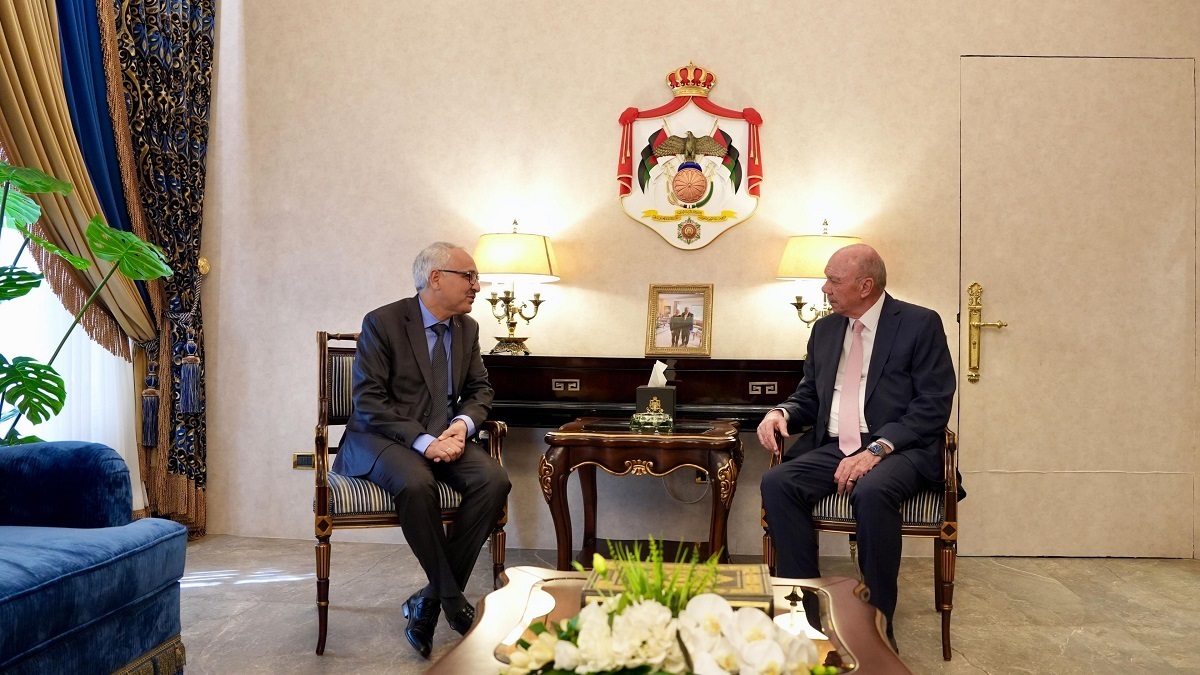
Amman, Sept. 27 (Petra) – Senate President Faisal Fayez met
separately on Sunday with the ambassadors of Algeria, Sudan, and
Italy to discuss bilateral relations, regional developments, and
issues raised in His Majesty King Abdullah II’s address to the United
Nations General Assembly.
Fayez met Algerian Ambassador Mohammad Zergot, Sudanese Ambassador
Hassan Swar Al-Dahab, and Italian Ambassador Pier Zamporlini.
He praised the level of Jordan’s relations with the three countries
and stressed the importance of expanding cooperation, particularly in
the political, economic, investment, and parliamentary fields.
The meetings addressed current developments in the region, including
the Iranian-American-Israeli war, the situation in the Gaza Strip and
the occupied West Bank amid continued Israeli aggression against the
Palestinian people, as well as Israeli attacks on Syria and Lebanon.
Fayez briefed the ambassadors on His Majesty King Abdullah II’s
address to the UN General Assembly and highlighted its main messages.
He noted that the King outlined the realities facing the region,
particularly developments in Gaza and the West Bank, the serious
situation in Syria and its direct implications for Jordan’s security
and stability, and the international community’s responsibility to
safeguard regional security and stability, halt Israeli violations,
and uphold international law.
Fayez said the King warned against Israel’s aggressive and
expansionist ambitions in the region, describing them as a regional
threat, and cautioned against the consequences of Israeli incursions
into southern Syria and attempts by Israel to impose new realities on
the ground.
He cited the King’s questions on the role of international law: “If
international law can be ignored for decades, what value does it
retain? And how can we enforce it if we cannot even acknowledge when
it is violated?”
Fayez also pointed to the King’s emphasis on protecting Jordan’s
national security, including his assertion that any threat to
Jordan’s northern border or water security constitutes a threat to
national security and that Jordan would not turn a blind eye to
threats affecting its security, water resources, or the interests of
its people.
At the same time, the King reaffirmed Jordan’s commitment to a just
peace, support for the resilience of the Palestinian people and the
United Nations Relief and Works Agency for Palestine Refugees in the
Near East (UNRWA), and continued responsibility under the Hashemite
Custodianship for preserving the historical and legal status quo at
Muslim and Christian holy sites in Jerusalem.
Fayez also cited the King’s assertion that Jordan’s commitment to
diplomacy does not supersede its commitment to human values and
should not be mistaken for weakness.
He noted that the King called on the international community to move
from managing crises to addressing their root causes, and from merely
issuing statements to taking practical measures that protect people,
enforce respect for international law, and prevent the continued
imposition of facts on the ground.
Fayez described the King’s address as a Jordanian assessment of
regional conditions and a call to restore respect for international
law, justice, and peoples’ rights to security, peace, and statehood.
He said the speech also outlined the risks posed by the continuation
of the Israeli occupation and Israel’s aggressive and expansionist
policies.
He added that while the King addressed the war crimes committed by
Israel in Gaza, he also highlighted developments in the West Bank,
including increasing settler violence, land seizures, and settlement
expansion, which Fayez said constitute war crimes.
The ambassadors, for their part, praised the King’s address and his
calls for the international community to fulfill its moral and legal
responsibilities toward ending regional conflicts and achieving
security and stability.
They said the speech reflected the King’s efforts toward regional
peace and stability and reaffirmed their countries’ commitment to
strengthening relations with Jordan across various fields.
//Petra// AO