Saudi Arabia’s Voluntary Carbon Market Fuels the Shift to a Low-Carbon

Under UAE President’s directives, UAE launches urgent relief response for Ghana flood victims

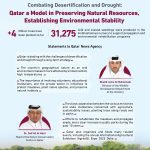
Combating Desertification and Drought: Qatar a Model in Preserving Natural Resources, Establishing Environmental Stability
UAE allocates US$30 million for emergency humanitarian response in El Obeid, calls for civilian protection, safe humanitarian aid access in Sudan

The Acting Director-General of the Ministry of Production and Economic Resources in Sennar State, Engineer Ali Sheikh Idris, stated that 80% of the state’s population depends on agriculture and livestock production. This came during his meeting with a delegation from UN Women, attended by senior officials from the Ministry of Production and representatives of women’s leadership in Sennar State. Idris noted that Sennar has emerged from the war and urgently requires development-oriented projects, stressing that the Ministry of Production will provide all necessary support to facilitate the implementation of programs aimed at empowering women economically and agriculturally. He added that targeting women in such initiatives would yield significant benefits in production sectors, urging women in the targeted localities to actively engage with the project and ensure its sustainability. For his part, the representative of the Humanitarian Aid Commission in Sennar, Mohamed Essam Al-Abed, called for stronger coordination among partners and the formation of women’s associations and cooperatives in the targeted localities to facilitate project implementation. He also highlighted the importance of activating the roles of social welfare and women’s institutions in mobilizing communities to ensure the project’s success. UN Women Economic Development Manager, Mr. Anouk, said the project aims to enhance and develop agriculture and nutrition in Sennar and Blue Nile states.He explained that implementation requires stronger partnerships with civil society and relevant stakeholders, noting that the project is funded by the African Development Bank (AfDB) to increase agricultural productivity and strengthen women’s capacities in agriculture in Singa and Abu Hujar localities.The project also seeks to improve market conditions to increase women’s income, he added. Project Coordinator in Sennar State, Taqwa Hamid, stated that the initiative targets 25 cooperatives in coordination with all partners, particularly the Women’s Administration, and will run for three years in Singa and Abu Hujar localities.BH/BH