Saudi Arabia’s Voluntary Carbon Market Fuels the Shift to a Low-Carbon
Under UAE President’s directives, UAE launches urgent relief response for Ghana flood victims

Combating Desertification and Drought: Qatar a Model in Preserving Natural Resources, Establishing Environmental Stability
UAE allocates US$30 million for emergency humanitarian response in El Obeid, calls for civilian protection, safe humanitarian aid access in Sudan

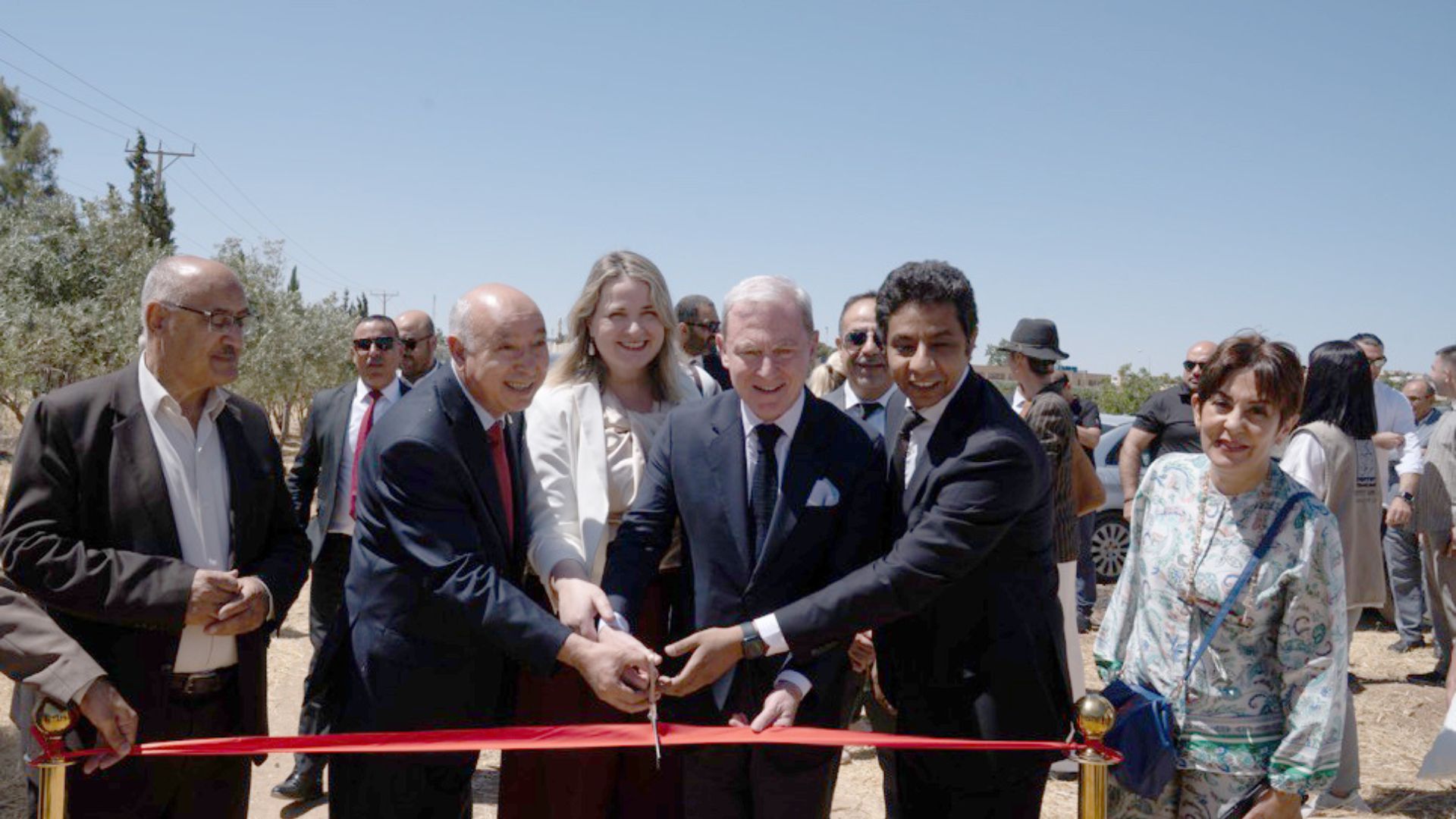
Amman, Aug. 12 (Petra) — A solar-powered water project inaugurated
Wednesday at Mu’tah in Karak Governorate will supply 50% of the
irrigation needs of 46 greenhouses, supporting agricultural
production and helping address water and energy challenges in the
local community.
Implemented by Schneider Electric in cooperation with the Dar Abu
Abdullah Association and funded by Irish Aid in Jordan, the project
features a 22-kilowatt solar-powered water pumping system designed to
improve the efficiency of several main wells and provide a reliable
water supply for agricultural activities.
According to a Schneider Electric statement, the project will benefit
185 direct and indirect beneficiaries in the Karak community and is
expected to reduce electricity and water costs while avoiding about
27 tons of carbon emissions annually.
The 46 greenhouses have a production capacity of up to 80 tons of
vegetables per season, Dar Abu Abdullah Association Acting CEO Samer
Balkar noted, describing the project as a model of sustainable
development based on economic empowerment. He explained that the
project will help families in the Mu’tah area establish stable and
independent sources of income.
Schneider Electric General Manager for Levant Countries Mohamed Samy
stressed that improving the management of energy and water resources
and supporting the transition to clean energy are key to sustainable
economic and social development in Jordan.
He highlighted the project’s reflection of the company’s commitment
to applying energy management, automation, and digital transformation
solutions to support sustainable community development.
Schneider Electric Sustainability Manager for North Africa and the
Levant, Asmaa Shiemy, outlined the use of the company’s EcoStruxure
platform, a digital system that connects devices, analyzes data and
optimizes operations, along with energy monitoring and management
systems, smart meters and Internet of Things (IoT) solutions. She
underlined that these technologies will help improve efficiency and
measure the project’s environmental, economic and social impact.
The project is the result of a partnership between Schneider Electric
and the Dar Abu Abdullah Association. Irish Aid funded the
development of the wells and infrastructure preparation, while Jabal
Sustainable Solutions provided technical supervision and
coordination, and Mara’i al-Azraq Agricultural Projects Company
served as the local implementing partner. Mu’tah University and the
Dar Abu Abdullah Association will oversee the project’s operation and
long-term maintenance.
//Petra// AJ