Saudi Arabia’s Voluntary Carbon Market Fuels the Shift to a Low-Carbon

Under UAE President’s directives, UAE launches urgent relief response for Ghana flood victims
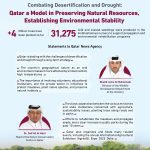
Combating Desertification and Drought: Qatar a Model in Preserving Natural Resources, Establishing Environmental Stability
UAE allocates US$30 million for emergency humanitarian response in El Obeid, calls for civilian protection, safe humanitarian aid access in Sudan

GENEVA, May 21, 2026 (SUNA) – A ministerial consultative meeting was held on Thursday on the sidelines of the 79th session of the World Health Assembly in Geneva, chaired by Federal Minister of Health Haitham Mohamed Ibrahim, to discuss the implementation of a joint working document on regional health cooperation between Sudan, Djibouti, Somalia, and Yemen. The meeting brought together Yemen’s Minister of Public Health and Population, Dr. Qassem Buhaibeh, Somalia’s Minister of Health, Dr. Ali Haji Adam, a representative of Djibouti, as well as technical experts and representatives from relevant institutions, with participation from the World Health Organization (WHO) Regional Office for the Eastern Mediterranean as a supporting technical partner. The Sudanese side emphasized the importance of transforming the draft memorandum of understanding into a practical action plan and an implementation roadmap extending to 2030, ensuring a shift from a general framework to executable and monitorable programmes and projects aligned with Sudan’s national health system recovery strategy. The memorandum is based on shared health challenges facing the four countries, including the health impacts of climate change, population displacement, refugee and migrant movements, epidemic risks, and the burden of communicable diseases and malnutrition. The meeting discussed priority areas of cooperation, including climate and health, health services for displaced populations, refugees and migrants, epidemic preparedness and response, cholera and dengue control, and zoonotic diseases under the One Health approach, in addition to capacity-building, training, and knowledge exchange. It was noted that Sudan, in its capacity as chair of the process, will continue coordination with participating countries and WHO EMRO to finalize the action plan and technical documents, ahead of a planned ministerial meeting in Khartoum before October. Federal Minister of Health Haitham Mohamed Ibrahim stated that the memorandum represents a framework for a regional health alliance responding to the needs of the four countries, calling for the development of a major joint project with WHO technical support focused on strengthening primary healthcare, epidemic control, capacity-building, and regional health security. He also proposed the preparation of a joint funding proposal covering a period of three to five years to be submitted collectively to regional and international donors, including the King Salman Humanitarian Aid and Relief Centre (KSRelief), the Qatar Fund for Development, and the Islamic Development Bank, in order to enhance opportunities for financing health system strengthening in the four countries. The Yemeni Health Minister welcomed the initiative, noting that the participating countries face similar health and humanitarian conditions, making cooperation practical and impactful, and called for activating the technical committee, holding regular meetings, and submitting clear reports and proposals ahead of ministerial sessions. The Somali Health Minister also welcomed the proposal for joint funding applications, stressing that a collective submission would carry greater weight and impact than individual proposals, and expressed Somalia’s readiness to work with partners to implement the initiative. The representative of Djibouti welcomed the cooperation framework, affirming the importance of regional collaboration and Djibouti’s readiness to continue coordination and participation in related meetings and activities. The meeting concluded with agreement to finalize the memorandum, prepare an implementation roadmap through 2030, designate focal points, and activate technical coordination mechanisms among the four countries, ahead of the first ministerial meeting in Khartoum before October to adopt the action plan and move into implementation.BH/BH