Saudi Arabia’s Voluntary Carbon Market Fuels the Shift to a Low-Carbon

Under UAE President’s directives, UAE launches urgent relief response for Ghana flood victims
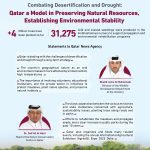
Combating Desertification and Drought: Qatar a Model in Preserving Natural Resources, Establishing Environmental Stability
UAE allocates US$30 million for emergency humanitarian response in El Obeid, calls for civilian protection, safe humanitarian aid access in Sudan

Khartoum, August 16, 2026 (SUNA) — The President of the Transitional Sovereignty Council (TSC) and Commander-in-Chief of the Armed Forces, General Abdel Fattah Al-Burhan, on Sunday met at his office at the Republican Palace with a delegation from the African Union Peace and Security Council, in the presence of the Minister of Foreign Affairs and International Cooperation, Ambassador Mohi-Eddin Salem. Ambassador Mohamed Khalid, Algeria’s Permanent Representative to the African Union, Chairperson of the Council for August, and head of the delegation, described the meeting in a press statement as fruitful, noting that it addressed a number of issues related to peace, security, and stability in Sudan. He praised the TSC President for the interest and commitment he demonstrated toward issues of peace and stability. The head of the delegation reaffirmed the African Peace and Security Council’s firm and unequivocal position on respecting Sudan’s sovereignty, territorial integrity, and national unity, as well as realizing the aspirations of the Sudanese people to restore peace, security, and stability, rebuild development, and establish democratic governance. Ambassador Mohamed Khalid explained that the meeting discussed the current situation in the country. The Council expressed deep concern over the continuation of the war and the resulting heavy loss of life, destruction of infrastructure, and worsening humanitarian crisis. The head of the delegation stressed that the only path to achieving lasting peace is through dialogue and national reconciliation and reaching a comprehensive political settlement that meets the aspirations of the Sudanese people. He noted the Council’s welcome for steps related to the peace initiative and the return of the government to carrying out its duties from the capital, Khartoum, describing this as a pivotal step toward restoring the functioning of state institutions, providing basic services, rebuilding confidence, and advancing the democratic transition. He called on the government and political forces to strengthen the inclusiveness of the transitional process and work toward achieving national consensus leading to a constitutional system through free and fair elections. Ambassador Mohamed Khalid also reaffirmed the pivotal role of the African Union in the Sudan peace process, commending the efforts of the Quintet under the leadership of the African Union, which includes a number of institutions and organizations. The head of the delegation reiterated the Council’s firm position condemning any external interference in Sudan’s internal affairs, considering such interference a factor that fuels the conflict. He stressed the Council’s rejection of any attempts to establish parallel entities or governments that undermine Sudan’s unity and sovereignty. He welcomed the steps toward reopening the African Union Liaison Office in Khartoum, expressing his hope for strengthening the Union’s role and supporting Sudan’s return to actively engaging in the African Union.BH/BH