Jordan’s Q2 2026 GDP Expands 3.0%, Outperforming Regional Headwinds, International Forecasts
ENV-KUWAIT-SUSTAINABLITYKuwait strengthens environmental sustainability through strategic initiativesBy Zahra Al-Kadhmi
HLT-KUWAIT-SURGERYKuwait advances health sector with robotic, remote surgeryBy Mohammad Al-Moseb

Saudi Arabia’s Voluntary Carbon Market Fuels the Shift to a Low-Carbon

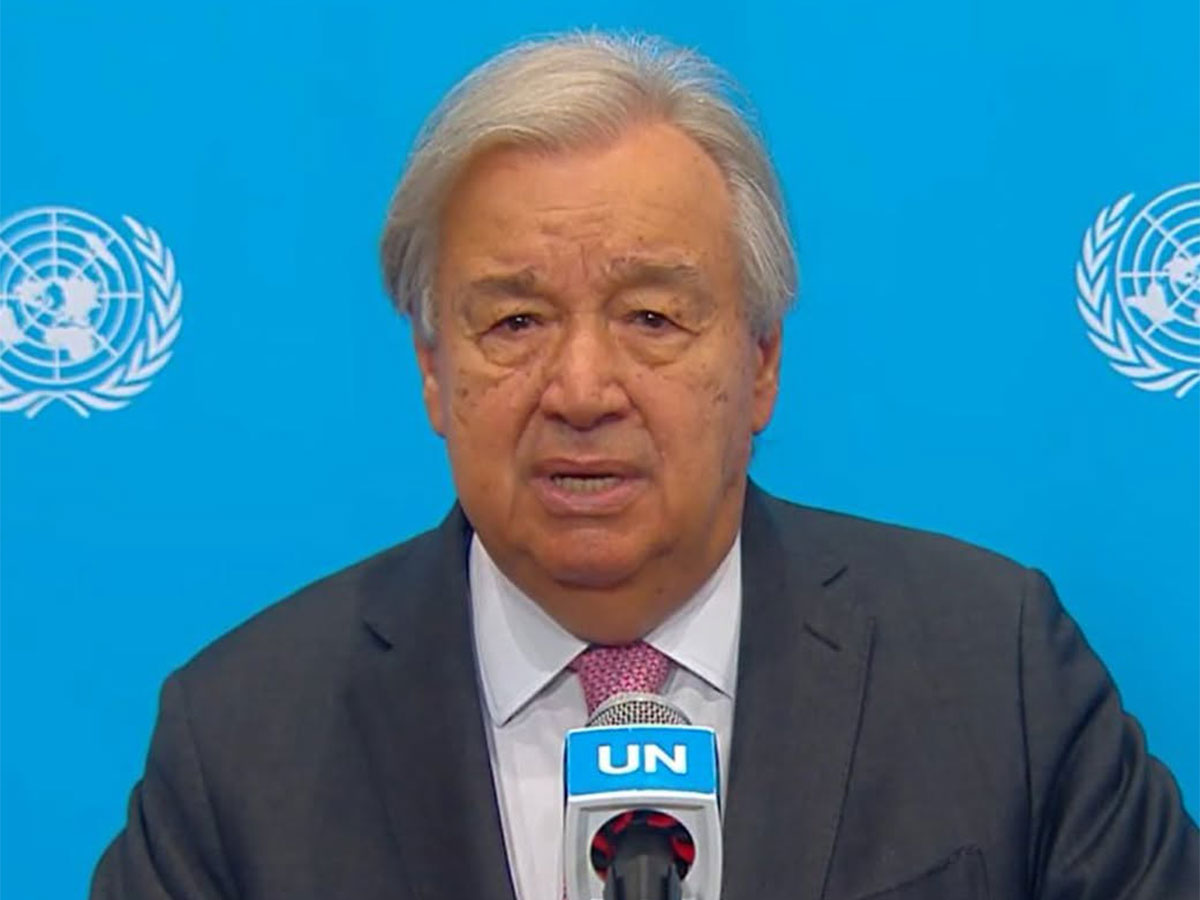
New York, October 23 (QNA) – UN Secretary-General Antonio Guterres has warned that the escalation and widening scope of conflicts are compounding human suffering and deepening inequalities worldwide. He called for an end to the fighting, the protection of civilians, and the creation of space for diplomacy.
Speaking to reporters in New York, Guterres stated that the repercussions of wars extend well beyond combat zones, affecting global energy markets, supply chains, and financial systems, while exacerbating the cost-of-living crisis. He emphasized that “the distance between the Strait of Hormuz and a family home, or a village marketplace, is shorter than we might imagine.”
Drawing a parallel to the El Niño climate phenomenon, Guterres described the current situation as an “El Niño of wars,” where conflicts fuel one another, with their consequences spreading further and faster.
He noted that conflicts, stretching from the Middle East to Ukraine and Sudan, involve persistent attacks on homes, hospitals, schools, airports, and energy infrastructure, and he urged an end to these violations and a commitment to respecting international law.
Guterres asserted that while war does not create all forms of inequality, it fuels and exploits them, exposing imbalances in an economic system that forces those with the fewest resources to bear the brunt of shocks. He stressed that the solution cannot lie in expanding the scope of confrontation, including in the Middle East.
Regarding Yemen, Guterres expressed concern over the escalation of hostilities in the vicinity of Taiz and the continued Houthi attacks on civilian targets in Saudi Arabia. He warned that such actions exacerbate the suffering of civilians and heighten regional tensions, calling for restraint and the establishment of a political horizon.
He emphasized the need for a nationwide cessation of hostilities, respect for international law, the protection of civilians, the safeguarding of the rights and freedoms of international navigation, and the creation of space for diplomatic efforts to succeed.
On the Palestinian issue, Guterres criticized the continued, stringent Israeli restrictions on the entry of essential aid into the Gaza Strip as winter approaches, as well as the obstacles hindering the implementation of the comprehensive plan to end the conflict, a plan endorsed by the Security Council.
He noted that Palestinians in the West Bank are subjected to daily attacks by Israeli settlers, asserting that “the clear objective is to drive communities off their land.” He warned that humanitarian funding remains insufficient to meet needs, pointing out that the World Food Programme requires USD 450 million to sustain its operations in Gaza and the West Bank over the next six months, an amount he noted is equivalent to what the world spends on its militaries in roughly 90 minutes.
Guterres appealed to donors to increase their support, reiterating his call for the establishment of a credible political path that leads to a lasting peace, an end to the occupation, and the realization of a two-state solution. (QNA)