
Saudi Arabia’s Voluntary Carbon Market Fuels the Shift to a Low-Carbon

Under UAE President’s directives, UAE launches urgent relief response for Ghana flood victims

Combating Desertification and Drought: Qatar a Model in Preserving Natural Resources, Establishing Environmental Stability

UAE allocates US$30 million for emergency humanitarian response in El Obeid, calls for civilian protection, safe humanitarian aid access in Sudan

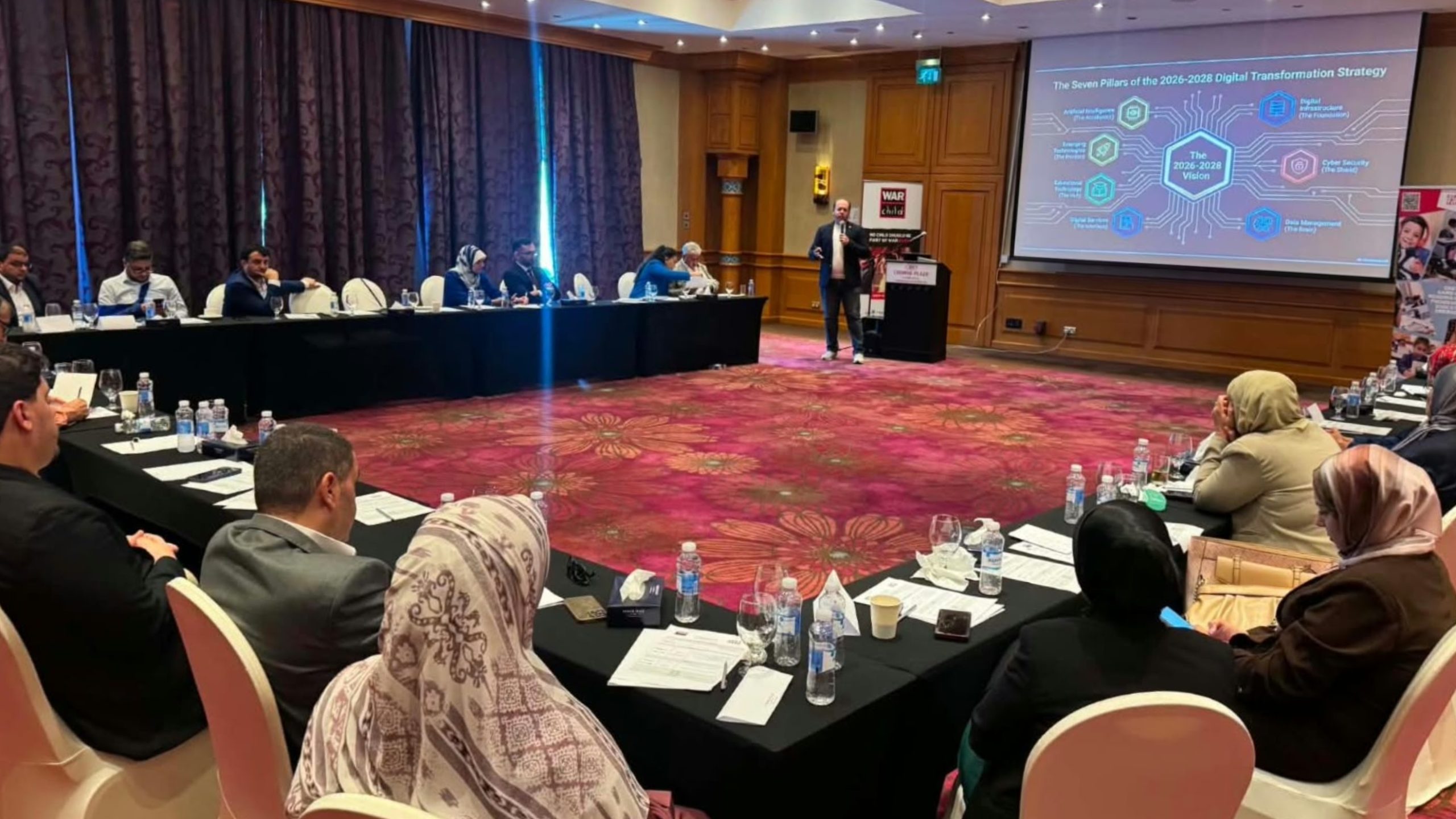
AMMAN, Aug. 15 (Petra) — The “War Child” organization, in
partnership with the Ministry of Education, reviewed on Saturday the
results of the initial pilot phase for the upgraded digital version
of the “We Love Reading” math game for first-grade students. The
findings were presented during a specialized workshop held to
evaluate outcomes, examine lessons learned, and chart future
implementation steps.
The pilot phase tested the new progressive web application (PWA)
version across public schools in the Qasabat Amman, Qasabat Irbid,
and Zarqa II directorates, utilizing in-school learning frameworks to
assess its compatibility with students’ and teachers’ needs under
actual field conditions.
Muneeb Tashman, director of the Queen Rania Al Abdullah Center for
Educational Technology and Information, stated that the Ministry of
Education has taken major strides in digital transformation by
integrating technology into education and fostering a digital
learning environment that supports students and teachers.
Tashman noted that the initiative provides a practical model for
leveraging digital solutions and interactive classroom learning,
emphasizing the value of field feedback in refining digital tools. He
underscored the importance of ongoing partnerships between the
ministry and educational organizations to develop localized digital
content driven by classroom assessments.
Dr. Mohammad Awamleh, Country Director of War Child in Jordan,
highlighted that the pilot results signal strong potential for
deploying technology to build foundational math skills among
children. He explained that the trial provided direct insights from
students and educators, guiding further enhancements before wider
rollouts.
The pilot demonstrated high engagement and enthusiasm among children,
who grew increasingly independent in navigating the game over time.
Teachers also welcomed the software’s educational value and alignment
with first-grade mathematics curricula, while emphasizing the need
for comprehensive pre-deployment training.
The workshop forms part of ongoing cooperation between War Child and
the ministry to share expertise, advance digital learning tools, and
expand collaborative initiatives across Jordanian public schools.
//Petra// AA