Jordan’s Q2 2026 GDP Expands 3.0%, Outperforming Regional Headwinds, International Forecasts
ENV-KUWAIT-SUSTAINABLITYKuwait strengthens environmental sustainability through strategic initiativesBy Zahra Al-Kadhmi
HLT-KUWAIT-SURGERYKuwait advances health sector with robotic, remote surgeryBy Mohammad Al-Moseb

Saudi Arabia’s Voluntary Carbon Market Fuels the Shift to a Low-Carbon

Amman, May 21 (Petra) — The World Health Organization (WHO) Regional
Office for the Eastern Mediterranean on Thursday described the
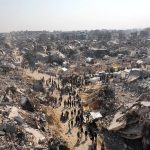
destruction of health services and loss of human life in the occupied
Palestinian territories, including East Jerusalem, as a “profound
tragedy.”
In a statement issued during the World Health Assembly, WHO Regional
Director for the Eastern Mediterranean Hanan Balkhy said, “Since
October 2023, more than 72,000 people have been killed and 182,000
injured,” adding that “in 2025 alone, nearly 26,000 additional deaths
were reported.”
Balkhy said that even after the October 2025 ceasefire, civilians
continued to die, health services remained disrupted, and
humanitarian access remained constrained.
She stressed that Gaza’s health sector is facing catastrophic
conditions, saying, “Today, no hospital in Gaza is fully functional.
In the north, none are functioning at all,” while more than half of
essential medicines are out of stock and thousands of patients still
require urgent medical evacuation.
She added that infectious diseases continue to spread in overcrowded
and unsanitary conditions, while “mental health needs are
overwhelming” and “maternal and neonatal risks are rising sharply.”
Regarding the West Bank, Balkhy said escalating violence and movement
restrictions continue to aggravate the humanitarian situation, noting
that the Palestinian Authority’s financial crisis has severely
limited healthcare services, with public hospitals operating on an
emergency-only basis.
Balkhy said WHO and its partners continue to operate under
“extraordinarily difficult conditions,” noting that the organization
appealed for $648 million to fund the 2025 health response, while
more than 75 percent of the appeal remains unfunded.
Despite these challenges, she said WHO facilitated the delivery of
more than 4,000 metric tons of emergency medical supplies into Gaza
and supported fuel deliveries that helped keep the health system
operational. In the West Bank, the organization continued expanding
trauma and emergency care services.
“But humanitarian operations cannot be sustained on political
statements alone,” Balkhy said, calling for the protection of
healthcare facilities, sustained humanitarian access, the removal of
restrictions delaying essential medical supplies and emergency
medical teams, and continued international support to restore and
expand health services.
She also called for reopening referral routes from the West Bank and
stressed that “Palestinians need more than expressions of concern.
They need protection, access, recovery, and peace.”
//Petra// AJ