
Jordan’s Q2 2026 GDP Expands 3.0%, Outperforming Regional Headwinds, International Forecasts
ENV-KUWAIT-SUSTAINABLITYKuwait strengthens environmental sustainability through strategic initiativesBy Zahra Al-Kadhmi

HLT-KUWAIT-SURGERYKuwait advances health sector with robotic, remote surgeryBy Mohammad Al-Moseb

Saudi Arabia’s Voluntary Carbon Market Fuels the Shift to a Low-Carbon

– Transit Exports Surge 36% to JOD 324M
– 50,058 Loaded Trucks Enter and Depart Zone
– Trade Up 24% to JOD 983M
– Key Economic Pillar for Trade and Investment
– Facilitating Cargo Movement and Regional Redistribution
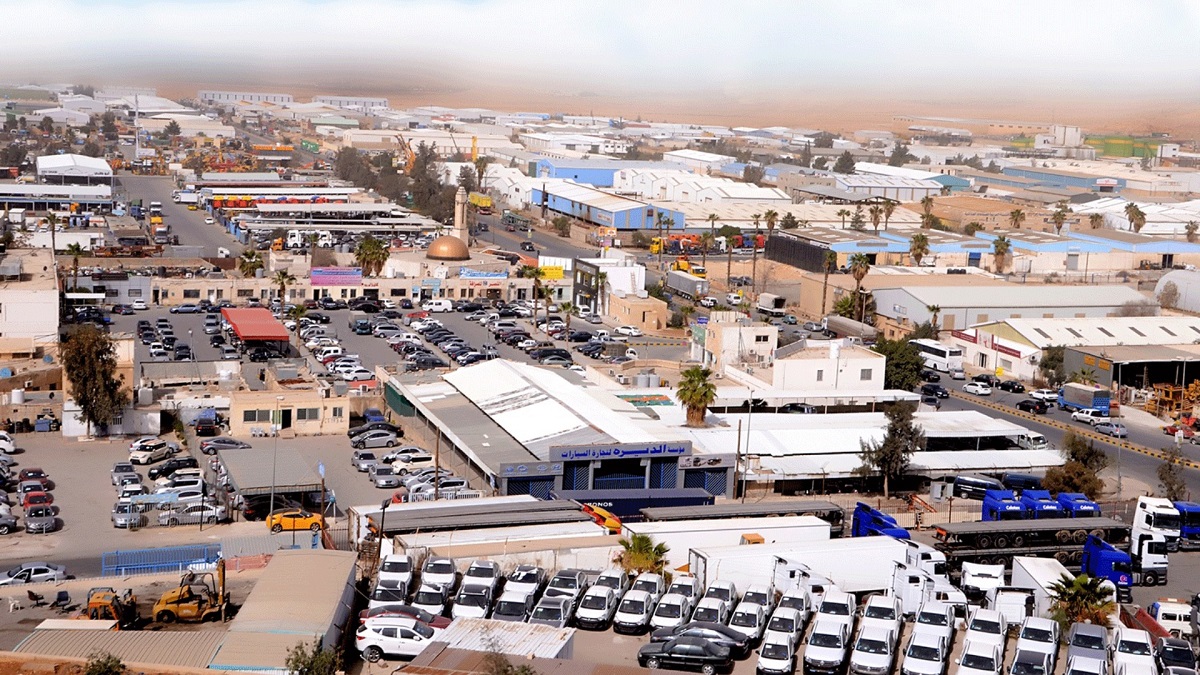
AMMAN, Oct. 24 (Petra) – The Zarqa Free Zone has demonstrated
structural resilience against regional macroeconomic volatility,
sustaining its role as a pivotal hub for transit flows, re-export
operations, and cross-border merchandise trade servicing both the
domestic market and neighboring Arab economies.
Statistical indicators released by the Jordan Customs Department show
that the aggregate value of inbound and outbound freight handled
through the zone reached 983 million JOD by the end of September
2026, marking a 24 percent year-on-year increase compared to 794
million JOD registered in the corresponding period of 2025.
International transit departures out of the zone experienced a 36
percent expansion during the first nine months of 2026, reaching a
total valuation of 324 million JOD compared to 238 million JOD
through Q3 2025. In parallel, inbound shipments designated for the
domestic market recorded a 4 percent valuation growth, rising to 192
million JOD from 185 million JOD in the prior-year period.
Customs logistics activity reflected robust operational throughput,
with freight and clearance handling firms completing 48,856
declarations across vehicle and general cargo categories via Zarqa
Free Zone Customs over the nine-month period. Customs telemetry
tracked 31,841 inbound loaded trucks entering the zone year-to-date,
alongside 18,217 outbound loaded units dispatched under multi-modal
transit and re-export procedures to regional destinations.
President of the Clearance and Transport Companies Association,
Daifallah Abu Aqueleh, stated that the zone has evolved from a
conventional bonded storage zone into a fully integrated logistics
platform that re-engineers regional trade flows and optimizes
supply-chain cost efficiency.
Abu Aqueleh highlighted the zone’s role in facilitating inventory
management for Gulf exporters through tariff-exempt bonded status
prior to re-export, serving as a primary consolidation and
pre-shipment point for Iraqi market demand via the Karameh border
crossing, and supporting capital goods trade into Syria following the
reactivation of the Jaber-Nassib commercial corridor. He noted that
the ecosystem offers operational incentives including full foreign
capital ownership, 100 percent tax exemptions on export earnings and
transit transactions, and a single-window administrative clearing
framework.
President of the Arab Federation for Freight Forwarders (OFA), Odeh
Ramahi, emphasized that the site serves as a vital component in
Jordan’s multimodal transport network. Ramahi noted that linking
Zarqa’s land transport, bonded warehousing, and customs processing
assets with maritime freight channels through the Port of Aqaba
yields high-value-added logistics solutions, improving national
supply-chain competitiveness and cementing the Kingdom’s position as
a regional trade gateway.
Established in 1983 along key international transport corridors, the
Zarqa Free Zone represents one of the region’s largest specialized
commercial and industrial enclaves, leveraging modern logistics
infrastructure to capture regional trade and foreign direct
investment.
//Petra// AA